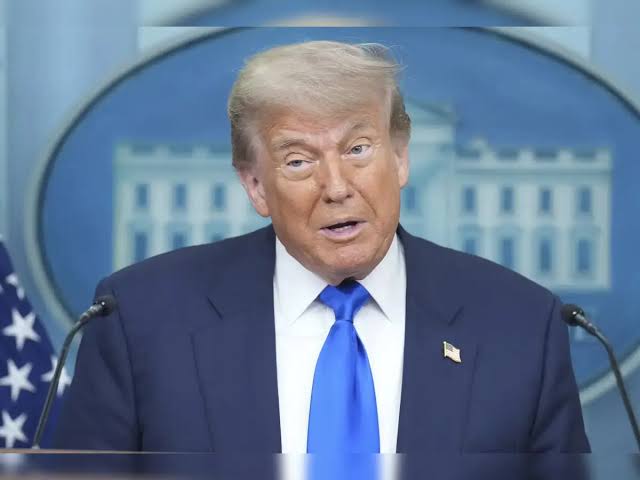
Washington D.C., USA – President Donald Trump on Monday issued a stark warning, stating that any nation aligning with what he termed the “anti-American policies” of the BRICS bloc would face an additional 10% tariff. The announcement, made via a post on Truth Social, did not provide specific details on what constitutes “anti-American” policies, leaving many to speculate on the implications.
“Any Country aligning themselves with the Anti-American policies of BRICS, will be charged an ADDITIONAL 10% Tariff,” Trump wrote. “There will be no exceptions to this policy. Thank you for your attention to this matter!”
The statement comes as BRICS, an intergovernmental organization that has expanded significantly in recent years, continues to bolster its economic and political influence on the global stage.
BRICS: A Growing Bloc Challenging the Status Quo
Established in 2009 with Brazil, Russia, India, and China as its founding members, BRICS later welcomed South Africa. In a significant expansion last year, the group brought in Egypt, Ethiopia, Indonesia, Iran, Saudi Arabia, and the United Arab Emirates.
This expansion has solidified BRICS’s position as a prominent forum for countries of the Global South, aiming to strengthen multilateralism, reform the global financial architecture, and increase the influence of developing nations in international governance.
One of BRICS’s key objectives is to reduce reliance on the U.S. dollar and Western-dominated financial institutions, advocating for a more inclusive global financial system. The bloc’s leaders have frequently stressed their commitment to promoting international peace and security, sustainable development, and global economic growth through enhanced trade and investment linkages.
Global Reactions and Concerns
Trump’s latest tariff threat has immediately drawn “serious concerns” from BRICS nations. Meeting in Rio de Janeiro, BRICS leaders implicitly condemned the increase of tariffs without directly naming Trump or the United States. A draft summit statement, obtained by various media outlets, expressed “serious concerns about the rise of unilateral tariff and non-tariff measures which distort trade and are inconsistent with WTO (World Trade Organization) rules.” The statement warned that such measures “threaten to further reduce global trade, disrupt global supply chains, and introduce uncertainty into international economic and trade activities.”
While the BRICS declaration avoids direct confrontation, it underscores the bloc’s collective unease with what they perceive as protectionist and unilateral trade actions. Some BRICS members, like India, are also navigating delicate trade negotiations with the U.S., adding another layer of complexity to the situation. India has reportedly drawn “red lines” on sensitive sectors like agriculture and dairy in its ongoing discussions for a mini-trade deal with the U.S., even as the July 9 deadline for the expiration of a reciprocal tariff suspension looms.
Analysts suggest that Trump’s aggressive stance aims to pressure countries into new trade terms and potentially curb the growing influence of BRICS as a counterweight to Western powers. However, the move is also seen as potentially exacerbating global trade tensions and fostering further fragmentation in the international economic order. The lack of clarity on what constitutes “anti-American” policies also creates uncertainty for businesses and governments worldwide.
The coming days are expected to see more detailed reactions from individual BRICS nations and other international bodies as they assess the full implications of Trump’s tariff warning.