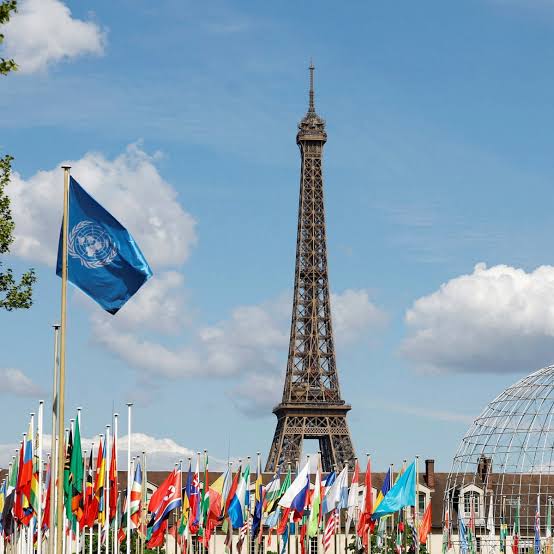
WASHINGTON D.C– July 23, 2025 – The United States, under the Trump administration, has announced its decision to once again withdraw from the United Nations Educational, Scientific and Cultural Organization (UNESCO), marking the third time in history the U.S. has exited the agency and the second under a Trump presidency. The move, which is slated to take effect at the end of December 2026, has drawn regret from UNESCO leadership and criticism from those who advocate for multilateral cooperation.
The White House and State Department cited similar concerns to those that led to the initial withdrawal in 2017 during Trump’s first term. A White House deputy spokesperson stated that President Trump decided to withdraw from UNESCO because it “supports woke, divisive cultural and social causes that are totally out-of-step with the commonsense policies that Americans voted for in November.”
A key grievance articulated by the Trump administration is UNESCO’s perceived “anti-Israel bias.” This includes the agency’s 2011 decision to admit the “State of Palestine” as a Member State, which the U.S. considers problematic and contrary to its policy. The administration also pointed to what it characterized as the proliferation of “anti-Israel rhetoric” within the organization.
Furthermore, the administration expressed concern over UNESCO’s focus on the UN Sustainable Development Goals (SDGs), describing them as a “globalist, ideological agenda for international development at odds with our America First foreign policy.” Other cited reasons included issues with UNESCO’s diversity, equity, and inclusion (DEI) policies, and what was termed a “pro-China tilt.”
The decision comes just two years after the Biden administration rejoined UNESCO in 2023, having reversed Trump’s earlier withdrawal. At the time, the Biden administration cited the need to counter China’s rising influence within the organization and re-engage in important global projects, including Holocaust remembrance and education in vulnerable regions.
Audrey Azoulay, the Director-General of UNESCO, expressed deep regret over the U.S. decision. In a statement, she underscored that the withdrawal “contradicts the fundamental principles of multilateralism” and could affect the many partners in the United States, including communities seeking World Heritage Site inscriptions, Creative City status, and University Chairs. Azoulay also noted that the reasons provided by the U.S. are “the same as seven years ago, even though the situation has changed profoundly, political tensions have receded, and UNESCO today constitutes a rare forum for consensus on concrete and action-oriented multilateralism.”
She added that UNESCO has prepared for this anticipated announcement by undertaking structural reforms and diversifying its funding sources, making it less financially dependent on any single member state.
The U.S. first withdrew from UNESCO in 1984 under President Ronald Reagan, citing mismanagement and an alleged anti-Western bias. It rejoined in 2003 under President George W. Bush. This latest withdrawal signifies a renewed turn towards a more isolationist foreign policy approach by the Trump administration, reinforcing its “America First” agenda which prioritizes national interests over multilateral engagement.
Critics of the withdrawal argue that the U.S. absence cedes influence to other nations, particularly China, in shaping global standards and policies in education, science, and culture. They contend that it weakens international cooperation at a time when global challenges demand unified solutions.
While the U.S. contribution to UNESCO’s budget has reportedly decreased to about 8% in recent years (compared to 25% historically), its departure will still represent a significant financial and symbolic blow to the Paris-based agency. The full impact on UNESCO’s programs and the U.S.’s standing in global educational and cultural diplomacy remains to be seen.