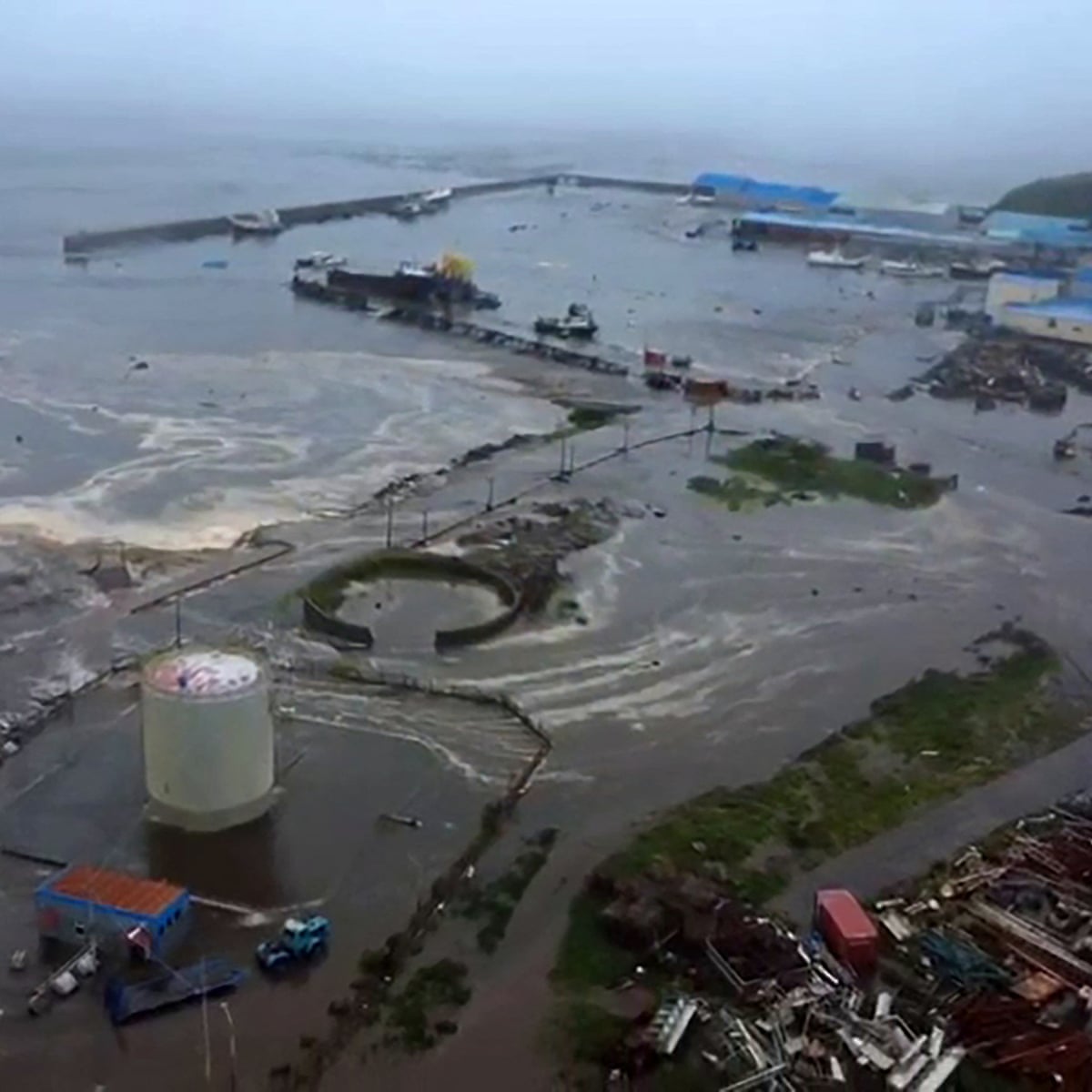
Petropavlovsk-Kamchatsky/Tokyo: A colossal earthquake with a magnitude of 8.8 struck off Russia’s Far Eastern Kamchatka Peninsula on Wednesday, July 30, 2025, sending tsunami waves crashing into Russian coastlines and prompting warnings and advisories across the Pacific, including Japan, Hawaii, and Alaska.
The powerful undersea quake, initially reported as magnitude 8.0 by the US Geological Survey (USGS) but later upgraded to 8.8, occurred at a shallow depth of 19.3 kilometers (12 miles). Its epicenter was located approximately 125 km (80 miles) east-southeast of Petropavlovsk-Kamchatsky, a significant coastal city in Russia’s Kamchatka region. This tremor is being described by officials as one of the strongest earthquakes in decades.
Tsunami Strikes Russian Coast:
In Russia’s Kamchatka region, tsunami waves as high as 3 to 4 meters (10-13 feet) were recorded. Coastal towns, including Severo-Kurilsk in the northern Kuril Islands, experienced significant flooding, leading to evacuations of residents to higher ground. Kamchatka Governor Vladimir Solodov stated that the earthquake was the “strongest in decades,” with initial reports indicating damage to buildings and some individuals sustaining injuries while attempting to flee. Russian state television also broadcast images showing a tsunami wave inundating a coastal settlement, sweeping away structures and debris.
Japan Issues Tsunami Warning:
Following the massive quake, Japan’s Meteorological Agency (JMA) promptly issued a tsunami advisory for its northern and eastern coasts. The first tsunami wave, measuring around 30 centimeters (one foot), was observed in Hokkaido, Japan’s main northern island. Subsequent waves, reaching up to 40 centimeters, were also reported. While no major damage or casualties have been reported in Japan, authorities urged coastal residents to remain vigilant and move to higher ground. There were also reports of whales washing ashore on the Japanese coastline after the waves.
Widespread Pacific Alerts:
The powerful seismic event triggered widespread tsunami warnings and advisories across the Pacific. Tsunami warnings were issued for Alaska and Hawaii, where sirens blared and residents were advised to seek higher ground. A tsunami watch was also in effect for the Pacific Coast of the United States. Furthermore, tsunami alerts and advisories were extended to the Philippines, Taiwan, Papua New Guinea, the Solomon Islands, and Vanuatu, with authorities urging residents in low-lying coastal areas to prepare for potential dangerous currents and flooding. The Pacific Tsunami Warning Center (PTWC) confirmed the tsunami, emphasizing the need for immediate precautions, though it noted that a major tsunami was not expected to strike Hawaii, but sea level changes and strong currents could still pose hazards