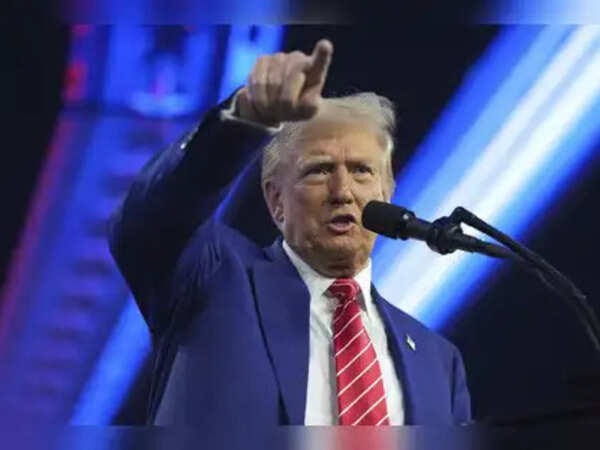
WASHINGTON – U.S. President Donald Trump has officially enacted a new “reciprocal tariff” plan, imposing duties on a wide range of goods from over 70 countries, effective from August 1, 2025. The move, a cornerstone of his trade policy, aims to address what he describes as unfair trade practices and significant trade deficits. India is among the nations most impacted, with a 25% tariff placed on its exports and an additional, unspecified penalty for its ongoing purchases of Russian oil and military equipment.
The new tariff regime, which ranges from 10% to 41%, is based on the principle of “reciprocity,” where the U.S. will match the tariffs that other countries impose on American products. Trump’s administration has stated that the rates were determined based on each country’s trade imbalance with the U.S. and their “strategic alignment.”
Key Details of the New Tariff Plan:
- Reciprocal Tariffs: The core of the policy is to mirror the tariff rates of trading partners, a move Trump has long advocated to ensure what he calls “fair trade.”
- India’s 25% Tariff: India’s exports now face a 25% duty, a rate that is higher than many other Asian nations. This decision comes despite ongoing negotiations for a bilateral trade agreement between the two countries. The U.S. has a significant trade deficit with India, which the Trump administration is seeking to reduce.
- Russia Penalty: Trump has also singled out India for its close ties with Russia, particularly its continued imports of Russian crude oil and military hardware. He announced an “additional penalty” for these transactions, a move that links trade policy with geopolitical strategy and targets India’s strategic autonomy.
- Trade Deficit Focus: Trump’s administration has consistently highlighted the U.S. trade deficit with India, which stood at approximately $45.7 billion in 2024. The new tariffs are a direct attempt to level the playing field and boost American manufacturing and exports.
India’s Reaction:
The announcement has elicited a swift and varied response from India. - Official Government Stance: India’s Commerce and Industry Minister, Piyush Goyal, stated in parliament that the government is “studying the implications” of the U.S. decision. He assured that the government is committed to taking “all necessary steps to safeguard and promote national interests” for Indian farmers, workers, entrepreneurs, and small and medium-sized enterprises.
- Industry Concern: The Indian industry has voiced serious concerns about the potential impact on its key export sectors. Experts warn that the new tariffs will hit textiles, gems and jewelry, seafood, agricultural products, and electronics particularly hard. The Federation of Indian Export Organisations (FIEO) has expressed disappointment, though some analysts remain hopeful that the tariffs are a “short-term phenomenon” and that a comprehensive trade deal could be finalized soon, leading to a reduction in the rates.
- Political Opposition: Opposition parties, including the Indian National Congress, have criticized the government’s foreign policy, calling the new tariffs a “failure” of Prime Minister Narendra Modi’s diplomatic efforts.
International Reaction:
The global response to Trump’s new tariffs has been mixed, with some countries seeing it as a victory and others condemning the move as disruptive and harmful to global trade. - Canada: Canada has been a strong critic, with its Chamber of Commerce calling the tariffs “fact-less turbulence.” President Trump’s administration increased tariffs on Canadian imports from 25% to 35%, citing Canada’s alleged failure to curb the flow of fentanyl into the U.S.
- Thailand and Cambodia: In a contrasting response, both Thailand and Cambodia welcomed their new tariff rates of 19%, viewing them as a “major success.” This was a significant reduction from the 36% tariff initially threatened. The outcome came after diplomatic intervention from the Trump administration.
- Taiwan: Taiwan is facing a 20% levy but has expressed hope for further reductions through ongoing negotiations. The country’s vice president emphasized the importance of maintaining strong trade relations with the U.S.
- Global Markets: The new tariffs have created uncertainty in global markets, with Asian equities mostly falling as investors contemplate the potential impact on the world economy.
In essence, Trump’s new reciprocal tariff plan has created a significant trade crisis, forcing nations to re-evaluate their trade relationships and diplomatic strategies with the U.S. The coming months will be critical as countries like India determine their next steps in response to this new era of trade protectionism.