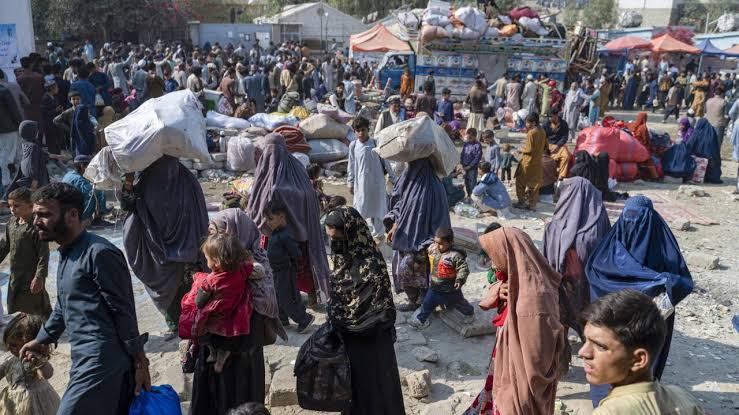
ISLAMABAD, PAKISTAN — The government of Pakistan has officially begun the process of repatriating and deporting Afghan refugees, with a new phase of its “Illegal Foreigners Repatriation Plan” now targeting those holding expired Proof of Registration (PoR) cards.
This latest development follows the expiration of the cards on June 30, 2025, which has rendered an estimated 1.3 million Afghan refugees in Pakistan without legal status.
The Ministry of Interior has informed provincial authorities that while voluntary returns should be encouraged immediately, the formal deportation process for PoR cardholders will commence on September 1, 2025. This move is an expansion of a similar campaign launched in late 2023, which initially focused on undocumented Afghans and has already seen hundreds of thousands of people return to Afghanistan.
Pakistan’s government justifies the mass repatriation by citing national security concerns, including a surge in militant attacks it attributes to some Afghan nationals. Officials have also accused the Taliban government of harboring militants.
However, this policy has been met with strong condemnation from the international community. The United Nations High Commissioner for Refugees (UNHCR) has urged Pakistan to halt the forced returns, warning that the deportation of registered refugees—many of whom have lived in the country for decades—is a violation of the principle of non-refoulement.
This international legal principle prohibits returning asylum seekers to a country where they would likely face persecution. The UNHCR has expressed particular concern for the safety of women and girls being sent back to Taliban-ruled Afghanistan.
In a recent statement, a UNHCR spokesperson noted that the agency has received reports of arrests and detentions of Afghans across Pakistan, including PoR cardholders, even before the official September 1 deadline.
The mass returns are creating a severe humanitarian crisis in Afghanistan, which is already grappling with a fragile economy and limited resources. The influx of returnees, combined with similar deportations from neighboring Iran, is putting immense pressure on aid organizations and straining basic services like housing and healthcare.
While some news outlets report that the new policy applies only to PoR cardholders, others suggest that it may also affect Afghan Citizen Card (ACC) holders, another category of refugees with temporary registration. The situation remains fluid and is under close observation by international human rights bodies.