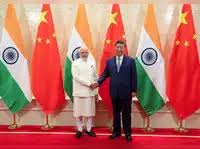
TIANJIN, CHINA: During the recent Shanghai Cooperation Organization (SCO) summit in Tianjin, Prime Minister Narendra Modi raised the critical issue of cross-border terrorism, receiving a commitment from Chinese President Xi Jinping for increased cooperation in combating the menace. The discussions, held on the sidelines of the summit, were a focal point of international media attention, coming amidst a backdrop of escalating global trade tensions.
Prime Minister Modi, in his address, emphasized that terrorism in all its forms poses a grave threat to regional and global peace. While not directly naming any country, he made a clear reference to the need for a unified and decisive approach, stating that “countries that use cross-border terrorism as an instrument of policy must not be spared criticism by this forum.” He reiterated India’s firm stance that there can be no double standards on such a serious matter.
In his bilateral meeting with President Xi, Modi raised the issue directly, pointing out that both India and China have been impacted by terrorism. According to a briefing by India’s Foreign Secretary, Vikram Misri, PM Modi told President Xi that “peace and tranquility at the border is like an insurance policy for India-China ties.” He also made a pitch for mutual support in tackling terrorism, and “received understanding and cooperation from China.”
International and Chinese Media Reactions
The meeting and the subsequent statements garnered significant coverage from global media outlets, which viewed the interaction as a crucial moment in the evolving dynamics between India, China, and the West.
Al Jazeera highlighted the meeting as an indication of a potential shift in India’s foreign policy. “India committed to improving ties with China, Modi tells Xi before SCO meet,” read a headline. The report suggested that the new tariffs imposed by the US on Indian goods may have prompted a re-evaluation of India’s strategic alliances. Al Jazeera’s Katrina Yu, reporting from Tianjin, stated that Modi “had made the calculation that he should be moving closer to Beijing,” signaling that the days of the US using India as a counterweight to China might be over.
The New York Times focused on the “striking split” between the US and India. The paper’s front-page coverage highlighted how India was “losing patience” with US trade policies, adding that Xi Jinping was using the SCO event to “flaunt China’s global pull.”
The Financial Express, quoting US media reports, noted that the visit “signals that India has many options beyond dependence on America.” The article suggested that India’s “historically non-aligned” status felt “vindicated by the events of the past few months,” referring to the new US tariffs.
Chinese State Media and Social Platforms also reacted positively to the visit. Global Times, a state-affiliated newspaper, ran editorials emphasizing the need for “Asian unity” to counter Western influence. On Chinese social media platforms like Weibo, users praised PM Modi’s “tough stance” against the US tariffs, with one widely circulated post stating, “Modi’s move this time is really ruthless.” This sentiment was seen by analysts as an effort by Chinese media to portray a growing alignment with India on certain geopolitical issues, particularly trade.
The discussions on terrorism, while a standard feature of SCO declarations, took on added significance due to the bilateral context. The summit’s final declaration is expected to include a strong condemnation of terrorism, and India’s successful effort to secure a specific pledge from China on this matter is seen as a diplomatic win, even as significant challenges remain on other issues, including border disputes and connectivity projects.