In a major escalation of tensions between the United States and Venezuela, U.S. President Donald Trump announced today that Venezuelan President Nicolás Maduro and his wife, Cilia Flores, have been captured by U.S. forces and flown out of the country following a large-scale military operation. The announcement marks a historic and highly controversial development in international relations and could reshape geopolitical dynamics in the Western Hemisphere.
U.S. Military Operation and Trump’s Announcement
President Trump wrote on his social media platform that the United States had “successfully carried out a large-scale strike against Venezuela and its leader,” saying that Maduro and his wife were taken into custody and transported out of Venezuelan territory in an operation conducted in conjunction with U.S. law enforcement agencies. Trump did not disclose the exact location to which Maduro was taken or specify the legal status under which he will be held.
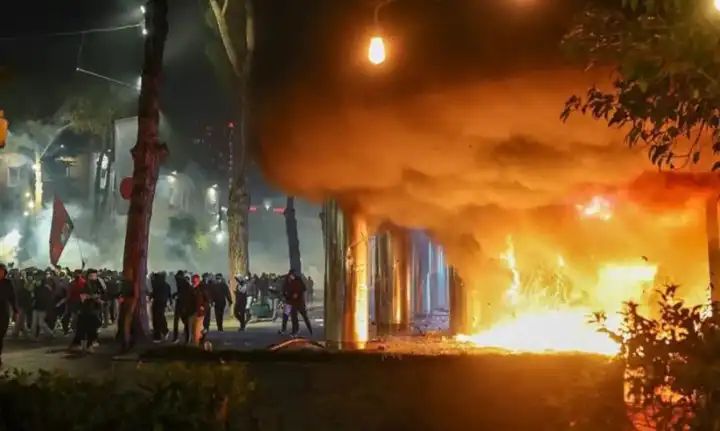
The military action reportedly involved multiple strikes on Caracas and key Venezuelan military sites, with explosions heard across the capital in the early hours of Saturday. Reports from various outlets describe blasts near strategic locations, contributing to chaos and confusion throughout the city.
Context and U.S. Justification
The United States has increasingly applied military and diplomatic pressure on the Maduro government over recent months, citing allegations that the Venezuelan leader presides over a regime involved in narcotics trafficking and corruption. Maduro has been under indictment in U.S. courts since 2020 on drug-related and “narco-terrorism” charges, and Washington previously offered substantial rewards for information leading to his capture.
Trump described the operation as a significant success and indicated further details would be provided in an official briefing. Secretary of State Marco Rubio and senior administration officials framed the development as a step toward ensuring accountability for crimes allegedly committed by the Maduro regime.
Venezuelan Government Response
The Maduro government has vehemently rejected the U.S. narrative, accusing Washington of orchestrating an “imperialist attack” on Venezuelan sovereignty. Venezuela’s Vice President, Delcy Rodríguez, demanded proof of life and information about the whereabouts of Maduro and his wife, asserting that the country remains under threat. Caracas declared a state of emergency and called on citizens to resist what it describes as unlawful foreign aggression.
International Reaction and Regional Tensions
Global reactions have been swift and sharply divided. Regional allies of Venezuela, including Russia, Iran, Colombia, and Cuba, condemned the U.S. action, labeling it a violation of international law and a dangerous precedent for foreign intervention. Some nations called for urgent meetings of the United Nations Security Council to address the situation.
Meanwhile, supporters of the operation in segments of U.S. political circles characterized it as a long-awaited move against an authoritarian leader accused of widespread abuses and criminal activity.
Uncertainties and Legal Implications
Despite Trump’s assertion that Maduro is in U.S. custody, independent verification of the capture remains limited, and international observers are still attempting to verify details. The legal framework for holding a sitting head of state in U.S. custody, particularly following a military strike in another country, raises complex questions about international law, sovereignty, and due process.
Outlook
As nations across the world monitor developments, this unprecedented event signals a potentially new chapter in U.S.–Latin America relations. How Venezuela’s political structure adapts in Maduro’s absence, and how diplomatic and legal processes unfold in the coming days, will be critical to understanding the full impact of this extraordinary claim.