Washington / Caracas:
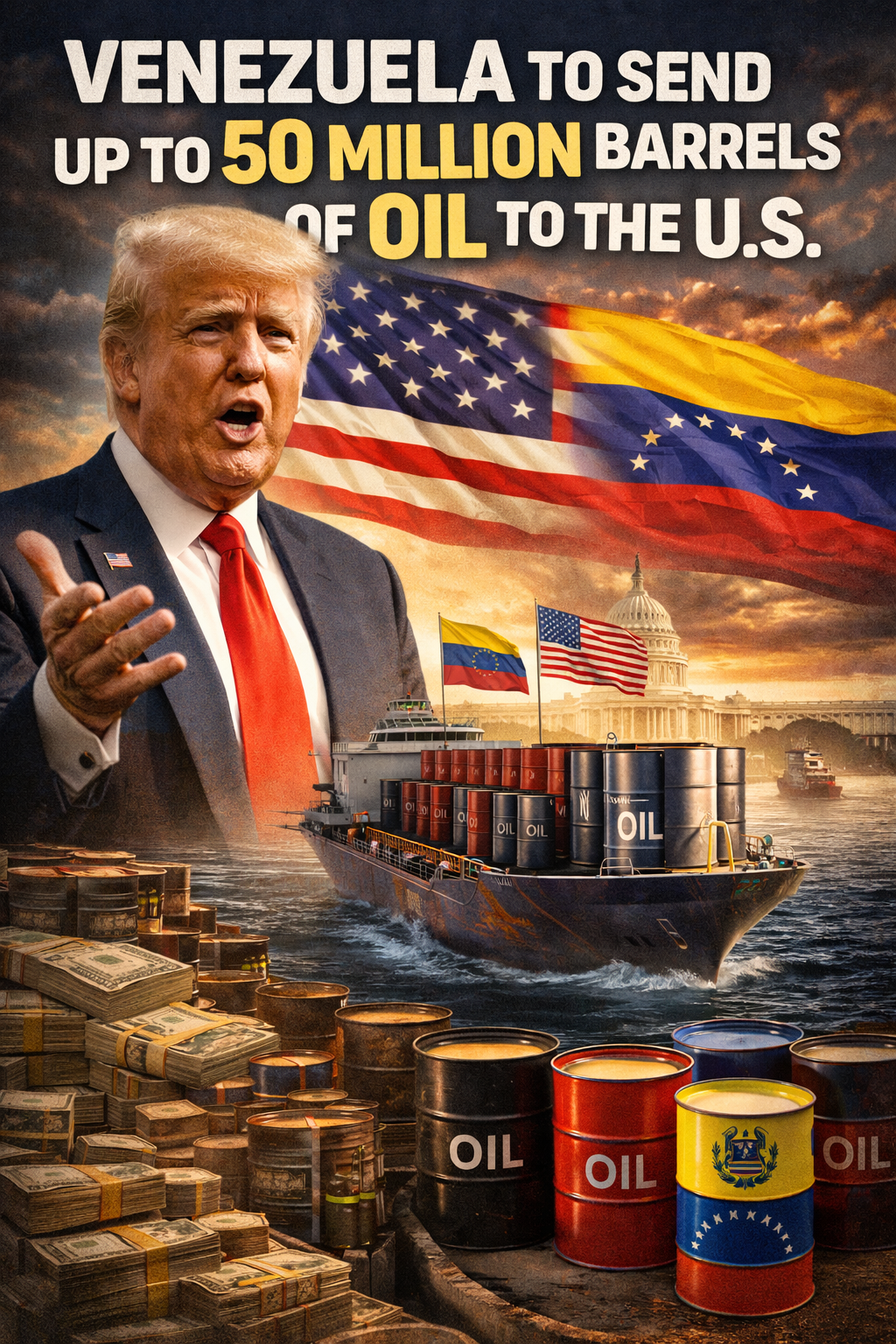
In a major geopolitical announcement, U.S. President Donald Trump said that Venezuela’s interim authorities will transfer between 30 million and 50 million barrels of oil to the United States—a move he said will benefit both nations and comes amid dramatic political upheaval in Venezuela.
President Trump revealed the plan in a post on his social media platform, Truth Social, on Tuesday. In the message, he said the Venezuelan crude oil to be delivered is “high-quality, sanctioned oil” and will be sold at market prices, with the proceeds controlled by him as President of the United States. Trump stated that the funds would be used in ways that support both the Venezuelan and American people.
Under the arrangement, the oil will be transported on storage ships and brought directly to unloading docks in the United States, according to Trump, who has directed U.S. Energy Secretary Chris Wright to implement the plan immediately.
Context and Strategic Implications
The announcement follows a U.S. military operation in Venezuela over the weekend that led to the capture of Venezuelan President Nicolás Maduro and his subsequent transfer to the United States on federal charges. The upheaval has reshaped political dynamics in Caracas and set the stage for a significant shift in U.S.–Venezuela relations.
Trump framed the forthcoming oil transfer as a strategic step to stabilize energy supplies and reinforce U.S. influence in Latin America. He said the move would help harness Venezuela’s vast petroleum resources—among the largest in the world—and redirect them toward the U.S. market at a time of global energy uncertainty.
Economic and Market Reactions
Industry analysts estimate that at current prices, 30–50 million barrels could be worth up to $2–3 billion, representing a significant infusion of crude into the U.S. market. However, the transfer and control of Venezuelan oil revenues by the U.S. president have raised questions among energy experts, foreign policy analysts, and international legal observers about sovereignty, legality, and long-term market impact.
U.S. Energy Sector Engagement
Alongside the announcement, the White House has reportedly scheduled meetings with senior executives from major U.S. oil companies to discuss reopening involvement in Venezuela’s energy sector. Representatives from firms such as Chevron, ExxonMobil, and ConocoPhillips are expected to attend discussions on future collaboration and investment strategies.
Venezuela’s Response and Regional Impact
Venezuelan government officials and allies have strongly condemned the U.S. actions, with some denouncing the capture of Maduro as illegal and the oil transfer as an infringement on national sovereignty. Interim President Delcy Rodríguez has rejected foreign interference and declared national opposition to the U.S. move.
The plan has significant implications for global energy markets, U.S.–Latin America relations, and the future of Venezuela’s troubled oil industry—once among the most productive in the world but crippled in recent years by economic decline and international sanctions.