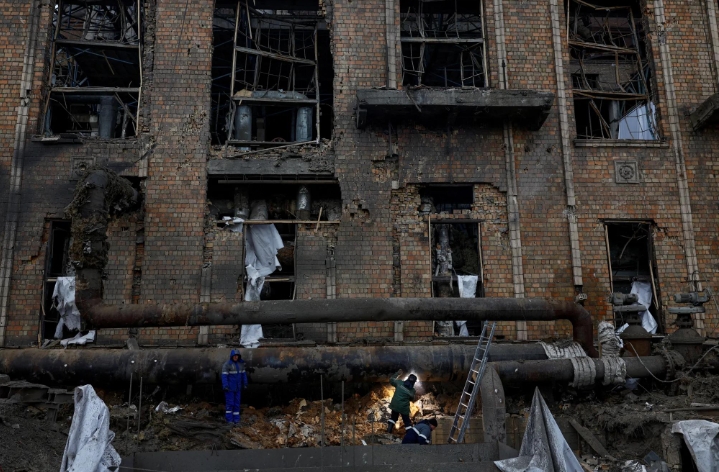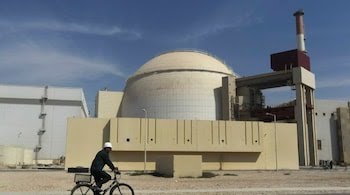
Russia has issued a stark warning that any Israeli strike on Iran’s Bushehr nuclear power plant could lead to a disaster akin to the 1986 Chernobyl catastrophe. The warning was delivered by both Russia’s state nuclear energy corporation and the Ministry of Foreign Affairs, as tensions between Israel and Iran continue to rise amid ongoing military escalations.
“A Very Dangerous Move”: Russia’s Reaction
Maria Zakharova, spokesperson for the Russian Foreign Ministry, said the consequences of any attack on the Bushehr facility would be “unpredictable” and could result in large-scale regional devastation. “This is an extremely dangerous move,” Zakharova said, emphasizing that it would be a direct violation of international law and humanitarian norms.
Echoing her remarks, Alexey Likhachev, Director General of Rosatom, Russia’s state atomic energy corporation, warned that a strike on the Bushehr plant could spark a “Chernobyl-style disaster.” He also confirmed that some Russian personnel at the site have been temporarily evacuated, although core staff continue to operate the facility.
Initial reports from an Israeli military spokesperson had suggested that the Bushehr site was among the nuclear facilities targeted in recent strikes against Iran. However, shortly after, another Israeli official contradicted this claim, stating that it was a “mistake” and that there was no confirmation of an actual strike on Bushehr, which lies along Iran’s Persian Gulf coast.
Israel has recently launched several operations against Iranian nuclear sites, targeting locations such as Natanz, Isfahan, and Arak. However, the status of the Bushehr plant remains ambiguous.
Amid growing concerns of a broader regional war, Russian President Vladimir Putin on Thursday expressed his willingness to mediate between Israel and Iran. He stressed the need to avoid further military escalation, warning that any armed conflict could destabilize the entire Middle East.
In a parallel statement, Russian Deputy Foreign Minister Sergei Ryabkov said Moscow had conveyed to former U.S. President Donald Trump the serious risks of supporting Israeli military action. “We urged Washington not to fuel this crisis,” Ryabkov stated, adding that a nuclear disaster in the Persian Gulf would have global implications.
The situation has alarmed several global powers and international agencies. The International Atomic Energy Agency (IAEA) is reportedly monitoring developments closely. Concerns are growing across the Gulf region, with Qatar and other neighboring countries warning of environmental and security threats in the event of a nuclear incident.
In January, Russia and Iran had signed a strategic cooperation agreement related to nuclear energy. At the same time, Moscow continues to maintain formal diplomatic relations with Israel, adding complexity to its mediation efforts.
DateEventJune 13Israel begins airstrikes on Iranian nuclear sites, including alleged targeting of Bushehr.June 16–17Russia condemns the attack as a violation of international law.June 18Zakharova warns of “unforeseen consequences.” Rosatom alerts about nuclear risk.June 19Putin offers to mediate. Israeli spokesperson walks back Bushehr attack claim.
Russia warns that an Israeli attack on Iran’s Bushehr nuclear plant could result in a catastrophic nuclear event similar to Chernobyl.
Israel initially claimed to have struck the site, but later denied it.
Russian officials, including President Putin and Foreign Ministry Spokesperson Zakharova, have called for restraint and offered mediation.
The international community, including the IAEA, is closely watching the unfolding situation.