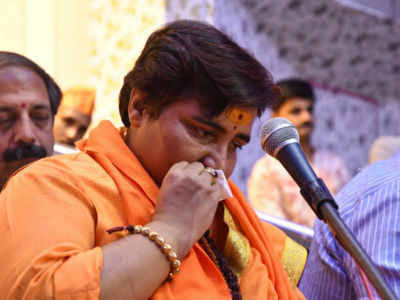
Mumbai, India: Following her acquittal in the 2008 Malegaon blast case, former BJP MP Pragya Singh Thakur has made a serious allegation, claiming that she was tortured and coerced by police officers to name several high-profile individuals, including then Gujarat Chief Minister and now Prime Minister Narendra Modi, as being involved in the conspiracy.
On Thursday, a special National Investigation Agency (NIA) court in Mumbai acquitted all seven accused in the Malegaon blast case, including Thakur and Lieutenant Colonel Prasad Purohit, citing a lack of “cogent evidence” and major flaws in the initial investigation. The verdict brought an end to a nearly 17-year-long legal battle.
Speaking to the media after the verdict, Pragya Singh Thakur claimed that during her interrogation by the Anti-Terrorism Squad (ATS), officers tortured her and pressured her to falsely implicate key figures. “They told me to take PM Modi’s name, as at the time I was staying in Surat (Gujarat),” she alleged.
“They said if I did not take the names, then they will torture me. The names include Uttar Pradesh Chief Minister Yogi Adityanath, Sudarshan ji, Indresh ji, Ram ji Madhav, and many more, which I can’t recall at the moment.”
Thakur, who had previously made similar claims of torture, said that she was illegally detained even in the hospital after she had fainted and her lungs had collapsed. She stated that she is writing her story to reveal the full truth of her ordeal. “This is a victory of religion, victory of Sanatan dharma, and victory of Hindutva,” she declared.
Background and Court’s Observations:
The 2008 Malegaon blast, which killed six people and injured over 100, was initially investigated by the Maharashtra ATS. The case gained significant political and communal attention with allegations of “Hindu terror” and “saffron terror” during the UPA regime. The NIA took over the probe in 2011 and later filed a supplementary chargesheet, which dropped charges under the MCOCA and pointed to gaps in the evidence gathered by the ATS.
The special NIA court, in its judgment, made several key observations:
- Lack of Evidence: The court found that the prosecution failed to prove that the bomb was placed on a motorcycle owned by Thakur. The court noted that the chassis and engine numbers of the motorcycle were tampered with, and there was no reliable evidence to link it to her.
- Investigative Lapses: The court highlighted serious flaws in the investigation, including contamination of the crime scene, a lack of crucial evidence, and inconsistent forensic reports.
- Pragya Thakur’s Claims: While the court acknowledged Thakur’s allegations of ill-treatment, it noted that no evidence was presented to support her claims. The judgment also referred to a 2011 Supreme Court order that had rejected her claims of illegal custody and torture.