Afghanistan’s bold move to harness its rivers threatens to deepen regional rifts
In a move with far-reaching geopolitical implications, Afghanistan’s Taliban administration has announced plans to accelerate the construction of multiple dams on the Kunar River — a vital transboundary waterway that flows into Pakistan. The directive, reportedly issued by Supreme Leader Mawlawi Hibatullah Akhundzada, underscores Kabul’s intent to assert control over its water resources amid rising tensions with Islamabad.
According to reports from Afghan and regional media, the Ministry of Water and Energy has been instructed to sign contracts with domestic firms to fast-track dam construction along the Kunar River, which originates in the Hindu Kush mountains of eastern Afghanistan before entering Pakistan’s Khyber Pakhtunkhwa province. The 480-kilometre-long river eventually merges with the Kabul River, forming a crucial tributary of the Indus River system that sustains Pakistan’s farmlands and power infrastructure.
Pakistan Warns of “Hostile Act”
The announcement has triggered strong reactions in Pakistan, where officials fear a severe impact on irrigation and hydropower generation.
Balochistan’s provincial information minister Jan Achakzai warned that unilateral dam construction by Afghanistan would amount to a “hostile act,” urging Islamabad to take diplomatic and legal steps to safeguard its downstream interests.
“This is not a small matter of engineering — it is a question of survival for our farmers and power sector,” a senior Pakistani official told The Express Tribune, stressing that Pakistan’s food and water security could be jeopardized by reduced river flows.
Observers note that this development coincides with a period of escalating Afghan–Pakistani tensions, marked by border clashes along the Durand Line, disputes over refugee repatriation, and mutual accusations of harbouring insurgent groups.
No Treaty, No Safeguards
Unlike the Indus Waters Treaty that regulates water sharing between India and Pakistan, there is no formal agreement between Afghanistan and Pakistan governing the use of the Kunar–Kabul River system.
Experts warn that the absence of a bilateral framework leaves Islamabad vulnerable to unilateral upstream developments.
“Afghanistan has every sovereign right to develop its waters,” said an Afghan water-policy analyst in Kabul, “but the lack of dialogue increases the risk of misunderstanding and regional friction.”
(RadioFreeEurope/RadioLiberty)
Afghanistan’s Water Sovereignty Drive
The Taliban leadership has justified the move as part of a national drive for self-reliance, aimed at reducing dependence on neighbouring countries and stimulating economic growth through hydropower generation and agricultural irrigation.
The Kunar River project aligns with the regime’s ongoing infrastructure push, which includes the massive Qosh Tepa Canal — a controversial project diverting water from the Amu Darya — and several small hydropower schemes across northern provinces.
“The era of giving away our water for free is over,” a Taliban-affiliated spokesperson told Afghan media, framing the initiative as a matter of economic justice and sovereignty.
(The Diplomat)
Economic and Technical Hurdles
Despite the bold announcement, experts point out that Afghanistan faces major technical, financial, and logistical obstacles. Decades of conflict have left the country’s hydrological data infrastructure weak, while sanctions and limited international recognition hinder access to foreign investment and engineering expertise.
Analysts also question whether Afghanistan currently has the capacity to build large storage dams without outside assistance. Still, some reports suggest that Chinese companies have expressed interest in supporting future dam projects — a development that could reshape South Asia’s hydro-political landscape.
Unverified Reports and Claims
While official Afghan channels have not yet disclosed specific project sites or timelines, reports from local and international media indicate that the Taliban leadership has already begun initial contract processes with Afghan companies.
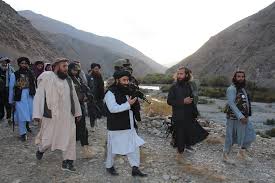
One report from The Economic Times cites a Baloch activist’s claim that Taliban commanders recently visited Kunar province to inspect potential dam sites aimed at “cutting water flow to Pakistan.” However, these claims remain unverified by independent sources.
(The Economic Times)
High Stakes for Pakistan
For Pakistan, the stakes are enormous. The Kunar and Kabul rivers contribute significantly to the Indus Basin, feeding agricultural heartlands and supporting major hydropower installations such as Warsak and Tarbela dams. Any upstream disruption could reduce water availability, increase drought risk, and undermine Pakistan’s already fragile food and energy security.
Hydrologists warn that even moderate upstream storage can affect river dynamics, particularly in dry seasons — compounding the effects of climate change, glacial retreat, and rainfall variability across the region.
The Road Ahead
As of now, no official timeline has been announced for dam construction on the Kunar River. Still, statements from Afghan officials indicate that the Taliban government remains committed to asserting water sovereignty “without external interference.”
Diplomats in both capitals acknowledge that the absence of a formal dialogue mechanism poses a serious challenge. Without a framework for joint management or dispute resolution, analysts fear the issue could evolve from an environmental concern into a flashpoint of regional instability.
Conclusion
The Taliban’s push to build dams on the Kunar River signals a new chapter in Afghanistan–Pakistan relations — one defined by hydro-political competition rather than cooperation.
While Afghanistan frames the move as a step toward national development, Pakistan views it as an existential threat to its water security.
Whether this tension leads to dialogue or confrontation will depend on both nations’ willingness to acknowledge that, in South Asia’s fragile river systems, every upstream gain risks a downstream loss.
Sources:
The Express Tribune (Pakistan), RadioFreeEurope/RadioLiberty, The Diplomat, Amu TV.