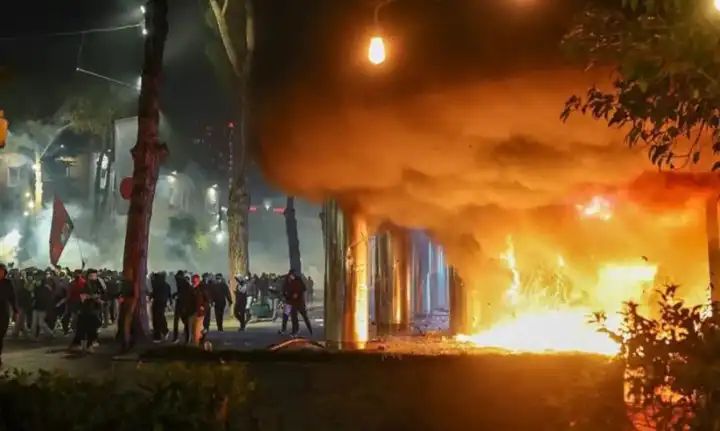
DAR ES SALAAM, TANZANIA: A deepening political and humanitarian crisis has gripped Tanzania following violent clashes that erupted after the country’s disputed general election on October 29. The main opposition party, Chadema, has alleged that nearly 700 people have been killed nationwide in a sweeping crackdown by security forces, while the government has firmly denied the claims, dismissing them as exaggerated and unfounded.
Post-Election Chaos and Conflicting Claims
The unrest began shortly after the announcement of results in the contentious presidential election, which opposition leaders say was marred by widespread irregularities, including the disqualification of key candidates and reports of ballot manipulation. Large-scale protests broke out in major urban centres such as Dar es Salaam, Mwanza, and Arusha, with demonstrators demanding a rerun of the election.
According to Chadema Party Spokesman John Kitoka, the violence that followed resulted in around 700 deaths over three days, including 350 in Dar es Salaam and more than 200 in Mwanza. The figures were reportedly compiled through party networks visiting hospitals and morgues. Anonymous diplomatic and security sources quoted by AFP corroborated the estimate, saying the actual toll could be “between 700 and 800 nationwide.”
However, Amnesty International has reported a much lower figure, citing “at least 100 confirmed deaths,” while emphasizing the difficulty of verifying numbers amid a government-enforced communications blackout. The United Nations Human Rights Office (OHCHR) confirmed receiving credible reports of at least ten deaths caused by security forces using live ammunition against protesters in several cities.
Government Denial and Information Blackout
The Tanzanian government has categorically denied the opposition’s claims. Foreign Minister Mahmoud Thabit Kombo, speaking to Al Jazeera, stated, “Currently, no excessive force has been used. There’s no number until now of any protesters killed.” The government has not released any official casualty figures, instead accusing the opposition of spreading misinformation to destabilize the country.
Army Chief General Jacob John Mkunda described the protesters as “criminals” and vowed that the military and police would continue operations “to restore law and order.”
The government has imposed a nationwide internet shutdown and restricted foreign journalists, making it almost impossible for independent observers to verify events on the ground. Human rights groups have condemned the blackout as an attempt to conceal the scale of the violence.
International Outcry
The international community has reacted with alarm to the reports emerging from Tanzania. UN Secretary-General António Guterres expressed deep concern over the “loss of life and deteriorating situation,” urging all parties to exercise restraint and engage in peaceful dialogue. He also called for a “thorough and impartial investigation” into allegations of excessive force by security agencies.
The Commonwealth Secretary-General echoed these sentiments, urging Tanzanian authorities to uphold the right to peaceful protest and allow transparent, independent scrutiny of the government’s response.
Worsening Political Crisis
Tanzania, once regarded as one of East Africa’s most stable democracies, has faced growing criticism over the shrinking space for political dissent in recent years. The latest unrest has drawn comparisons to the violent post-election episodes in 2020 and 2015, both marked by allegations of repression and vote manipulation.
As of now, the true death toll remains unverified, with hospitals overwhelmed and access to affected regions severely restricted. Analysts warn that unless communication channels are restored and independent investigations allowed, Tanzania risks sliding further into authoritarianism and prolonged civil unrest.
Source: AFP, Al Jazeera, Amnesty International, United Nations Human Rights Office (OHCHR), The Guardian (UK).