Washington / Gaza, Nov 15, 2025 — The United States is reportedly crafting a controversial long-term strategy to divide the Gaza Strip into two distinct zones: a “Green Zone,” under Israeli and international military control for reconstruction, and a “Red Zone,” left in ruins, according to U.S. military planning documents obtained by The Guardian.
Key Elements of the Plan
- Division of Gaza
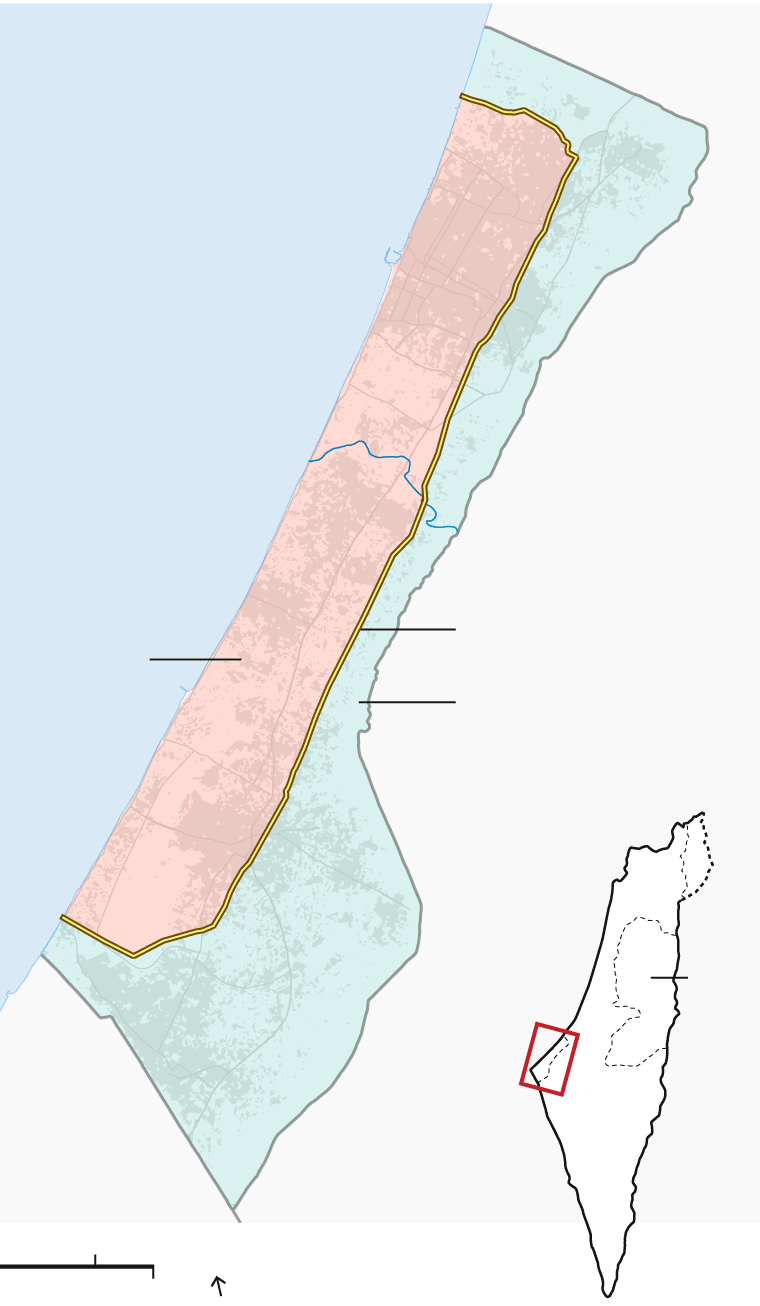
- The proposed “Green Zone” would cover part of eastern Gaza, with joint Israeli and foreign forces stationed there.
- A demarcation, referred to as the “Yellow Line,” is central to the plan. West of this line would be the “Red Zone,” which is not slated for immediate reconstruction.
- International Stabilization Force (ISF)
- A multinational force, designated as the International Stabilization Force (ISF), is proposed to operate within the Green Zone.
- Initial deployment would be small, possibly a few hundred troops, but could grow to as many as 20,000, according to U.S. planning documents.
- The ISF would work in tandem with Israeli troops, including jointly manning “crossing points” along the controlled boundary.
- Reconstruction and Civilian Movement
- Reconstruction efforts are proposed to begin inside the Green Zone. The plan envisions aid, infrastructure rebuilding, and possibly safe areas to encourage Palestinians to relocate there gradually.
- U.S. officials reportedly hope that as the Green Zone becomes more stable and developed, more Palestinians from the Red Zone will voluntarily move in.
- However, the U.S. has not clearly defined a timeline for full civilian repatriation or reconstruction.
- Long-Term Vision
- The plan forms part of a bigger 20-point proposal put forward under Donald Trump’s administration, which calls for the demilitarization of Gaza, a new Palestinian police force, and a phased—conditional—Israeli withdrawal.
- A transitional administrative body, called the Board of Peace, is also proposed under this framework to temporarily govern Gaza during reconstruction.
- Challenges and Criticism
- The proposal has drawn strong criticism. Some analysts and humanitarian groups warn that dividing Gaza in this way risks creating a permanent occupation, rather than a genuine political solution.
- Comparisons have been made to past U.S. “Green Zone” concepts in Iraq and Afghanistan, where secure enclaves became symbols of foreign occupation.
- Several countries are reportedly reluctant to contribute troops. For example, Jordan, despite being floated as a potential contributor, has publicly rejected deploying its forces.
- U.S. Secretary of State Marco Rubio has argued that the force’s deployment is not meant to permanently divide Gaza, but critics remain skeptical.
- Humanitarian Concerns
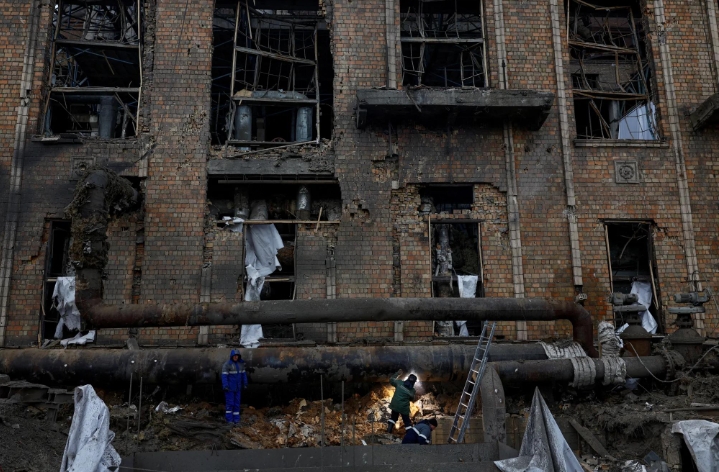
- According to U.S. planning documents, more than 80% of Gaza’s buildings, including schools and hospitals, were destroyed or damaged during the war, making reconstruction urgent.
- Nearly 2 million Palestinians are concentrated in the proposed Red Zone, which might remain without major rebuilding in the short term.
- Some fear the reconstruction model may incentivize movement into the Green Zone in a way that pressures Palestinians to abandon their homes in the Red Zone.
Implications and Reactions
- Strategic Implications: The plan could entrench Israeli security influence over eastern Gaza, while giving the U.S. and its allies a long-term role in stabilization.
- Geopolitical Risk: Potential troop contributors have expressed concern about being seen as propping up an “occupation,” while others have refused participation outright.
- Human Rights Risk: Critics argue the Green/Red division may institutionalize a two-tier system for Palestinians — giving international protection to some, leaving others in a devastated no-man’s-land.
- Sovereignty Questions: The proposed Board of Peace, if set up, may sideline traditional Palestinian political structures in favor of a trusteeship model favored by Western powers.