Marajo Island, Brazil:
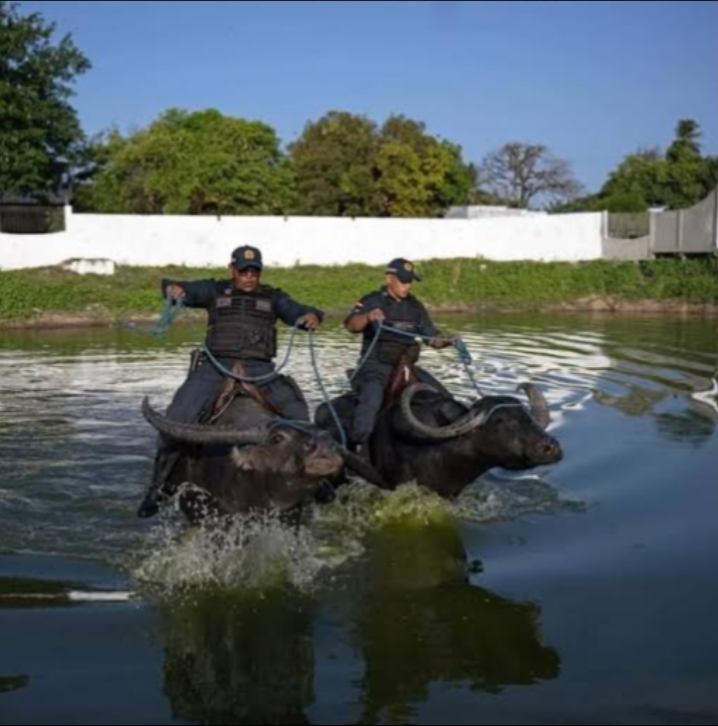
In one of the most unusual and visually striking policing methods in the world, officers on Brazil’s northern Marajó Island are patrolling floodplains and forests not on horses or in vehicles, but on Asian water buffalos. The distinctive practice has turned into a symbol of the island’s culture and environmental adaptation.
A Unique Island Geography
Marajó, located in the Amazon delta, is one of the world’s largest river islands. Much of the terrain becomes marshy or submerged during the rainy season, making conventional vehicles nearly useless. Long stretches of the island are accessible only through muddy wetlands, shallow water channels, or swamp-like grasslands.
How Asian Water Buffalos Arrived Here
Asian water buffalos—now iconic to Marajó—were introduced in the late 19th century, reportedly after animals survived a shipwreck and swam ashore. Over time, they adapted remarkably well to the island’s waterlogged ecosystem. Today, buffalo populations on the island are believed to outnumber humans, according to several local studies.
These animals are strong swimmers, stable in mud, and capable of moving effortlessly through flooded terrain—traits that have made them invaluable to daily life on the island.
Birth of the ‘Buffalo Police’ Unit
In the town of Soure, the 8th Battalion of the Military Police has formed a dedicated mounted unit that uses buffalos for patrol duty. These officers are popularly known as the “Buffalo Soldiers.”
- Special saddles are fitted onto the buffalos to accommodate officers.
- Unit insignia and official plaques depict buffalos carrying weapons—a symbol of strength and heritage.
- The buffalo-mounted patrols have become an essential means of reaching remote communities during harsh weather.
Senior officers say that buffalos quickly learn to respond to commands and adapt to policing routines, making them surprisingly effective partners in law enforcement.
Why Buffalos Work Better Than Vehicles or Horses
- Superior Movement in Flooded Terrain:
Buffalos can wade through mud and water where patrol cars, bikes, and even horses fail. - Speed and Stability:
In wet marshlands, buffalos provide more stability and traction than any motor vehicle. - A Cultural and Social Symbol:
Buffalos are deeply embedded in Marajó’s identity—featured in festivals, local art, and tourist activities. - Officer Training:
Police personnel undergo special training to ride and control buffalos confidently. - Cost-Effective and Practical:
In many situations, maintaining buffalos is cheaper and more sustainable than operating vehicles.
Challenges and Environmental Concerns
Despite their usefulness, the sheer population of buffalos raises ecological concerns such as overgrazing and habitat pressure. Animal welfare advocates also monitor how working buffalos are treated, especially those used in tourism.
Meanwhile, the unusual policing style itself has become a tourist attraction, drawing visitors who want to witness or photograph the “buffalo patrols.”
Future Outlook
The “Buffalo Police” of Marajo may appear unconventional, but this approach blends environmental adaptation, cultural heritage, and practical policing. As climate and environmental conditions continue to shape daily life in the Amazon region, Marajó’s buffalo-mounted unit stands out as a uniquely successful model of law enforcement tailored to local geography.