Kolkata: The Border Security Force (BSF) has flagged a significant upsurge in the number of undocumented Bangladeshi nationals attempting to cross back into Bangladesh from West Bengal. According to a senior BSF officer, the surge is closely linked to the ongoing Special Intensive Revision (SIR) of electoral rolls in the state.
“Quantum Jump” in Crossings
The BSF officer, quoted by the Press Trust of India, said that while illegal crossings used to be in the low double digits just a few years ago, they are now consistently in the three-digit range every day. Some media reports have suggested as many as 500 people crossing daily, but the officer clarified that the real number lies more realistically between 100 and 150 or more per day.
Fear of SIR Drives the Exodus
According to officials, many long-term undocumented immigrants are now attempting “reverse migration” because they fear the SIR process. The SIR involves door-to-door verification of voter lists by Booth Level Officers, and many undocumented people worry they may be identified, detained, or lose their ability to live and work in India legally.
Hotspots along the Border
The spike in crossings is especially noticeable along unfenced frontier stretches in North 24 Parganas and Malda districts of West Bengal.
A particularly alarming incident occurred at the Hakimpur check-post near Swarupnagar (North 24 Parganas), where the BSF intercepted a single large group of hundreds of suspected undocumented Bangladeshi nationals — men, women, and children — who were camping near the “Zero Line,” the border demarcation.
Verification and Repatriation Challenges
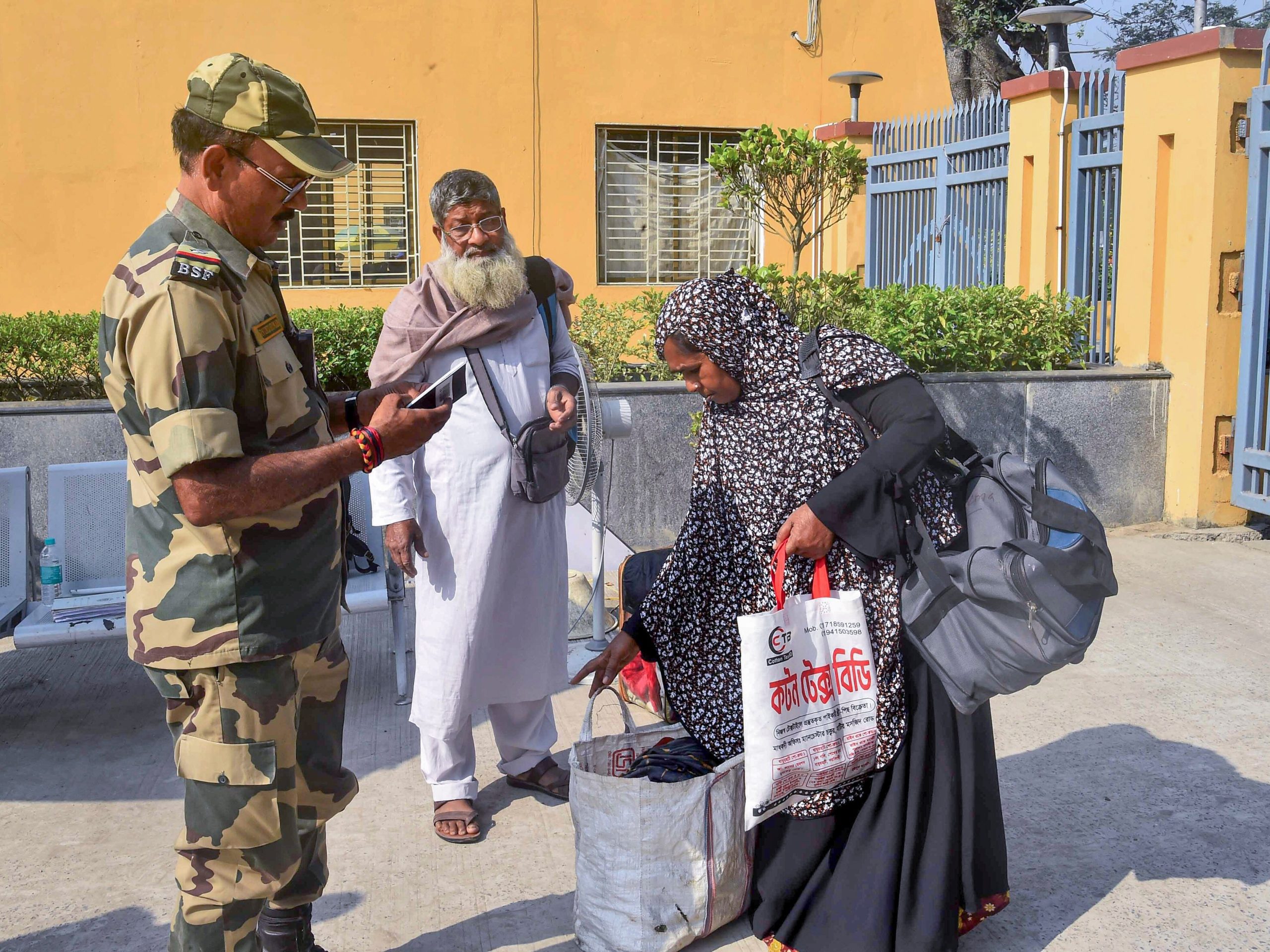
- Every person intercepted by the BSF undergoes biometric checks, questioning, and criminal-background verification.
- Many of those apprehended admit to having lived in Kolkata’s suburbs for years, working as laborers, domestic workers, or in construction — but without valid documents.
- The BSF is coordinating with the Border Guard Bangladesh (BGB) to repatriate those who do not have a criminal record.
- However, the logistical burden is significant: detaining large numbers of people for long periods is difficult, so processing and return is being managed on a case-by-case basis.
Broader Implications
Security officials warning that not all returnees are necessarily economic migrants — some may have criminal or extremist links, according to BSF sources.
Meanwhile, the political debate is intensifying. The SIR-driven clampdown is being seen by many as unearthing a long-standing issue of illegal migration — and raising serious questions about border management, undocumented populations, and the balance between civil rights and national security.