HONG KONG — Hong Kong’s Democratic Party, the city’s longest-standing and once-influential pro-democracy force, has formally voted to dissolve itself, marking a watershed moment in the territory’s political history. The decision reflects deepening pressure from Beijing and the practical collapse of organized political opposition under Hong Kong’s security-focused governance system.
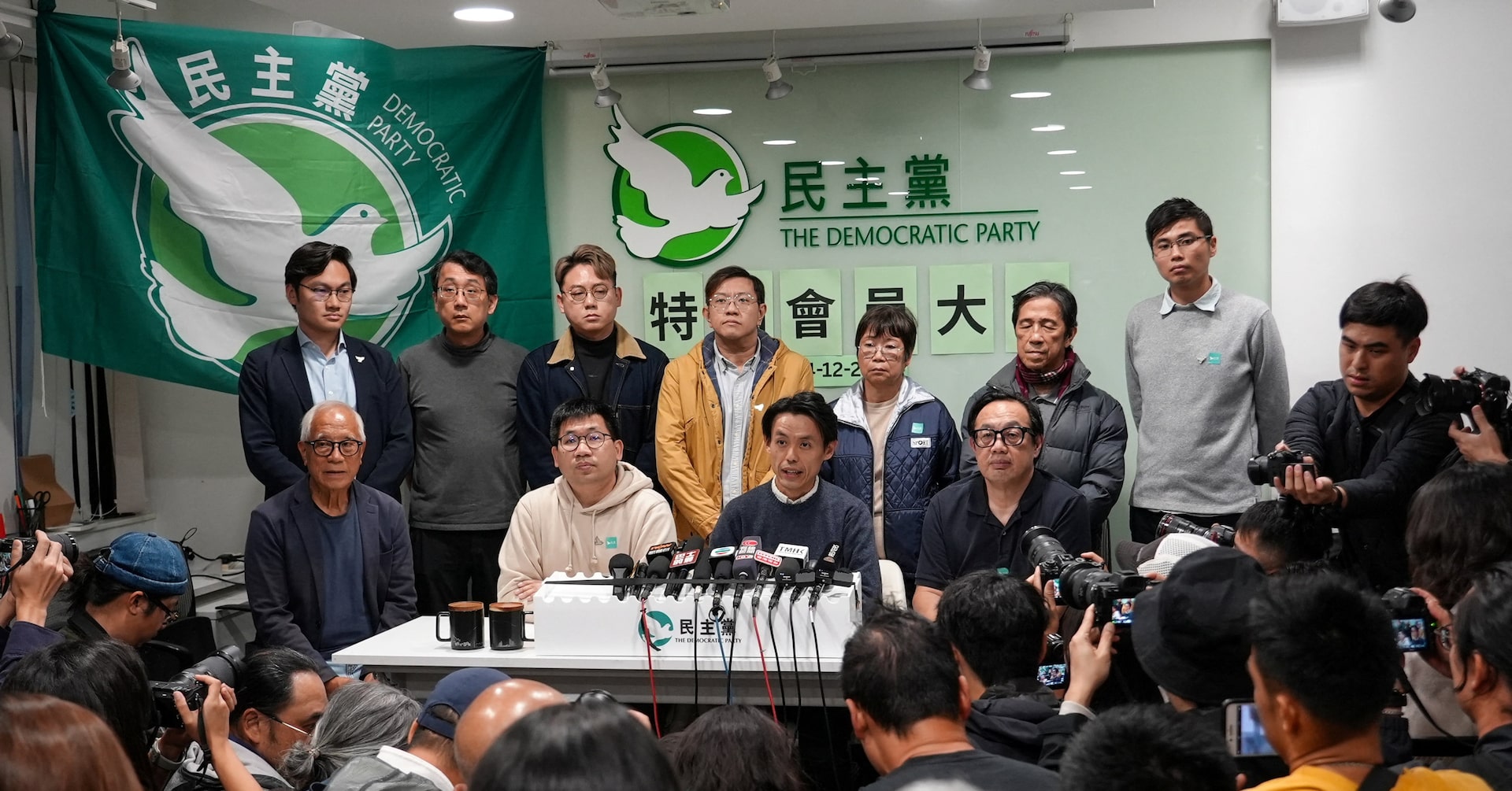
At an extraordinary general meeting on Sunday, December 14, 2025, the party’s members overwhelmingly backed a motion to disband and begin liquidation proceedings. Of 121 ballots cast, 117 supported dissolution, with four blank ballots recorded, Democratic Party Chairman Lo Kin-hei announced after the vote.
In remarks to reporters following the vote, Lo acknowledged the difficulty of the moment but framed the decision as pragmatic. “Yet as the times have shifted, we now, with deep regret, must bring this chapter to a close,” he said, noting that the current political environment was a central factor in the party’s choice.
The Democratic Party’s dissolution brings to a symbolic end a political movement that spanned more than three decades. Founded in 1994, shortly before Hong Kong’s 1997 return to Chinese sovereignty, the party once held significant influence in local councils and the Legislative Council (LegCo), advocating for universal suffrage, transparency and expanded civil liberties.
Former senior member Yeung Sum, speaking at a press conference after the vote, called the outcome a stark symbol of Hong Kong’s political backsliding under Beijing’s tightened control, but expressed hope that the spirit of democracy could endure. “If Hong Kong people believe that democracy is the way to go, I believe that they will keep on striving for democracy,” he said.
Impact of National Security Law and Beijing Pressure
The Democratic Party’s dissolution comes against the backdrop of an increasingly restrictive political environment shaped by Beijing’s National Security Law (NSL), imposed in 2020, and subsequent reforms that have curtailed dissent and reshaped electoral politics in Hong Kong.
Under the NSL, authorities have prosecuted numerous pro-democracy figures. Several veteran Democratic Party leaders, including Albert Ho and Wu Chi-wai, have been arrested or jailed on national security charges in recent years. Meanwhile, electoral reforms introduced in 2021 mandated a “patriots only” rule requiring loyalty-screened candidates for public office, effectively excluding pro-democracy parties from meaningful participation in elections.
The Democratic Party joins a growing list of civil society groups, trade unions and political organizations that have shut down in the past five years, including the Civic Party and smaller activist networks. Those closures have occurred in the context of broader enforcement actions under the NSL and a sharp crackdown on public dissent after the 2019 protests.
Senior party members had previously reported that officials — or intermediaries linked to Beijing — warned the Democratic Party to cease operations or face serious consequences, including the threat of arrest. Lo and other leaders have described the choice to disband as a means to protect members amid increasing legal and political pressure.
Reactions and Wider Significance
International reactions to the dissolution have been muted but reflective of broader concerns over political freedoms in Hong Kong. Observers and democracy advocates see the move as another milestone in the erosion of the city’s unique political space under the “One Country, Two Systems” framework that once guaranteed a high degree of autonomy.
Within Hong Kong, the vote underscores the reality that formal party-based political opposition has effectively been dismantled. Lo Kin-hei said the Democratic Party’s legacy of advocacy and public service was something its members would carry forward personally, even as the formal organisation ceases to exist.
As the city transitions into a new era of governance dominated by pro-Beijing leadership, analysts say the dissolution of the Democratic Party stands as a stark reminder of how rapidly Hong Kong’s political landscape has transformed in a matter of years.