Copenhagen:
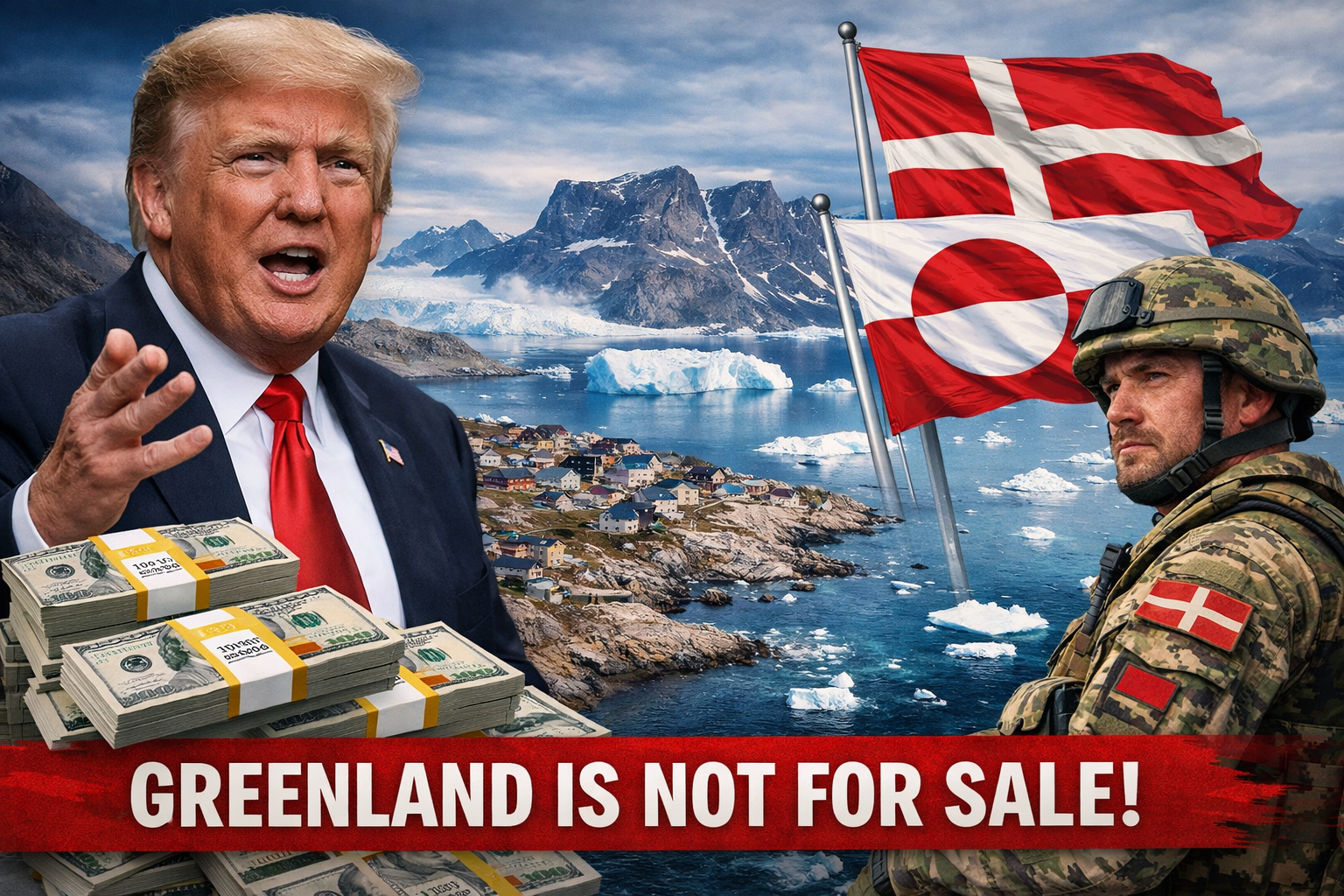
Former US President Donald Trump has once again stirred international controversy by reviving his long-standing idea of acquiring Greenland, this time reportedly proposing an unprecedented financial incentive — offering up to $100,000 to each Greenlandic citizen — in a bid to “achieve the objective by any means,” according to sources familiar with the discussions.
Though no formal proposal has been submitted through official diplomatic channels, reports suggest that informal discussions and strategic conversations have intensified among Trump’s advisers and allied policy circles. The move is being portrayed by Trump’s camp as a “strategic investment” aimed at strengthening US national security, expanding Arctic influence, and countering growing Russian and Chinese activity in the polar region.
Trump’s Strategic Argument
Trump has long argued that Greenland’s geopolitical location, vast mineral resources, and strategic military value make it crucial for American interests. The former president, who had first floated the idea during his presidency in 2019, is said to believe that direct economic incentives to Greenland’s population could overcome resistance and accelerate negotiations.
Greenland, an autonomous territory with around 56,000 residents, is rich in rare earth minerals, oil, gas, and uranium — resources considered vital for future energy and defense technologies.
Denmark’s Firm Rejection
Denmark, which retains control over Greenland’s foreign and defense policy, reacted sharply to the renewed speculation. Danish officials reiterated that Greenland is not for sale, calling the reported offer “absurd,” “disrespectful,” and a violation of international norms.
“This is not a real estate transaction. Greenland’s future can only be decided by its people — not by foreign powers waving chequebooks,” a senior Danish government representative said.
Copenhagen also emphasized that Greenland enjoys self-rule and that any discussion about sovereignty without Greenlandic consent is unacceptable.
Greenland’s Response
Leaders in Greenland echoed Denmark’s position, stressing that economic offers cannot replace self-determination, cultural identity, and political autonomy. Greenland’s government has repeatedly stated that while it seeks greater economic independence, it does not wish to become a bargaining chip in great-power politics.
International Implications
The renewed controversy has drawn attention across Europe and NATO, with analysts warning that such proposals could strain US–European relations and undermine trust among allies. Experts note that Arctic geopolitics is becoming increasingly sensitive due to climate change opening new shipping routes and access to resources.
Political Undertones
Observers see the revived Greenland narrative as part of Trump’s broader nationalist messaging, appealing to domestic audiences by projecting strength, expansion, and strategic dominance. Critics argue that the approach reflects a transactional worldview that reduces sovereign nations and peoples to economic assets.
As of now, there has been no confirmation of formal negotiations, and Denmark has categorically ruled out any talks on selling Greenland. Still, the resurfacing of the idea has reignited a global debate on sovereignty, ethics, and power politics in the Arctic — one that Denmark insists is already settled.
“Greenland belongs to Greenlanders,” Danish officials reiterated — a message they say Washington should clearly understand.