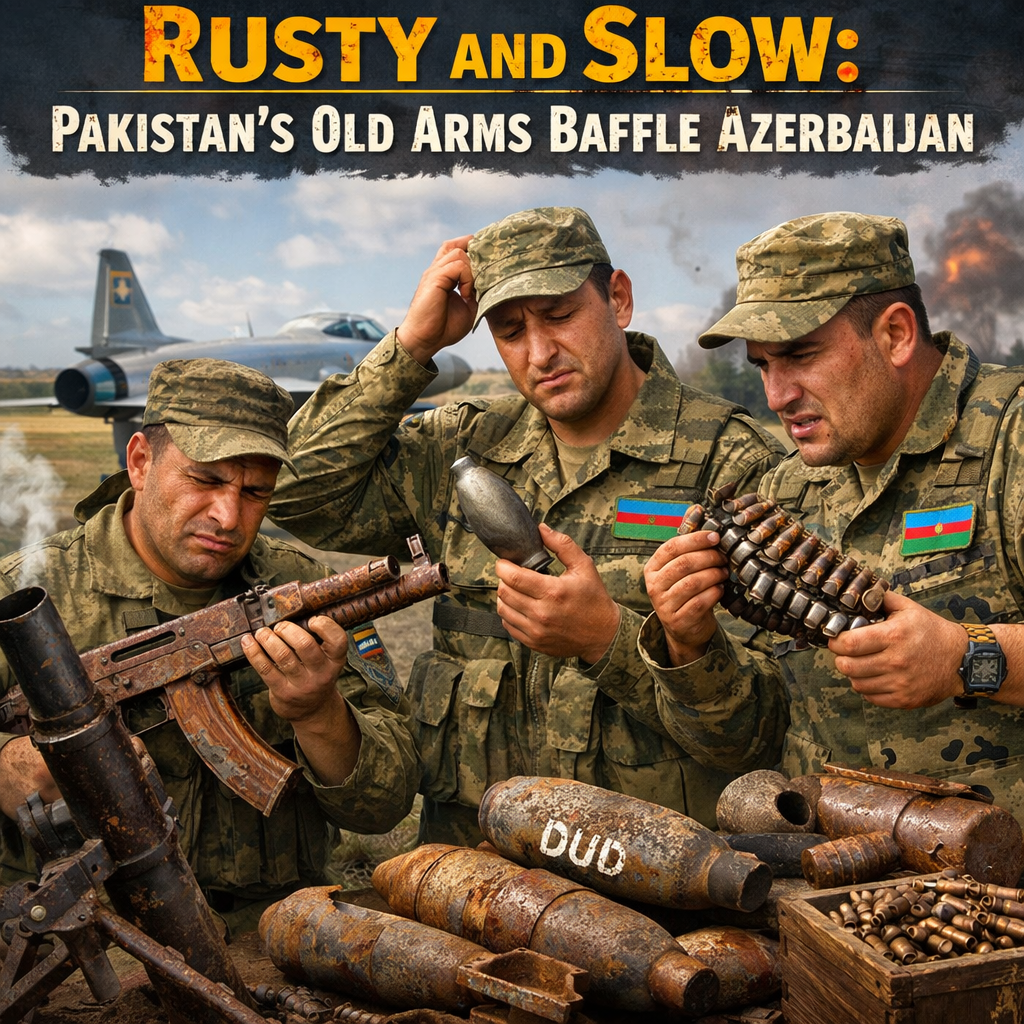
BAKU : A controversy has emerged regarding Pakistan’s arms shipments to Azerbaijan, with reports suggesting that some of the weapons and ammunition supplied are aged, low-quality, and underperforming on the battlefield. Analysts say the issue has caused confusion among troops and raised questions about the reliability of Pakistan’s defence exports.
Background of the Deal
Azerbaijan, amid ongoing tensions with neighboring Armenia, turned to Pakistan for military hardware beyond its traditional suppliers. The package included defence equipment and JF‑17 Thunder fighter jets, under a major deal signed in 2024–25.
However, media reports—including coverage from Navbharat Times—have highlighted potential issues:
- Some ammunition appears old or worn.
- Certain rounds have range failures or performance inconsistencies, suggesting poor propellant quality or outdated stock.
- Defence experts warn that these problems could undermine confidence among current and future buyers.
The Fighter Jet Component
In June 2025, Azerbaijan signed a $4.6 billion contract with Pakistan to acquire 40 JF‑17 Thunder Block III jets, the largest defence export deal in Pakistan’s history.
The jets, co-developed with China, are intended to modernize Azerbaijan’s air force. Analysts, however, note that while the aircraft are modern, they are based on older designs compared to stealth-capable platforms.
Implications
The criticism focuses on Pakistan exporting older or substandard stock, with some defence observers joking that the country is selling “collectibles” rather than cutting-edge equipment.
Key concerns raised include:
- Quality control and maintenance before export.
- Long-term reliability of these systems in combat.
- Possible effects on future defence partnerships.
Summary
- Azerbaijan continues to expand its military ties with Pakistan.
- Some supplied ammunition is reportedly aged and underperforming.
- The controversy highlights questions about quality assurance and reliability of exports, even as major contracts proceed.