By International Desk
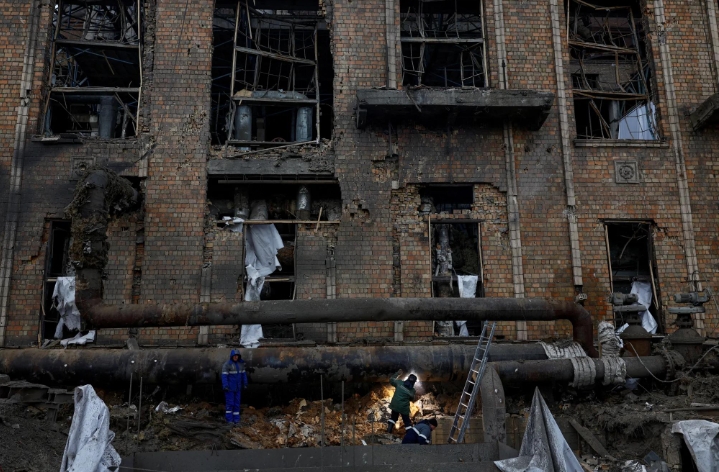
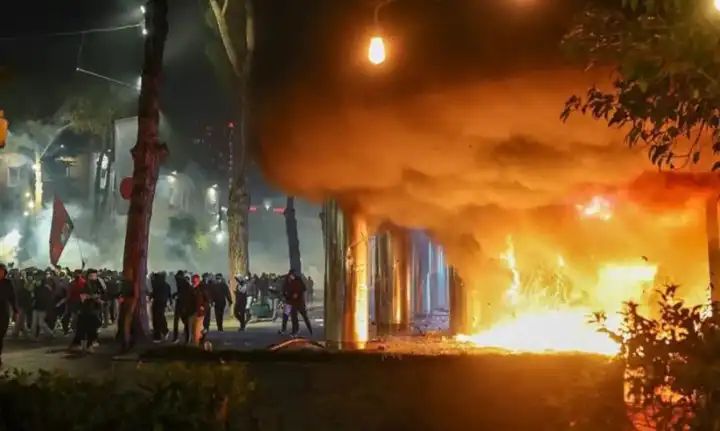
The performance of China’s advanced HQ-9B long-range air defence system has come under renewed scrutiny following coordinated U.S. and Israeli airstrikes on Iranian targets, including sites near Tehran and other strategic cities. Defence analysts and multiple media outlets report that the system, recently acquired by Iran, did not effectively intercept a significant number of incoming missiles and aerial threats during the attacks.
The development has triggered debate among military experts about the operational readiness of Iran’s integrated air-defence network and the real-world combat performance of Chinese-origin systems exported abroad.
Air Defence Performance Questioned
According to defence coverage by The economic Times, the strikes “have again raised spotlights over the Chinese-origin HQ-9B long-range surface-to-air missile system due to its perceived failure in defending key Iranian targets.”
Similarly, reporting by The Times of India noted that the HQ-9B system “appears to have fallen short of its task,” raising broader questions about its effectiveness under combat conditions.
The attacks reportedly targeted high-value installations, including strategic facilities near Tehran. Analysts say the level of damage suggests that Iran’s layered air-defence network — which combines Russian, domestic, and Chinese systems — may have faced coordination or integration challenges during the operation.
Why Iran Bought the HQ-9B
Iran is understood to have procured the HQ-9B from China in recent years to modernise its long-range air defence, particularly after concerns over the performance of older systems such as the Russian S 300PMU-2 in previous confrontations.
The HQ-9B is developed by China Aerospace Science and Industry Corporation and is considered one of China’s most advanced export-grade surface-to-air missile (SAM) systems.
Military analysts describe it as broadly comparable in role to Russia’s S-300 family and the U.S. Patriot systems. The HQ-9B reportedly has an engagement range of up to 250–260 kilometres and is designed to intercept aircraft, cruise missiles, and certain ballistic threats. It features phased-array radar, active radar homing guidance, and the ability to track multiple targets simultaneously.
Iran reportedly deployed the system around strategic sites, including nuclear facilities and major urban centres, as part of a broader effort to strengthen its deterrence posture amid rising regional tensions.
Alleged Operational Shortcomings
During the recent U.S.–Israel strikes, however, reports suggest that the HQ-9B did not prevent multiple incoming projectiles from reaching their intended targets.
Defence observers cited by NDTV indicated that the system may have struggled against advanced stand-off weapons, precision-guided munitions, and potentially stealth-enabled platforms.
Some experts argue that the issue may not lie solely with the missile system itself but with broader operational factors, including:
- Command and control interoperability
- Radar integration across different systems
- Electronic warfare countermeasures
- Real-time targeting coordination
Iran operates a mix of domestically developed systems alongside Russian and Chinese imports. Analysts say such diversity can complicate seamless integration during high-intensity engagements.
Comparisons With Previous Deployments
The HQ-9 series has also faced scrutiny in past regional conflicts. Indian media reports have drawn parallels with the reported underperformance of similar Chinese systems deployed by Pakistan during Operation Sindoor .
While the operational circumstances differ, critics argue that repeated battlefield questions may affect perceptions of Chinese defence exports in global markets.
Strategic and Geopolitical Implications
The controversy surrounding the HQ-9B’s performance comes at a sensitive time for Beijing, which has expanded its role as a major arms supplier in Asia, the Middle East, and Africa.
If battlefield reports continue to highlight shortcomings, defence analysts suggest it could:
- Influence future procurement decisions by importing countries
- Increase demand for upgraded or integrated air-defence architectures
- Trigger internal reviews within Iran’s military command
At the same time, some experts caution that definitive assessments require classified operational data that is not publicly available. Combat performance often depends as much on training, deployment strategy, and electronic warfare environments as on hardware specifications.
The Broader Debate
The events have reignited a broader conversation about modern air defence in an era of precision-guided munitions, hypersonic developments, electronic warfare, and stealth technology. Even advanced long-range systems face increasing pressure against coordinated multi-vector attacks.
While China has promoted the HQ-9B as a capable and cost-effective alternative to Western and Russian systems, its recent battlefield test in Iran is likely to remain under close scrutiny by military planners worldwide.
Further official confirmations from Tehran, Beijing, Washington, or Tel Aviv regarding technical assessments have not yet been publicly released.