Key Developments (Latest Confirmed Updates)
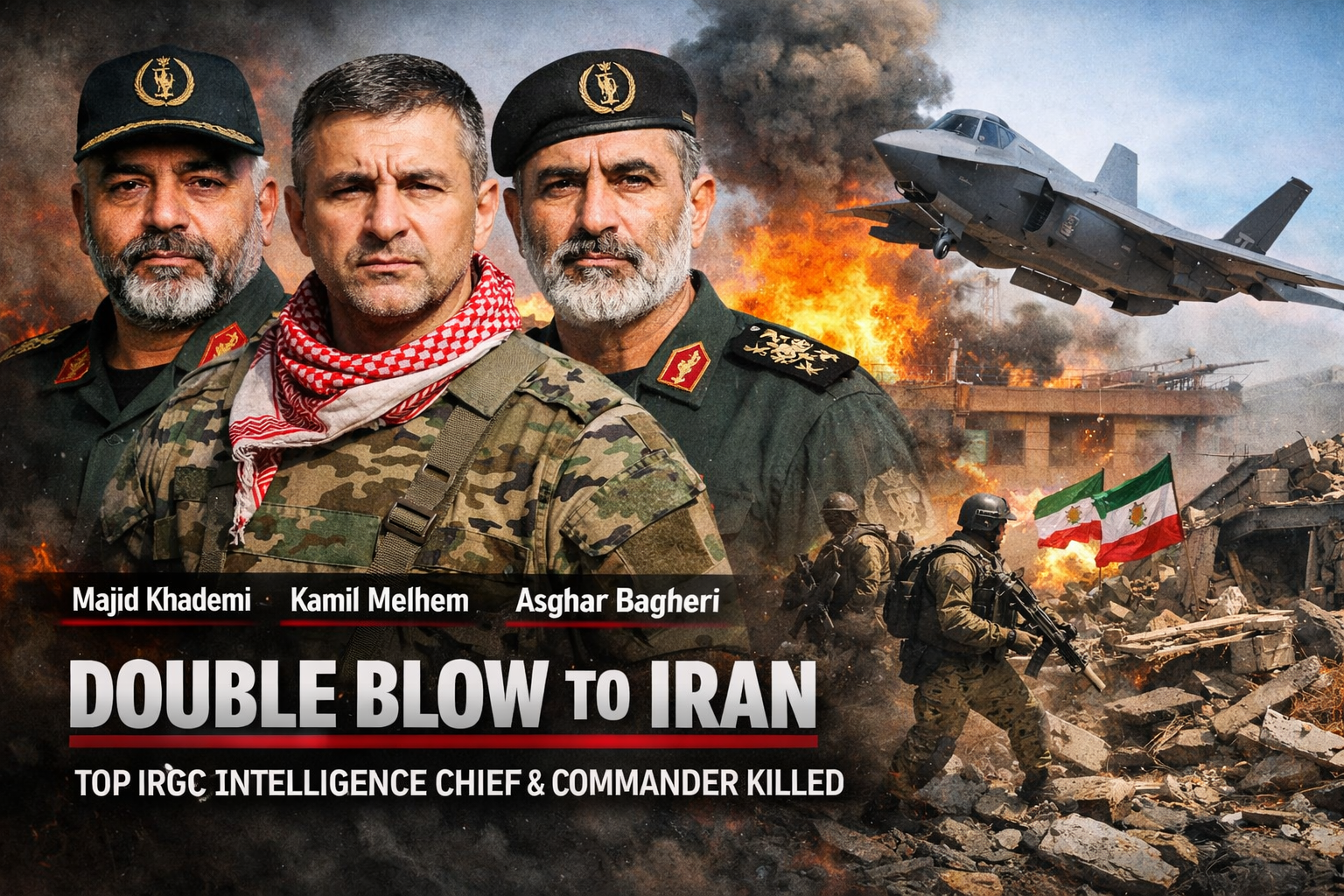
Iran has suffered a major setback following a series of targeted strikes on April 6, 2026, resulting in the deaths of several high-ranking military officials:
- Majid Khadmani– Chief of Intelligence, Islamic Revolutionary Guard Corps (IRGC)
- Kamil Melhem– Senior Artillery Commander, Imam Hussein Division
- Asghar Bagheri– Head of IRGC External Operations Unit
The strikes are widely attributed to Israel , with multiple reports suggesting possible strategic backing from the United States.
Details of the Strike
According to military sources, the operation involved:
- Precision intelligence-led airstrikes
- Simultaneous targeting of multiple high-value locations
- Direct hits on Imam Hussein Division headquarters and fire-control infrastructure
The Israil defends forces described the operation as a major disruption to Iran’s command-and-control systems.
The death of Khademi, a key intelligence figure, is considered a severe blow to Iran’s internal and external security coordination.
Israeli Response
Israeli officials signaled continued operations against Iranian-linked targets.
“We will continue to find and eliminate those who threaten us, wherever they are.”
The military characterized the strikes as part of a broader effort to neutralize strategic threats.
Iranian Reaction
Iran officially confirmed the death of Majid Khademi and condemned the attack.
- Authorities labeled it an act of “enemy aggression”
- Officials warned that retaliation is inevitable, consistent with prior responses to similar incidents
United States (Position)
While the United States has not issued detailed public statements regarding this specific strike:
- Reports indicate possible intelligence or logistical support
- U.S. officials have previously justified such actions as targeting hostile threats and protecting allied interests
Wider War Situation
The conflict in the region has intensified significantly:
- The war has entered its 38th day
- Multiple senior Iranian military figures have been killed in recent weeks
- Missile exchanges between opposing sides continue
Strategically critical zones such as the Strait of Hormuz
are facing disruption, raising global concerns over oil supply and maritime security.
Analysis: What This Means
- 🔻 intelligence network faces serious disruption
- 🔻 IRGC’s command hierarchy shows signs of destabilization
- 🔺 Risk of major escalation across the Middle East increases
- 🔺 retaliatory strikes by Iran grows significantly
Conclusion
The killing of senior commanders from the Imam Hussein Division alongside the IRGC intelligence chief marks a critical phase in what analysts describe as a “leadership decapitation strategy” targeting Iran.
These developments signal a shift toward more precise, high-impact military operations that could push the region into a broader and more dangerous conflict phase.