New Delhi:June 25, 2025 —
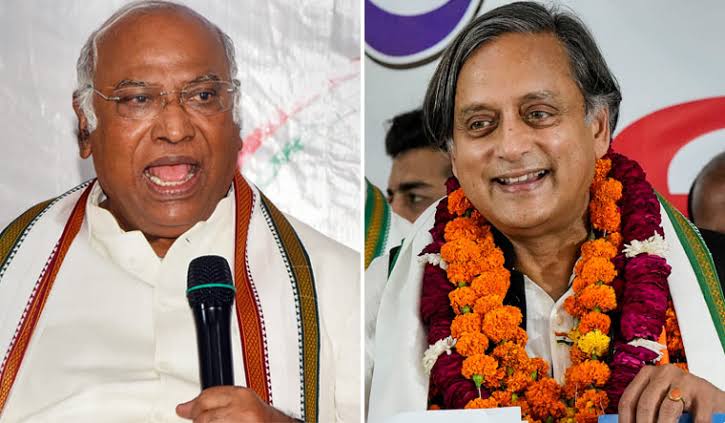
Congress President Mallikarjun Kharge has publicly criticized senior party leader Shashi Tharoor for his repeated praise of Prime Minister Narendra Modi, saying “for some people, Modi comes first.” The remark comes amid internal friction in the Congress Party following Tharoor’s appointment to lead a cross-party delegation on “Operation Sindoor.”
Internal Discontent Surfaces Over Tharoor’s Modi Praise
Kharge’s comments have brought to light the growing ideological divisions within the party, especially after Tharoor lauded Modi’s leadership and global engagement in recent public remarks. This latest episode further fuels speculation about rifts in the Congress camp ahead of crucial parliamentary sessions.
A Clash of Messaging in the Party
Tharoor, a Member of Parliament from Thiruvananthapuram, had earlier referred to Prime Minister Modi as a “prime asset,” praising his energy, dynamism, and willingness to engage with global leaders. His comments were seen by many within Congress as straying from the party line, which has often taken a more critical stance toward the Modi government.
Kharge addressed the issue during a press conference, making a veiled attack:
“We stood together for the nation in Operation Sindoor. We said ‘country first.’ But some say Modi comes first, and the country later. What are we supposed to do with that?”
He added, “Shashi Tharoor’s language is excellent, which is why he remains on the Congress Working Committee. But language alone isn’t enough.”
Tharoor’s recent statements have raised eyebrows within his own party. While intended to promote bipartisan cooperation on national issues, they have instead triggered criticism that he is too accommodating of the ruling BJP leadership.
In response to criticism, Tharoor posted cryptically on social media:
“Don’t ask permission to fly.”
Observers interpret the post as a signal of his independent streak and unwillingness to conform entirely to the party’s internal dynamics.
Party Tensions Ahead of Parliament Session
The controversy comes at a sensitive time for Congress, which is attempting to present a united front while pushing for a special session of Parliament to discuss Operation Sindoor—a campaign aimed at government accountability in matters of national security and military transparency.
Kharge’s swipe suggests deeper discomfort among party leadership about balancing individual voices with organizational cohesion.
As Tharoor continues to occupy a prominent position within Congress while also engaging across party lines, the question remains: Can the party accommodate diverse voices without undermining its core message? Kharge’s latest remarks underline the challenge facing the Congress Party—maintaining unity in a time of political complexity and ideological fluidity.