BJP Alleges Foreign Plot Behind Viral CJP Movement; Allies Warn Against Ignoring Gen Z Anger
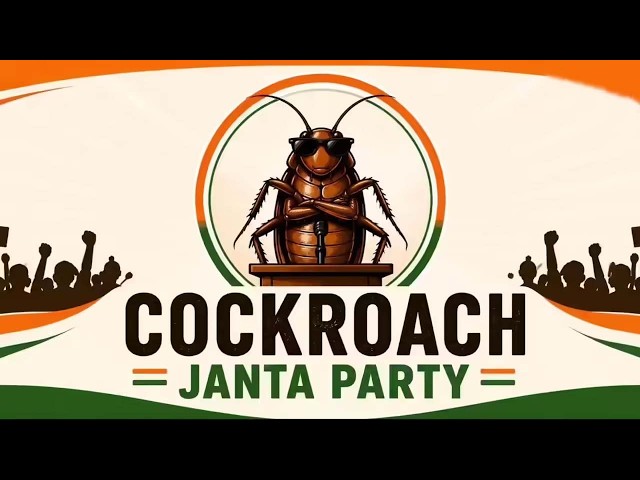
A major political battle has erupted in India over the rapidly growing social media phenomenon known as the Cockroach Janata Party (CJP), a satirical digital movement that has captured the imagination of millions of young internet users.
While the Bharatiya Janata Party (BJP) has alleged that the movement is part of a coordinated foreign-backed attempt to destabilize India, coalition allies and even sections within the ruling camp have warned that merely banning online platforms will not address the growing frustration among India’s youth.
The controversy has now evolved into a wider national debate about unemployment, Gen Z political culture, censorship, meme activism, and the power of social media in shaping public opinion.
What Is the Cockroach Janata Party?
The Cockroach Janata Party (CJP) is not an officially registered political party.
It began as a satirical social media movement led primarily by young digital creators and unemployed youth frustrated with the current socio-economic climate.
Its slogans include:
- “Voice of the Unemployed”
- “Main Bhi Cockroach”
- “Secular. Socialist. Democratic. Lazy.”
The movement quickly transformed into a massive meme-based online protest, particularly among Gen Z users.
Timeline: How the Movement Grew
Phase 1: The “Cockroach” Remark
The controversy reportedly began after remarks linked to observations made during legal discussions on unemployment were interpreted online as comparing unemployed youth to “cockroaches” or “parasites.”
This triggered outrage across social media platforms.
Young users responded by reclaiming the term “cockroach” as a symbol of protest and resistance.
Phase 2: Birth of CJP
Soon after, digital activists launched:
- Instagram pages,
- X (Twitter) accounts,
- YouTube channels, under the name “Cockroach Janata Party.”
Within days:
- follower counts exploded,
- memes flooded social media,
- and the movement became one of India’s biggest online political trends.
Phase 3: Fuelled by Economic Anxiety
The movement gained further momentum due to:
- unemployment concerns,
- NEET exam controversies,
- exam paper leak allegations,
- economic uncertainty,
- and frustration among students and job seekers.
Many supporters described CJP as:
“A protest against a system that refuses to listen to young people.”
BJP’s Strong Allegations
Senior BJP leader and former Union Minister Rajeev Chandra Shekhar alleged that the movement was not an organic youth reaction but part of a larger international influence operation.
He stated:
“This is not a spontaneous reaction to comments made by the Chief Justice of India. There is a coordinated influence operation being run from abroad. It is the government’s responsibility to identify who is behind it.”
Rajeev Chandrasekhar further claimed:
- foreign actors were trying to destabilize India,
- fake news and manipulated narratives were being spread online,
- and some sections of the opposition were indirectly helping such campaigns.
Government Action and Platform Restrictions
Following intelligence inputs, reports emerged that:
- certain CJP-related X handles were blocked,
- and some social media accounts were restricted.
Senior BJP MP Nishikant Dubey defended the government’s action, saying:
“The government is not afraid. It is the opposition that is losing public support.”
Coalition Allies Raise Concerns
However, not everyone within the NDA coalition agreed with the crackdown.
Leaders from the Telugu Desam Party (TDP), one of BJP’s key allies, warned that suppressing digital youth movements could backfire politically.
TDP parliamentary leader Lavu Srikrishna Devarayalu said:
“Young people now rely on new forms of social media for information. Unless there is clear evidence of foreign interference, such platforms should not simply be banned.”
TDP leaders also pointed to the massive youth support received by actor-turned-politician Vijay and his TVK party in Tamil Nadu as a sign of changing political behaviour among Gen Z voters.
Internal BJP Debate
Political observers say the viral rise of CJP has triggered intense internal discussions within BJP circles.
Some within the broader ruling ecosystem reportedly acknowledge that:
- youth frustration is real,
- meme politics cannot be dismissed lightly,
- and Gen Z communicates politically through humour, irony, and internet culture rather than traditional ideological language.
Why Gen Z Is Different
Analysts believe CJP reflects a new kind of political culture emerging among young Indians.
Unlike earlier generations, Gen Z:
- often avoids traditional party structures,
- prefers decentralized online activism,
- communicates through memes and satire,
- and uses humour as a form of political dissent.
Experts compare the phenomenon to:
- meme activism during the Arab Spring,
- Hong Kong’s digital protest culture,
- and online youth movements seen globally in recent years.
Opposition Reactions
Opposition leaders have argued that:
- unemployment and economic anxiety are the real issues,
- censorship cannot suppress public anger,
- and the government should focus on addressing youth concerns rather than restricting online speech.
However, some opposition figures also cautioned that:
- misinformation could spread rapidly,
- and anonymous online movements could potentially be manipulated.
A Symbol Beyond Memes
What started as an internet joke has now evolved into:
- a symbol of youth anger,
- a reflection of economic frustration,
- and a debate over free speech in digital India.
The “cockroach” symbol itself has become a viral online identity, with:
- profile pictures,
- parody manifestos,
- rap videos,
- AI-generated content,
- and meme campaigns spreading across platforms.
The Bigger Questions
The CJP controversy has raised several critical questions for Indian politics:
- How deep is youth frustration in India?
- Can meme culture influence future elections?
- How should governments respond to digital protest movements?
- Where is the line between national security and free speech?
- Is Gen Z reshaping Indian politics through internet culture?
Conclusion
The Cockroach Janata Party may not be a formal political party, but it has become one of the most talked-about digital movements in India.
Whether it remains a temporary viral trend or evolves into a lasting form of Gen Z political expression, the controversy has already exposed the growing disconnect between traditional politics and a new internet-driven generation.