Mahesh C
Tantric Vidya, often misunderstood or mystified in modern discourse, is one of the most profound and esoteric spiritual sciences rooted in ancient Indian traditions. While commonly misrepresented as a dark or occult practice, its authentic form is a sacred, systematic approach to harnessing the divine energy inherent in the universe. The Rishis (seer-sages) of ancient India were deeply immersed in this wisdom, exploring its depths for spiritual evolution and cosmic understanding.
The Meaning and Scope of Tantra.
Definition:
The term Tantra originates from the Sanskrit root “tan”, meaning “to expand” or “to weave”. Tantra is a system that aims at the expansion of consciousness and liberation through ritual, meditation, mantra, and inner transformation.
Core Components:
Tantric practice involves three interwoven elements:

Mantra: Sacred sound vibrations or syllables.
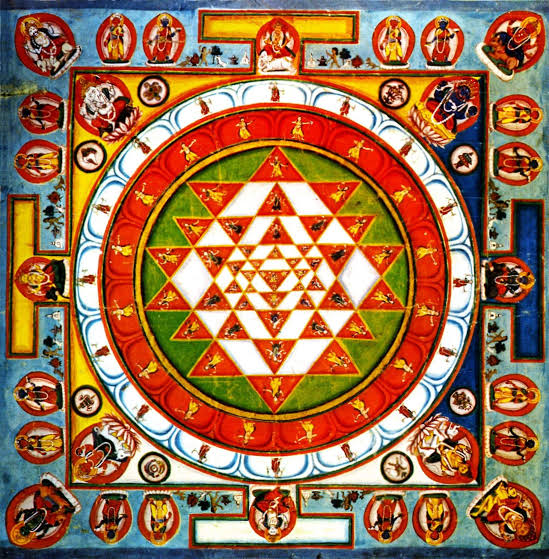
Yantra: Geometric diagrams used in meditation or rituals.
Tantra (as technique): Ritualistic methods, philosophical doctrines, and sadhana (spiritual disciplines).
Historical and Scriptural Foundations
Textual Sources:
Tantra is rooted in a wide range of scriptures known as Agamas and Nigamas, which complement the Vedas. These are typically divided among:

Shaiva Agamas: Worship of Shiva
Shakta Tantras: Worship of the Goddess (Shakti)
Vaishnava Pancharatra: Worship of Vishnu
Kaula and Samaya schools: Especially in Sri Vidya
Contrary to Vedic Orthodoxy:
While the Vedas were primarily focused on fire rituals and external worship, Tantras offered a more internalized, mystical, and symbolic approach, often accessible to a wider range of people beyond the rigid caste hierarchies.
Role of Indian Rishis in Tantra

Key Rishis Involved:
Vasishta: Associated with mystical knowledge and advanced yogic powers.
Viswamitra: Known for his transformation from a king to a Brahmarishi through intense tapas.
Agastya: Revered in Southern traditions; credited with spreading Tantric knowledge across Dravida desa.
Durvasa: Known for his temperament and mastery of esoteric energies.
Patanjali (Yoga and Tantra overlap): Though more known for Yoga Sutras, some traditions link him to Tantra and Kundalini science.
Contributions:
These Rishis not only practiced but also codified Tantric teachings. Through meditation, intense austerity, and direct perception (darshana), they explored the hidden energies (prana, kundalini) and subtle bodies (sukshma sharira).
Tantric Worship and Practice

Shakta Worship:
Tantra is particularly associated with the worship of the Goddess or Shakti in forms like Kali, Tripura Sundari, Durga, Bhairavi, and Chandi. These forms symbolize not just deities but cosmic principles.
Sri Chakra and Sri Vidya:

Among the most sophisticated forms of Tantra is the Sri Vidya tradition, which uses the Sri Chakra – a sacred geometric symbol representing the body of the Goddess and the entire universe. The Rishis revered this as the ultimate path to liberation (moksha).
Kundalini Shakti:
A major Tantric concept is the Kundalini, the dormant spiritual energy believed to lie at the base of the spine. Awakening this energy through specific techniques leads to spiritual enlightenment.
Philosophical Underpinnings
Non-duality (Advaita):
While Tantra encompasses both dualistic and non-dual philosophies, many schools (like Kashmir Shaivism and Sri Vidya) promote a non-dual view: that the individual soul (jiva) and the cosmic soul (Shiva/Shakti) are one.
Use of Ritual and Symbolism:
Every aspect of Tantric practice – from the placement of deities to ritual diagrams – carries deep symbolic meaning. Rather than literal worship alone, these practices guide the practitioner into higher states of consciousness.
Misconceptions and Clarifications
Black Magic Association:

Popular media and misunderstanding have linked Tantra with sorcery and black magic. While certain sub-traditions exist (like Aghora), authentic Tantra is rooted in spiritual purity, ethics, and liberation.
Sensuality and Sacredness:
Some Tantric texts speak of the union of masculine and feminine energies through symbolic or literal means. These are not endorsements of indulgence, but symbolic of cosmic balance and transformation.
Legacy and Influence
Tantra has influenced:
Yoga systems, especially Kundalini Yoga
Art and architecture (e.g., Khajuraho temples)
Ayurveda (subtle energy body concepts)
Mantra traditions (like Om, Hreem, Shreem)
Buddhist Tantras (especially in Tibetan Vajrayana Buddhism)
Modern Revival:

Genuine teachers across India, Nepal, and Tibet continue to preserve and teach authentic Tantric paths. However, proper guidance and ethical foundations are crucial.
Suggestions for Further Study:
If you’re interested in diving deeper:
Books:
Tantra: The Path of Ecstasy by Georg Feuerstein
Shakti and Shakta by Sir John Woodroffe (Arthur Avalon)
Kundalini: The Secret of Life by Swami Muktananda
Scriptures:

Rudra Yamala Tantra
Kularnava Tantra,Parashurama Kalpasutra.
Tripura Rahasya
Sri Lalita Sahasranama

Tantric Texts of Ancient India
Rudra Yamala Tantra
Tradition: Shaiva–Shakta
Overview: A vast compilation that covers both right-hand (Dakshinachara) and left-hand (Vamachara) Tantra practices. It includes mantras, yantras, rituals, and spiritual doctrines.
Specialty: Said to be a dialogue between Shiva and Parvati on various Tantric topics.
Kularnava Tantra

Tradition: Shakta (Kula school)
Overview: A highly respected text in Sri Vidya and Kaula Tantra traditions.
Specialty: Discusses initiation (diksha), guru–shishya relationship, chakras, and kundalini awakening. Offers a balance between spiritual discipline and mystical symbolism.
Sri Vidya Tantra / Tripura Rahasya
Tradition: Shakta (Sri Vidya)
Overview: A profound exposition of non-dual Shaktism where Tripura Sundari is the supreme reality.
Specialty: Focuses on the Sri Chakra, inner yogic realization, and secret wisdom.
Shiva thandra
Tradition: Shaiva
Overview: These are the foundational texts of Shaiva Tantra (especially in Kashmir Shaivism). Includes texts like:
Vijnana Bhairava Tantra
Rudra Tantra
Kiranagama
Specialty: Meditative practices, non-duality, and the worship of Bhairava (Shiva in his fierce form).
Vijnana Bhairava Tantra
Tradition: Kashmir Shaivism
Overview: One of the most celebrated Tantric texts, presented as a dialogue between Bhairava (Shiva) and Bhairavi (Parvati).
Specialty: Contains 112 dharana techniques for entering higher states of consciousness – many are meditations using breath, awareness, sound, etc.
Lalita Sahasranama (within Brahmanda Purana)
Tradition: Shakta (Sri Vidya)
Overview: Not strictly a Tantric book, but deeply connected to Sri Vidya Tantra.
Specialty: Recitation of 1000 names of Goddess Lalita Tripura Sundari; embedded with mantric power and secret yogic meanings.
Kamakhya Tantra

Tradition: Shakta (Vamachara)
Overview: Associated with the Kamakhya temple in Assam, one of the 51 Shakti Peethas.
Specialty: Focuses on Tantric rituals, feminine divine energy, and esoteric yogic practices.
Tantraloka by Abhinavagupta
Tradition: Kashmir Shaivism
Overview: A monumental work summarizing and systematizing all of Tantra in 37 chapters.
Specialty: Philosophical, ritual, yogic, and meditative knowledge all integrated; known for its non-dualism (Advaita Shaivism).
Kalika Purana

Tradition: Shakta
Overview: A Purana but filled with Tantric content, especially around the worship of Kali and Kamakhya Devi.
Specialty: Vamachara rituals, secret initiations, and fierce goddess worship.
Yogini Tantra

Tradition: Shakta (from Assam/Nepal region)
Overview: Focused on Yoginis (divine feminine spirits) and esoteric practices.
Specialty: Contains detailed descriptions of Vamachara practices and sacred geography of Tantric sites.
Ancient Kerala’s Sri‑Vidya tradition was integral to local Sakteya tantric culture—sustained through Meppad sampradaya, temple kavu-lineages, and Brahminical tantra combining Vedic and Tantric modalities.
Practices involved both inner meditation and external ritual, marked by deep secrecy and guru guidance.
Kaula or Vamacara elements—though officially minimized in Dakṣiṇacara forms—persisted in certain families such as Meppad, and among northern kavu traditions in Wayanad/Kannur etc.
Texts such as Tripura Rahasya, Soundarya Lahari, Parashurama Kalpasutram, and traditional paddhatis were studied locally, often as palm-leaf manuscripts
Tantric Texts in Buddhism

Hevajra Tantra
Guhyasamaja Tantra
Kalachakra Tantra
These are key to Vajrayana Buddhism, practiced mainly in Tibet and Nepal.
Conclusion
Tantric Vidya is a deep, structured, and sacred science aimed at spiritual realization through the awakening of inner energies. The Indian Rishis – through their meditative insight, scriptural contributions, and disciplined practice – laid the foundation for this mystical tradition. Far from being a dark art, authentic Tantra is a path of transformation, balance, and union with the Divine.