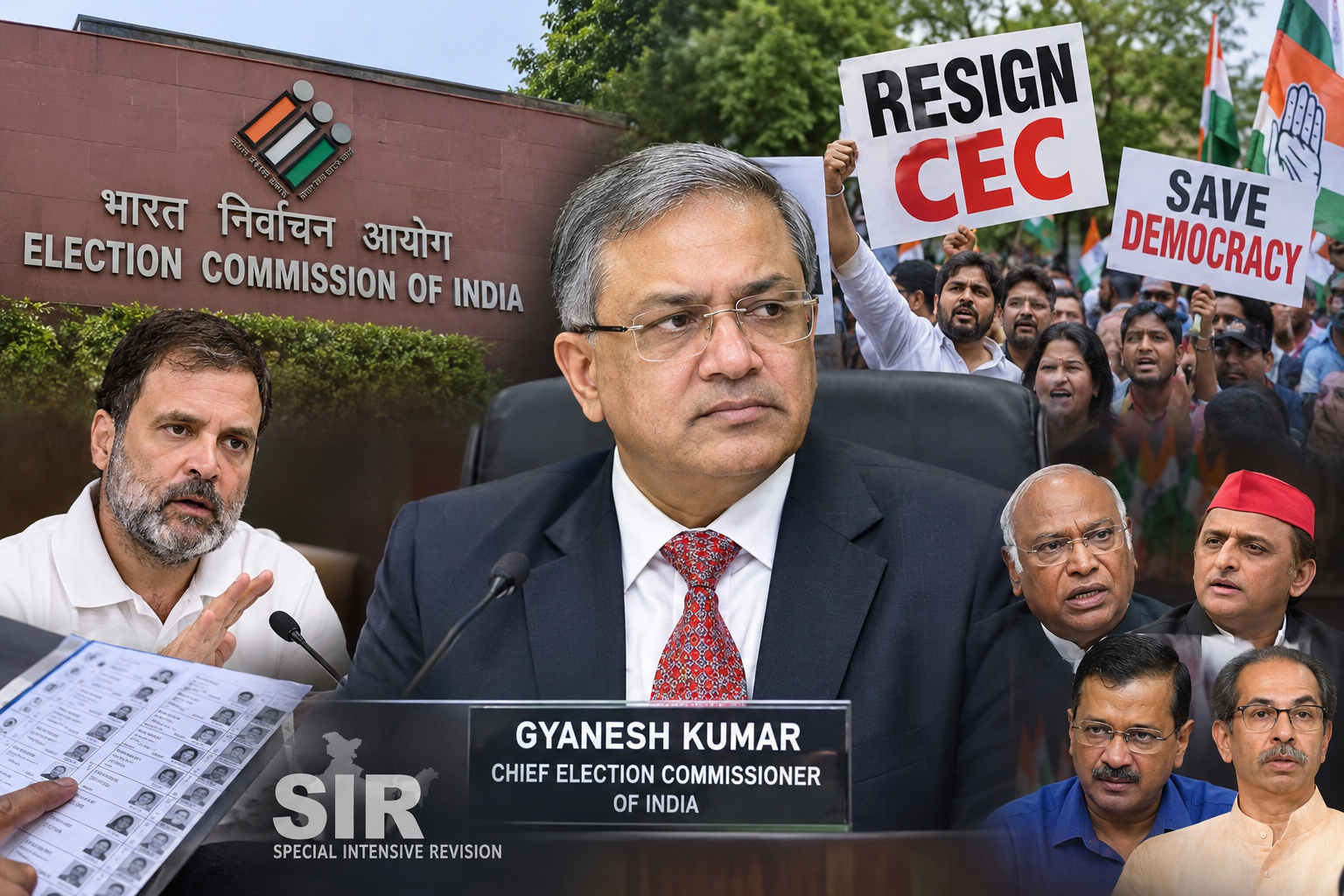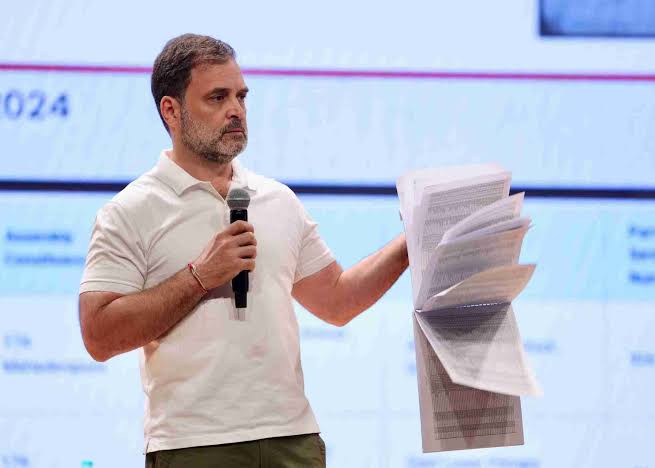
In an escalating confrontation, the Election Commission of India (ECI) has demanded a public apology from Congress leader Rahul Gandhi for what it describes as “misleading” statements about the integrity of the electoral process. This demand came after Gandhi, in a recent press conference, alleged widespread electoral fraud and accused the ECI of colluding with the ruling party to “steal elections.”
The ECI has challenged Gandhi to provide concrete evidence for his claims. Chief Electoral Officers (CEOs) of several states, including Karnataka, Maharashtra, and Haryana, have sent letters to Gandhi, requesting him to file a formal declaration or oath under Rule 20(3)(b) of the Registration of Electors Rules, 1960.
The ECI’s stance is that if Gandhi truly believes his allegations, he should have no difficulty submitting a formal complaint with specific details of the alleged voter fraud. An ECI source stated, “If Rahul Gandhi does not submit such a complaint, it would mean that he does not believe in his own allegations. In that case, he should apologize to the nation on this matter.”
In response, the Congress party has intensified its attack, with Rahul Gandhi dismissing the ECI’s demand. He has stated that his public statements should be considered his oath. At a rally in Bengaluru, Gandhi repeated his claims of “vote theft,” demanding that the ECI provide the party with the complete electronic voter list and video records for the entire country. He alleged that the ECI has taken down websites in certain states after the Congress’s “expose” and accused the poll body of trying to “destroy evidence” by limiting the preservation of CCTV and webcasting footage.
Gandhi also presented what he called “proof” of irregularities, citing an analysis of voter data from a Karnataka constituency where he claimed over 1 lakh votes were “stolen.” He alleged that there were thousands of duplicate voters, voters with fake addresses, and other anomalies. The Congress party has called the Special Intensive Revision (SIR) of electoral rolls an “institutionalized theft” aimed at disenfranchising the poor.
They argue that the ECI’s refusal to provide digital data and video recordings raises serious doubts about its neutrality. Congress leaders have also pointed out that while the ECI is asking for a formal complaint, the rule they are citing may not be applicable in this situation, as the elections in question were held months ago.