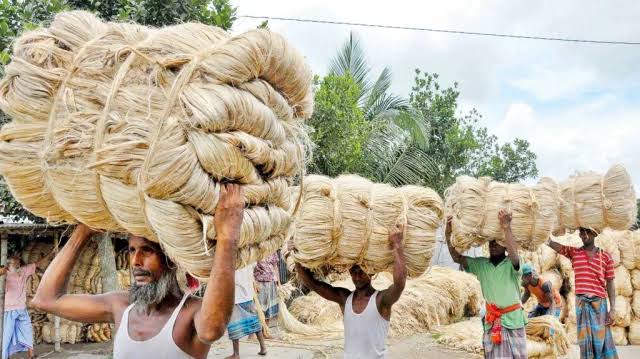
New Delhi – In a significant move signaling escalating trade tensions, India has imposed an immediate ban on the import of certain jute products from Bangladesh through all land border crossings. According to a notification from the Directorate General of Foreign Trade (DGFT), these consignments will now only be permitted to enter India through the Nhava Sheva seaport in Maharashtra.
The affected products include a range of items such as bleached and unbleached woven fabrics of jute, twine, cordage, rope, jute sacks, and bags. This is not the first such measure; the latest restrictions build upon similar curbs announced in recent months, which have targeted various products including ready-made garments, processed foods, and other textile items from Bangladesh.
The decision is viewed as a response to multiple concerns. India’s domestic jute industry has long complained about unfair competition from subsidized and cheap jute products from Bangladesh, which they argue are hurting local farmers and mill workers. Despite earlier anti-dumping duties, imports from Bangladesh have continued to rise, leading to a fall in domestic jute prices below the government’s Minimum Support Price (MSP).
Beyond the economic factors, the restrictions are also being seen in the context of strained diplomatic relations between the two countries. The measures have been announced against the backdrop of controversial remarks made by the head of Bangladesh’s interim government, Muhammad Yunus, which drew strong reactions from political leaders in India.
The ban on land routes will significantly disrupt cross-border trade, which is a key part of the economic relationship between the two nations. Business associations in Bangladesh have termed these restrictions as a “non-tariff barrier” and have warned that it could further hinder trade relations. While the new rule allows imports through the Nhava Sheva seaport, the significantly higher costs and logistical challenges of rerouting shipments are expected to make Bangladeshi jute products less competitive in the Indian market.
The move highlights India’s intent to protect its domestic industries and use trade policy as a tool in its foreign relations, especially with a neighbor with whom it shares a complex and evolving dynamic.