The Karnataka government has taken steps aiming to regulate — and in practical effect curb — the operations of the Rashtriya Swayamsevak Sangh (RSS) in public spaces, educational institutions, and government premises.
Key Developments
- The Karnataka Cabinet, in a recent meeting, approved new rules that will require organizations such as the RSS to obtain prior permission before holding events, marches, or gatherings on public roads, government properties, and other public places.
- In particular, the rules will target activities in government schools, colleges, aided institutions, and other government-owned or -controlled sites, ensuring such activities are regulated.
- The proposed legislation — likely to be titled the Regulation of Use of Government Premises and Properties Bill, 2025 — is being drafted to formalize these restrictions and to define penalties for violations.
- Under the draft, violations could invite penalties such as imprisonment up to 2 years and fines up to ₹50,000 for first-time offenders, and higher penalties (up to 3 years and ₹1 lakh) for repeat offenses.
- For continuing violations, daily penalties (e.g. ₹5,000 per day) are also being considered.
- The justification offered by state ministers is that unrestricted RSS activities in public and government-controlled spaces, including shakhas (local branches) in schools, playgrounds and parks, may promote ideological influence among youth and “go against the spirit of the Constitution.”
- Ministers have clarified that the rules are not uniquely targeted at the RSS. They argue they apply broadly to private organizations that use public or state-controlled land without prior permission.
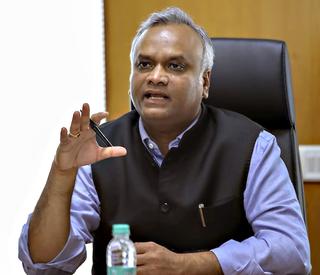
- As part of this push, Rural Development & Panchayat Raj Minister Priyank Kharge has urged strict enforcement of the civil service conduct rules that bar government employees from associating with political or ideological organizations. He has asked for disciplinary action against those who violate these rules.
Political Reactions & Controversies
- The BJP has strongly opposed the move, charging that the Congress-led Karnataka government is using the RSS issue as a diversion from governance challenges.
- In countering BJP arguments, the Karnataka government cited a 2013 circular issued during a previous BJP regime, which had restricted private organization activities on school premises, to show the idea is not unprecedented.
- In response to Minister Kharge’s letter and public statements, he allegedly received threat calls. The state government has stated that his security will be enhanced and that the threats are being taken seriously.
- The matter is expected to trigger judicial scrutiny, especially on constitutional grounds — freedom of association, freedom of expression, and state power over regulation of public spaces.