News Report:
In a dramatic political realignment in Nagaland, the ruling Nationalist Democratic Progressive Party (NDPP), which held 32 of the 60 seats in the state assembly, has merged with the smaller Naga People’s Front (NPF), which had just 2 MLAs.
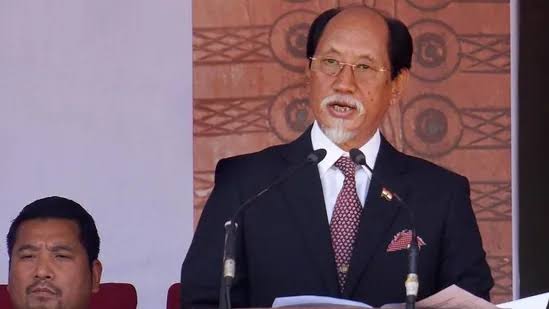
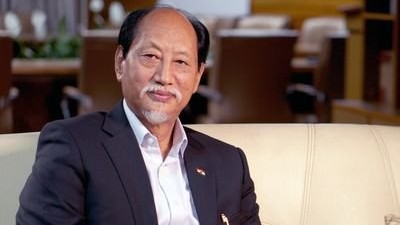
The merger was formally announced at the NDPP’s general convention on 18 October 2025, where Chief Minister Neiphiu Rio declared that both parties would operate under the NPF banner.
As a result, the total strength of the merged entity now stands at 34 MLAs (32 + 2) in the assembly.
Crucially, this development has left the Nagaland Legislative Assembly without a formal opposition, as nearly all other parties and independents are now part of or aligned with the ruling coalition.
Context & Significance:
- The NDPP had already secured a strong position after absorbing seven MLAs from the Nationalist Congress Party in May 2025, taking its tally to 32 seats.
- The NPF, once a dominant regional party, had been weakened in recent years, winning only two seats in the 2023 election.
- With the merger, Chief Minister Neiphiu Rio has reclaimed control of a unified regional party, consolidating his leadership and simplifying governance by eliminating the opposition’s parliamentary checks.
- Analysts say the move signals an intention to present a strong, singular regional front in Nagaland and perhaps beyond, simplifying the management of the Naga political issue and regional aspirations.
Implications:
- The absence of a recognised opposition raises questions about legislative scrutiny, accountability and the robustness of democratic debate in the assembly.
- The ruling party’s dominance is now virtually complete, giving it broad freedom to legislate and govern.
- Future alliances (such as with the Bharatiya Janata Party (BJP)) may be recalibrated as the merged NPF inherits NDPP’s electoral machinery and majority.
- Critics may view this as a weakening of checks & balances, while supporters argue it promotes stability and unity for addressing the state’s key issues.
What Happens Next:
- The newly-merged party is expected to hold organisational conventions, elect leadership under the NPF banner, and decide on symbols, cadre integration and policy alignment.
- Other parties and independents will have to consider their role in the changed political landscape — whether to support, align, or attempt to revive as a meaningful opposition.
- Observers will watch whether this consolidation impacts governance quality, legislative debate, and the handling of longstanding regional issues such as the Naga peace process.