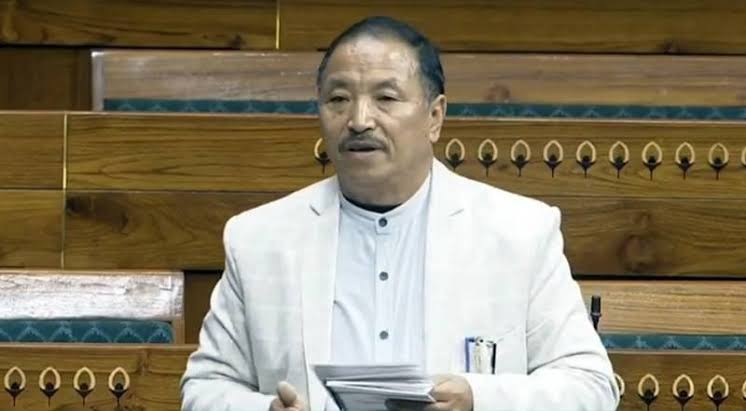
Nagaland, India – S. Supongmeren Jamir, the Member of Parliament representing Nagaland in the Lok Sabha, has launched a scathing critique against the Union Government, accusing it of chronic neglect towards the Northeast region and failing to effectively implement its “Act East Policy.”
Raising concerns under Rule 377 during the ongoing Parliament session, Jamir highlighted significant infrastructural deficiencies and questioned the sincerity of the Centre’s commitment to the region.
In a written submission, MP Jamir pointed out that despite the North East sharing extensive international borders with Bangladesh, Myanmar, and China, it continues to lag behind the rest of the country in crucial development sectors.
He specifically cited inadequate progress in road, rail, and air connectivity, electricity supply, health services, and telecommunications and IT infrastructure. Jamir emphasized that the rural-urban gap in these areas is particularly stark, creating significant disparities.
He further underscored the practical implications of this neglect by citing the example of the Longwa International Trade Centre along the Indo-Myanmar border in Nagaland. While access from the Myanmarese side for two-wheelers is readily available, the Indian side remains barely accessible due to poor road infrastructure – a stark and embarrassing contrast, he noted. Even defence and paramilitary forces, he claimed, face logistical challenges due to the region’s underdeveloped infrastructure, which hampers effective border management.
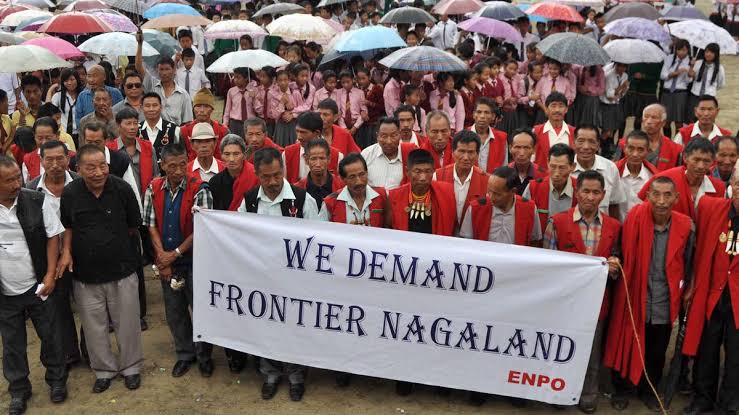
Beyond infrastructure, Jamir also pressed the Centre on the protracted delay in resolving the Naga political issue. He questioned why the government, while quick to label the region as “disturbed” or insurgency-affected, has failed to implement the two hard-won peace accords signed with various Naga National Groups. These agreements, which were touted as the long-cherished final political settlement for the people of Nagaland, have been pending for years without concrete outcomes. Jamir challenged the government to explain what tangible solutions have been delivered to the people of Nagaland from these much-publicized accords.
The Nagaland MP called for a more “context-sensitive policy making” approach, stressing the urgent need to decentralize the planning process. He asserted that only through inclusive and region-specific policy frameworks can the government’s development vision for the North East truly succeed. His remarks underscore a growing sentiment of frustration in the region over unfulfilled promises and the demand for genuine, impactful development initiatives beyond mere rhetoric.