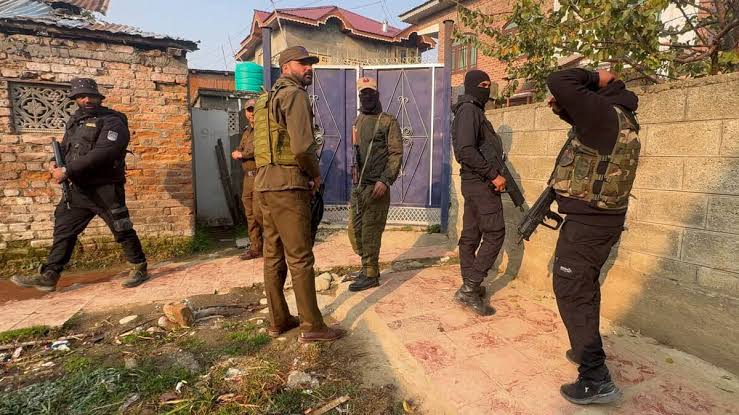
Jammu and Kashmir, November 12, 2025: The Jammu & Kashmir Police today launched one of its largest operations in recent years, with simultaneous raids across the Kashmir Valley targeting more than 300 locations linked to the banned socio-religious organisation Jamaat-e-Islami (JeI).
Operation Highlights
- The raids were executed in multiple districts including Kulgam, Pulwama, Shopian, Baramulla, and Ganderbal. In Kulgam district alone, over 200 locations were reported to have been targeted.
- Police described the action as part of a sustained “preventive strategy” aimed at dismantling the “terror-separatist ecosystem” by severing ideological, financial and logistical links of the banned outfit.
- During the searches, officials recovered a large number of documents, digital devices and printed material linked to Jamaat-e-Islami’s operations. Several persons have been detained and moved to district jails under preventive detention provisions.
Background and Context
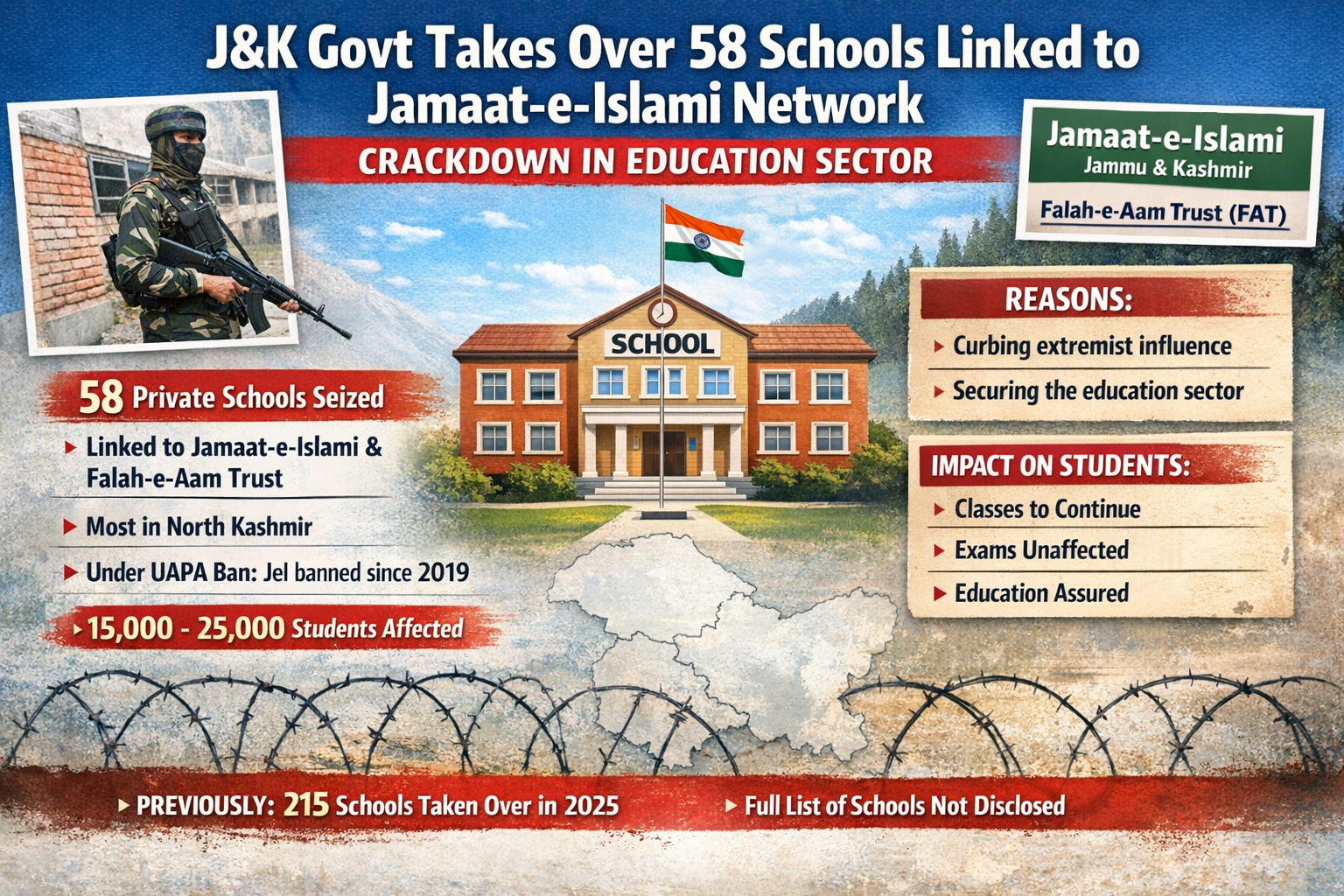
The Jamaat-e-Islami in Jammu & Kashmir was banned in February 2019 under the Unlawful Activities (Prevention) Act (UAPA) for its alleged connections with militant groups and involvement in activities deemed “unlawful associations”.
This current crackdown comes amid heightened vigilance in the Union Territory and follows other recent anti-terrorist measures in the region.
Significance
- The large scale of the raids suggests that authorities believe JeI-linked activity is trying to resurface under new fronts, as stated by police intelligence.
- The timing and breadth of the operation underline the government’s intent to send a strong message about zero tolerance for organisations perceived to be operating in the “grey zone” between politics and subversion.
- Detainees and seized materials could lead to further investigations into funding channels, recruitment, and coordination with other organisations considered a threat to security.
Implications
- The large-scale preventive detention and searches may prompt concerns among civil‐society groups about rule-of-law, due process, and the treatment of persons affiliated (or alleged to be affiliated) with banned organisations.
- The operation may increase tensions in the region, particularly if subsequent steps lead to public protests or backlash from local communities.
- For policymakers and security agencies, this marks an escalation in the “soft dismantling” of networks rather than exclusively kinetic action, signalling a shift to deeper structural interventions.