New Delhi: The Lok Sabha on Tuesday passed the Viksit Bharat Guarantee for Rozgar and Ajeevika Mission (Gramin) Bill, 2025—popularly referred to as the VB-G RAM G Bill—amid intense protests and sharp opposition from several political parties. The new legislation seeks to repeal and replace the nearly 20-year-old Mahatma Gandhi National Rural Employment Guarantee Act (MGNREGA), one of India’s largest rural welfare programmes.
Heated Scenes in the House
The passage of the bill was accompanied by dramatic scenes in Parliament. Opposition members from the Congress, Trinamool Congress (TMC), and DMK strongly objected to both the substance and symbolism of the proposed law.
Several MPs accused the government of “insulting” Mahatma Gandhi by removing his name from the employment guarantee scheme. In protest, some members reportedly tore copies of the bill and threw them into the well of the House.
Senior opposition leaders, including Priyanka Gandhi and Mahua Moitra, criticised the renaming of the scheme, alleging that replacing “Gandhi” with the acronym “RAM G” was politically motivated and carried communal overtones. The opposition also demanded that the bill be referred to a Parliamentary Standing Committee for detailed examination, a request rejected by the government.
Key Provisions of the New Bill
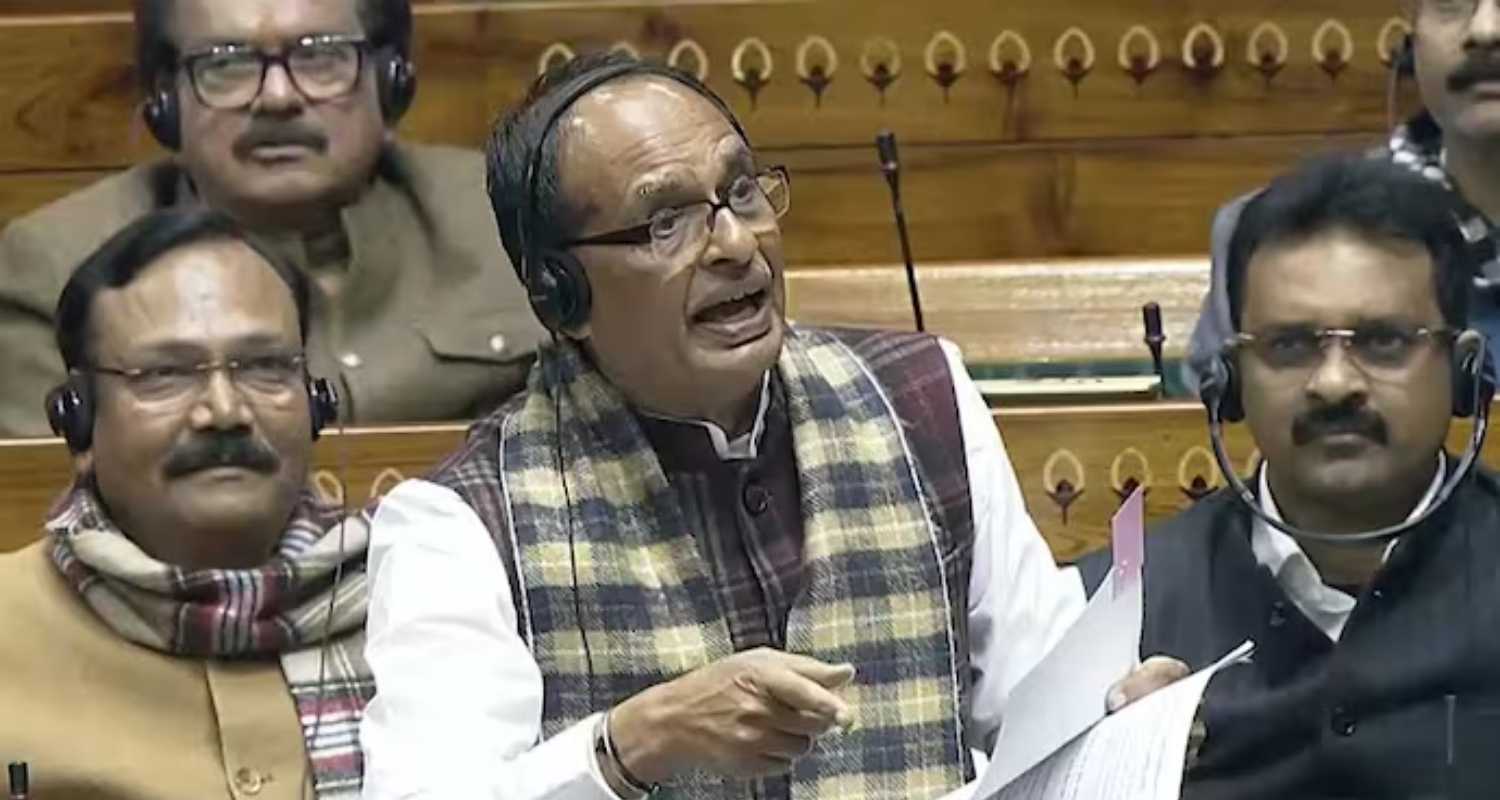
Defending the legislation, Union Minister Shivraj Singh Chouhan described the VB-G RAM G Bill as a “major reform” aimed at addressing structural shortcomings in MGNREGA and aligning rural employment policy with the government’s “Viksit Bharat 2047” vision.
Under the new framework:
- The guaranteed number of workdays per rural household will increase from 100 to 125 days.
- Funding for wages will shift from full central support to a 60:40 Centre–State sharing pattern.
- The scheme’s focus will move towards water conservation, climate resilience, and the creation of durable rural infrastructure.
- Planning and fund allocation will involve greater central oversight, reducing the role of Gram Panchayats.
Points of Contention
The opposition has raised multiple concerns, particularly over the financial implications for states. Opposition-ruled states such as Kerala and Tamil Nadu have warned that the requirement to bear 40% of the wage cost could impose a heavy fiscal burden, running into thousands of crores of rupees annually.
Critics have also objected to what they describe as excessive centralisation, arguing that the bill weakens local self-governance by limiting the decision-making powers of Gram Panchayats and relying on centralised digital planning platforms.
Government’s Stand
Responding to criticism, Minister Chouhan said the bill reflects Mahatma Gandhi’s ideals of “Ram Rajya” and “Gram Swaraj” in a modern context. He argued that increased employment days and an emphasis on durable assets such as ponds, irrigation works, and rural roads would provide a stronger and more sustainable safety net for rural households.
Despite continued opposition protests, the government pushed the bill through the Lok Sabha, setting the stage for further political debate as it moves to the Rajya Sabha.