Riyadh —
Tensions between longtime Gulf allies Saudi Arabia and the United Arab Emirates (UAE) escalated sharply after Saudi airstrikes hit Yemen’s southern port city of Mukalla, prompting Yemeni authorities aligned with Riyadh to issue a 24-hour ultimatum demanding the withdrawal of UAE forces from the country.
What Happened
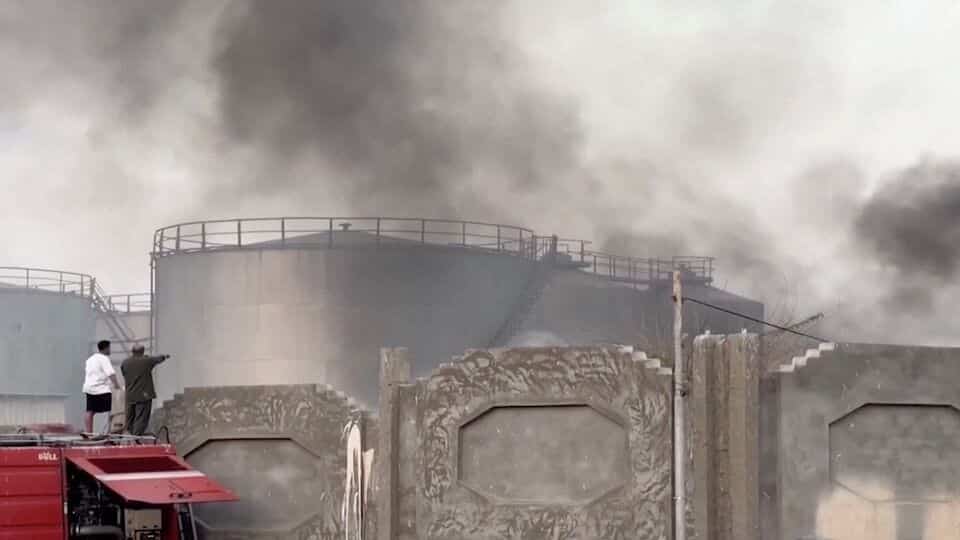
Saudi Arabia confirmed it carried out targeted airstrikes near Mukalla port, stating that the operation was aimed at weapons and military equipment allegedly linked to the UAE and intended for the UAE-backed Southern Transitional Council (STC). Riyadh described the strike as a limited security operation carried out to protect regional stability.
Soon after the strikes, Yemen’s Presidential Leadership Council (PLC)—which is supported by Saudi Arabia—cancelled its defence coordination agreement with the UAE and formally demanded that all remaining Emirati forces leave Yemen within 24 hours.
UAE Response
The UAE rejected claims that the targeted shipment contained weapons for separatist groups but announced it would withdraw its remaining military personnel from Yemen, framing the move as a voluntary conclusion of its counter-terrorism mission rather than compliance under pressure.
Emirati officials reiterated their commitment to regional security while stressing that Abu Dhabi no longer sees a military role for its forces inside Yemen under the current circumstances.
Background to the Rift
Saudi Arabia and the UAE have both been key players in the Yemen conflict since 2015, initially united against the Iran-aligned Houthi movement, which controls much of northern Yemen. However, their interests have diverged in the south:
- Saudi Arabia backs Yemen’s internationally recognised government and prioritises territorial unity and border security.
- The UAE has supported the Southern Transitional Council (STC), which seeks autonomy or independence for southern Yemen.
These competing strategies have repeatedly strained relations between the two allies.
Security and Regional Impact
Following the airstrikes, Yemeni authorities declared a state of emergency in Mukalla and imposed a temporary blockade on ports and border crossings, citing security risks. Analysts warn that the confrontation highlights deepening distrust between Riyadh and Abu Dhabi, raising concerns about the future of coordination among Gulf states in Yemen and beyond.
International Reaction
The United States and other international actors urged restraint, calling on all parties to avoid further escalation and to return to political dialogue aimed at stabilising Yemen, which remains gripped by one of the world’s worst humanitarian crises.
Outlook
While the UAE’s decision to withdraw troops may help prevent an immediate military confrontation between the two Gulf powers, observers say the episode underscores a significant strategic split that could reshape alliances and influence the trajectory of the Yemen conflict in the months ahead.