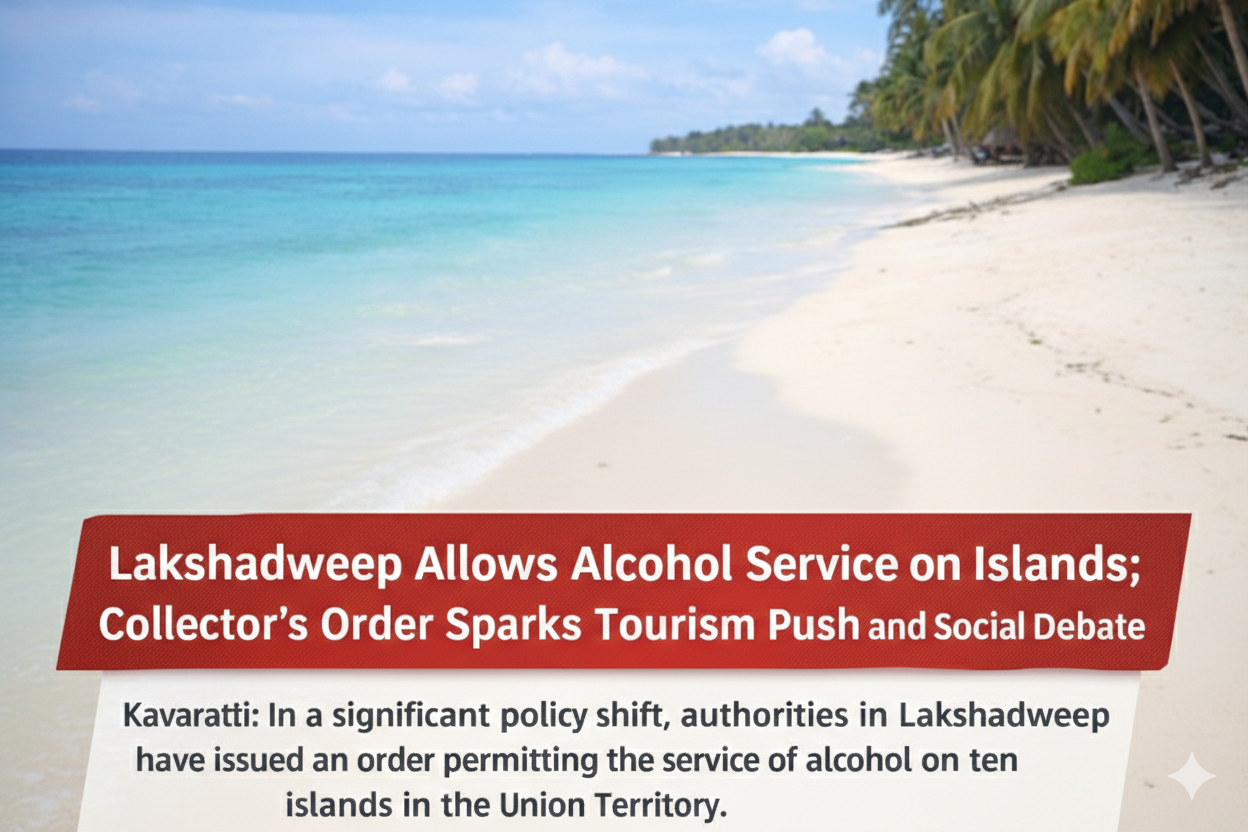
Kavaratti: In a significant policy shift, authorities in Lakshadweep have issued an order permitting the service of alcohol on ten islands in the Union Territory. The decision, issued by the district administration, allows licensed resorts and designated tourism establishments to serve alcohol under regulated conditions.
Officials stated that the move is aimed at promoting tourism and aligning local hospitality policies with international standards. The administration emphasized that alcohol service will be restricted to approved resorts and tourist facilities, and will not be available for general retail sale to residents.
Key Provisions of the Order
- Licenses will be granted only to authorized resorts and tourism establishments.
- Alcohol service will primarily cater to tourists under strict regulatory oversight.
- Stringent monitoring mechanisms will be implemented to prevent unauthorized sale and distribution.
- Law enforcement agencies will increase vigilance to curb illegal trade.
Authorities believe the policy could boost tourism revenue, attract private investment, and create employment opportunities in the island territory.
Historical Context
Lakshadweep, a Muslim-majority region in India, has historically enforced strict alcohol restrictions. A prohibition law introduced in 1979 imposed tight controls on the sale and consumption of liquor across the islands.
Until now, limited exemptions existed in select tourist destinations such as Bangaram Island, where alcohol was permitted in specific resort areas catering to foreign visitors. The new order significantly expands the scope of such permissions.
Social and Community Reactions
The decision has generated mixed reactions across the territory.
Supporters Say:
- The move will modernize Lakshadweep’s tourism sector.
- Increased tourist inflow could strengthen the local economy.
- Employment opportunities in hospitality and related sectors may grow.
Critics Argue:
- The policy could affect the region’s traditional cultural and religious values.
- There are concerns about potential social issues, particularly among youth.
- Some community leaders have expressed apprehension about inadequate public consultation before implementing the decision.
Political Responses
Political reactions have also been divided. Some leaders have endorsed the move as a necessary step toward economic development, while others have questioned the timing and approach of the administration. As Lakshadweep is a Union Territory governed directly by the federal government, the development has drawn attention at the national level.
Looking Ahead
The long-term impact of the decision will depend on how effectively the administration balances economic ambitions with social sensitivities. While tourism stakeholders anticipate growth, community leaders are calling for safeguards to preserve local traditions and social harmony.
The policy marks a notable shift in Lakshadweep’s regulatory landscape and is likely to remain a subject of debate in the months ahead.