The Middle East is witnessing a rapid escalation in tensions following the confirmed death of Iran’s Supreme Leader,Ayatollah Ali khamenei . Iranian authorities announced the appointment of an interim successor, Ayatollah Arafi, in accordance with constitutional procedures. The development has triggered political uncertainty inside Iran and heightened geopolitical anxiety across the region.
Leadership Transition and Domestic Unrest
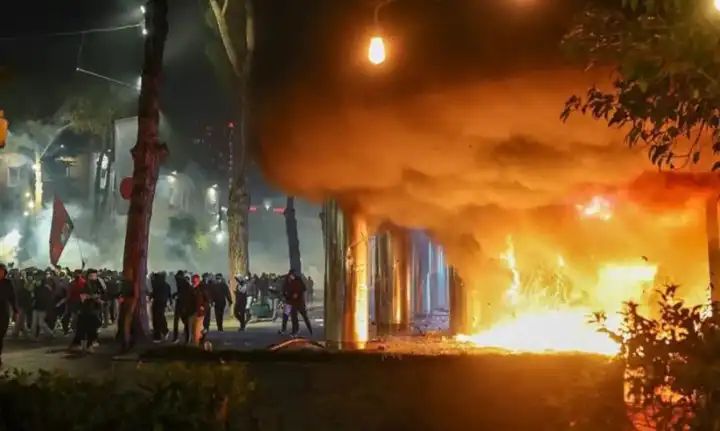
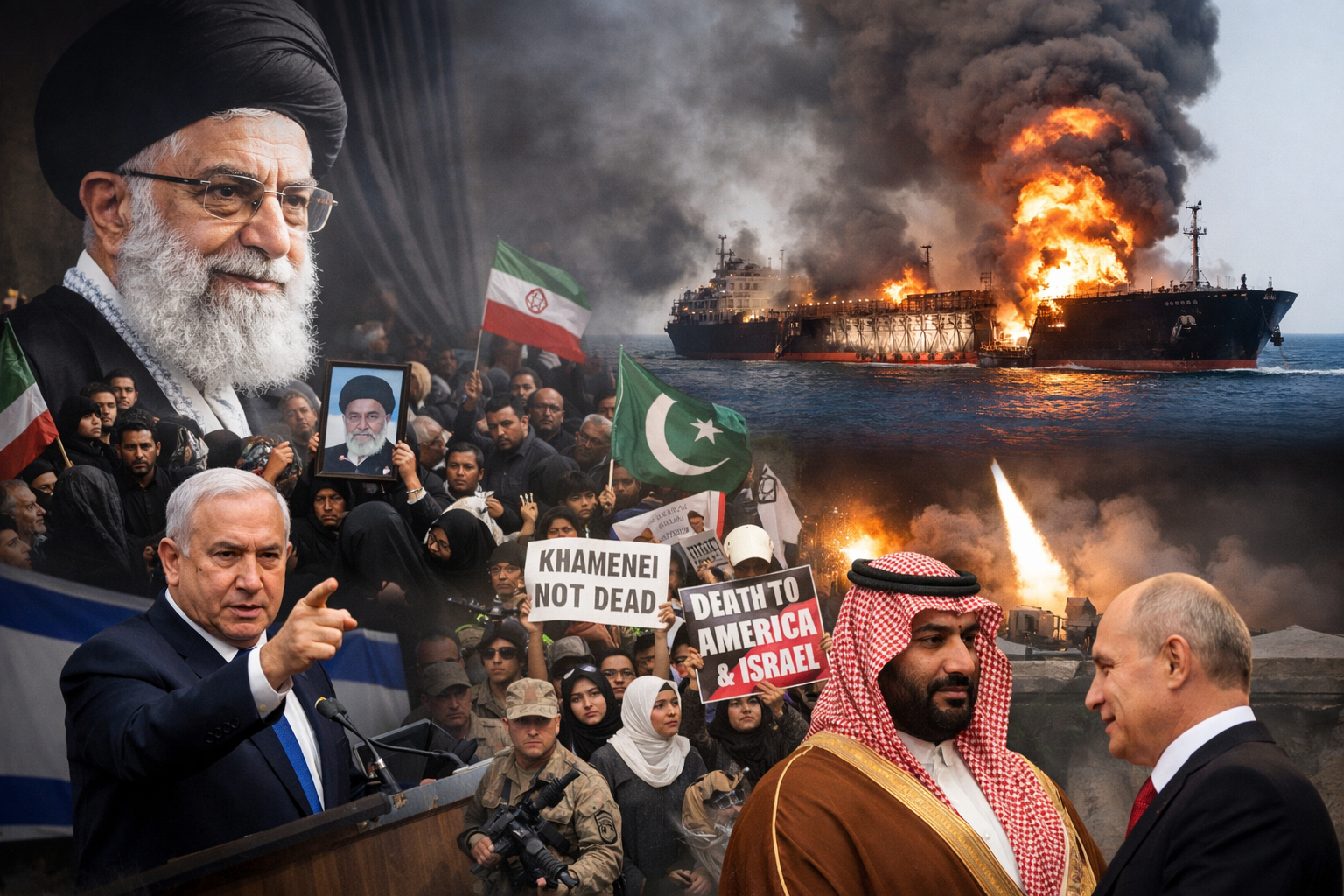
In the capital, Tehran , thousands gathered in both mourning processions and anti-government demonstrations. Security forces were deployed in major cities to prevent unrest from spiraling. While supporters of the late Supreme Leader held large memorial rallies, reformist and opposition-leaning groups staged protests calling for political change.
Observers note that the leadership transition comes at a highly sensitive moment for Iran, both domestically and internationally. The interim leadership is expected to oversee constitutional processes leading to the selection of a permanent successor.
Maritime Attack Near Oman
Regional tensions escalated further after an oil tanker was struck by an explosion off the coast of Oman . Maritime security monitoring agencies reported significant structural damage to the vessel, though crew members were evacuated safely. Several Western governments suggested possible Iranian involvement, an allegation Tehran has denied.
Shipping insurers have warned of rising risk premiums in the Gulf shipping lanes, a critical artery for global energy supplies.
U.S. Military Operation and Israeli Response
The United States confirmed the deployment of armed drones under an operation referred to as “Epic Fury,” describing it as a defensive measure aimed at deterring further escalation. The move marks one of the first public acknowledgments of expanded drone engagement in the current crisis.
Israel reaffirmed its close security coordination with Washington. Israeli Prime Minister Benjamin Netanyahu stated, “We will take all necessary military measures against hostile regimes that threaten our national security.” He added that Israel is prepared to target strategic military infrastructure if required.
Expanding International Alignments
Russia expressed diplomatic support for Iran, criticizing what it described as Western military pressure . North Korea also condemned U.S.-Israeli actions.
Conversely,Saudi Arabia warned that destabilizing actions in the region would face firm resistance. Analysts suggest that the crisis may deepen long-standing strategic rivalries between Sunni-majority Gulf states and Shiite-led Iran.
Reports have also emerged of missile activity targeting British military installations in Cyprus , though damage assessments remain ongoing.
Impact on India-Iran Relations and Trade
The crisis has had economic repercussions beyond the region. India, which has maintained longstanding trade and energy ties with Iran, is facing disruptions. Shipments of Indian basmati rice have reportedly stalled at the Iranian port of Bandar Abbas, leading to a drop in domestic export prices.
India and Iran have historically cooperated on infrastructure projects such as the development of the Chabahar port, viewed as strategically important for regional connectivity. Analysts warn that prolonged instability could affect bilateral trade, energy security, and investment flows.
Protests in Jammu and Kashmir
Demonstrations were reported in parts of Jammu and Kashmir following news of Khamenei’s death. Local authorities increased security measures and appealed for calm. The situation remained under close monitoring.
Muslim World Divided?
The geopolitical fallout appears to be reshaping alignments within the Muslim world. Some nations and political movements aligned with Iran have expressed solidarity, while others have distanced themselves, emphasizing regional stability. Analysts note that sectarian dynamics—particularly the Sunni-Shiite divide—may intensify diplomatic polarization.
However, several countries have adopted a cautious stance, calling for restraint and dialogue rather than military escalation.
Casualties and Damage
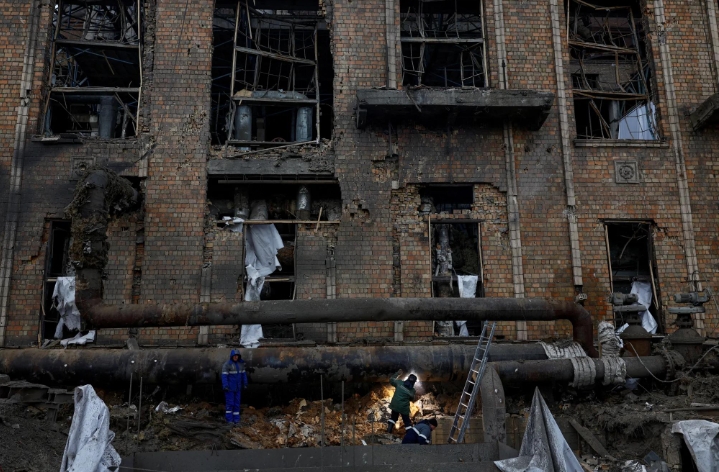
Preliminary reports indicate injuries in various incidents linked to the unfolding crisis, though comprehensive casualty figures have not been independently verified. Damage to maritime and military infrastructure is still being assessed. Energy markets have reacted with volatility, reflecting concerns over potential supply disruptions.
Outlook
International organizations, including the United Nations, have urged immediate de-escalation and diplomatic engagement. With multiple global powers now rhetorically and militarily involved, the risk of a broader regional confrontation remains significant.
As Iran navigates a critical leadership transition, the coming days will determine whether the crisis evolves into sustained military conflict or shifts toward negotiated diplomacy. The stability of the Middle East—and its impact on global energy markets and international security—hangs in the balance.