Tensions between Pakistan and Afghanistan escalated sharply after Pakistan carried out airstrikes targeting Taliban military facilities and suspected militant hideouts in Kandahar and other Afghan regions. The strikes mark one of the most serious escalations in cross-border hostilities between the two neighbouring countries in recent years.
What Happened in Kandahar
According to Pakistani officials, the operation targeted military installations and tunnels allegedly used by militants in southern Afghanistan. Islamabad said the strikes were aimed at eliminating camps linked to the Tehrik-e-Taliban Pakistan (TTP), a militant group responsible for attacks inside Pakistan.
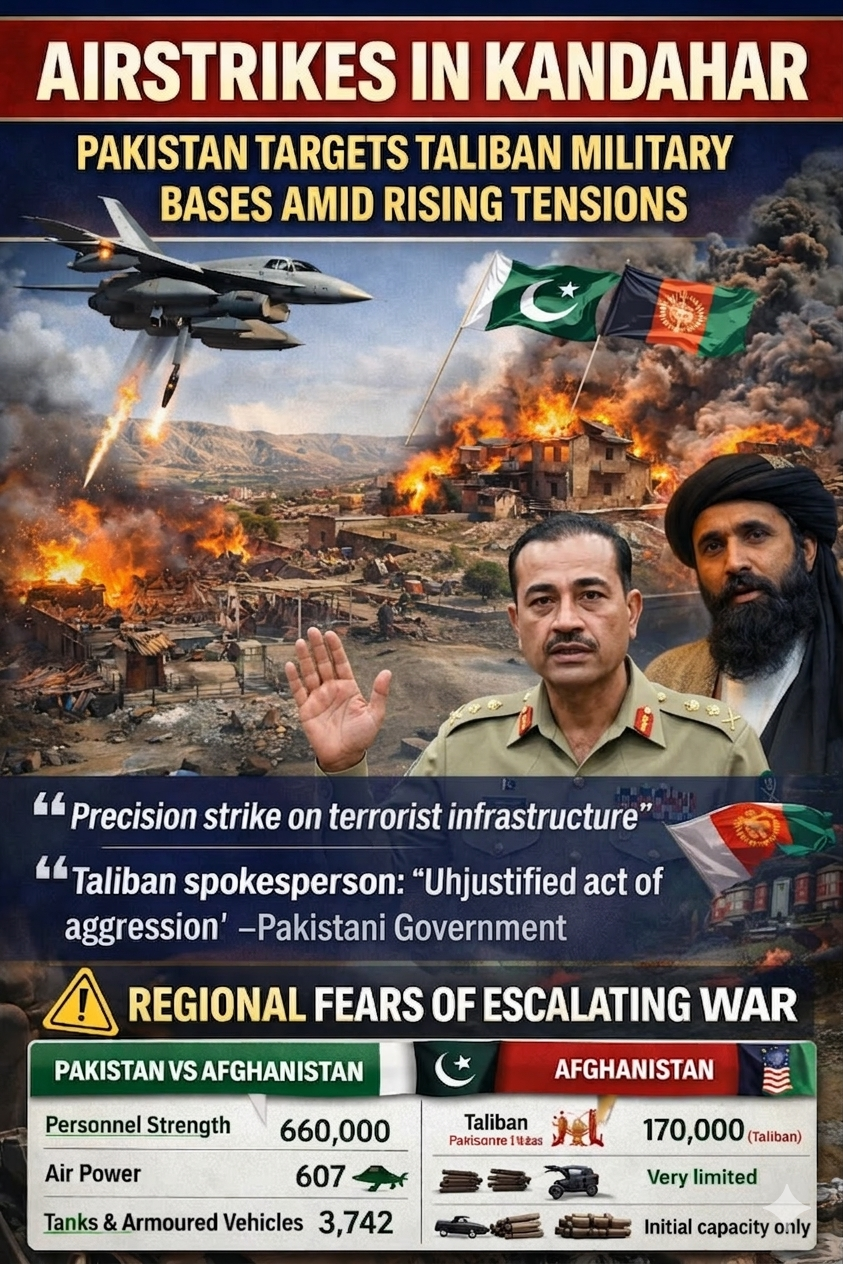
A Pakistani security statement described the attack as a “precision strike on terrorist infrastructure threatening Pakistan’s security.”
The operation is believed to be part of a broader campaign against militant groups operating across the border.
Taliban Response and Civilian Casualty Claims
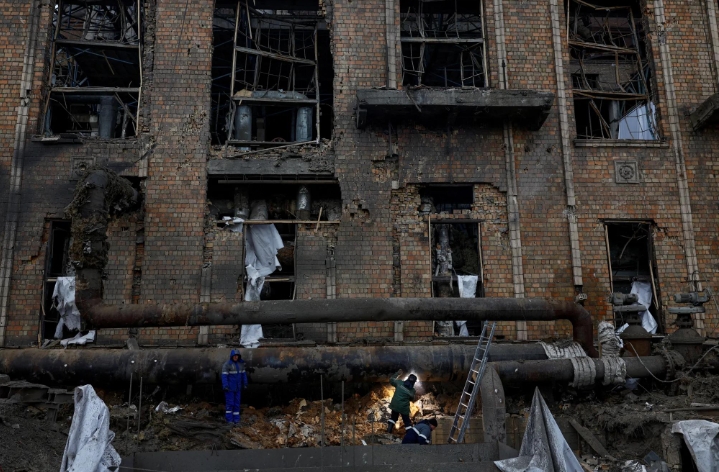
The Taliban-led government in Afghanistan strongly condemned the strikes, accusing Pakistan of violating Afghan sovereignty and causing civilian casualties. Afghan officials reported that several civilians were killed or injured during the attacks and that infrastructure was damaged.
A Taliban spokesperson said the strikes were “an unjustified act of aggression against Afghanistan.”
Pakistan, however, rejected the allegations and insisted that the targets were strictly militant camps and not civilian areas.
Regional Reaction
The escalation has drawn international concern. India criticised the airstrikes and called them “an act of aggression”, urging respect for Afghanistan’s sovereignty and territorial integrity.
The United Nations and several regional powers have also expressed concern about the growing instability along the Pakistan–Afghanistan border.
Background of the Conflict
The latest strikes come amid months of cross-border clashes between Pakistan’s military and Taliban forces. Pakistan has repeatedly accused the Afghan Taliban of allowing militant groups such as the TTP to operate from Afghan territory and carry out attacks inside Pakistan.
Afghanistan denies these allegations and claims Pakistan’s airstrikes have targeted civilian areas.
Pakistan vs Afghanistan: Military Power Comparison
Despite the ongoing clashes, the military capabilities of the two countries differ significantly.
Personnel Strength
- Pakistan: About 660,000 active military personnel across army, air force and navy.
- Afghanistan (Taliban forces): Around 170,000 fighters, with plans to expand to about 200,000.
Air Power
- Pakistan operates hundreds of combat aircraft and advanced fighter jets, along with more than 260 helicopters.
- Afghanistan currently has very limited air power and relies mainly on drones and captured aircraft from the former Afghan army.
Armoured and Ground Forces
- Pakistan possesses thousands of tanks and armoured vehicles, along with extensive artillery systems.
- Taliban forces rely largely on light vehicles, captured equipment, and guerrilla warfare tactics.
Overall Capability
Military analysts note that Pakistan’s conventional military strength is far greater in terms of technology, manpower, and air capability.
However, Afghanistan’s rugged terrain and the Taliban’s guerrilla warfare experience have historically made conflicts in the region difficult even for technologically superior armies.
Growing Risk of Wider Conflict
Security experts warn that continued airstrikes and retaliatory attacks could lead to a prolonged conflict between the two neighbours.
Analysts say diplomatic efforts are urgently needed to prevent the situation from escalating further in a region already facing political instability and militant activity.
Sources: Reuters, Al Jazeera, AP News, Times of India, Global Firepower, international defence reports.