

C.Mahesh
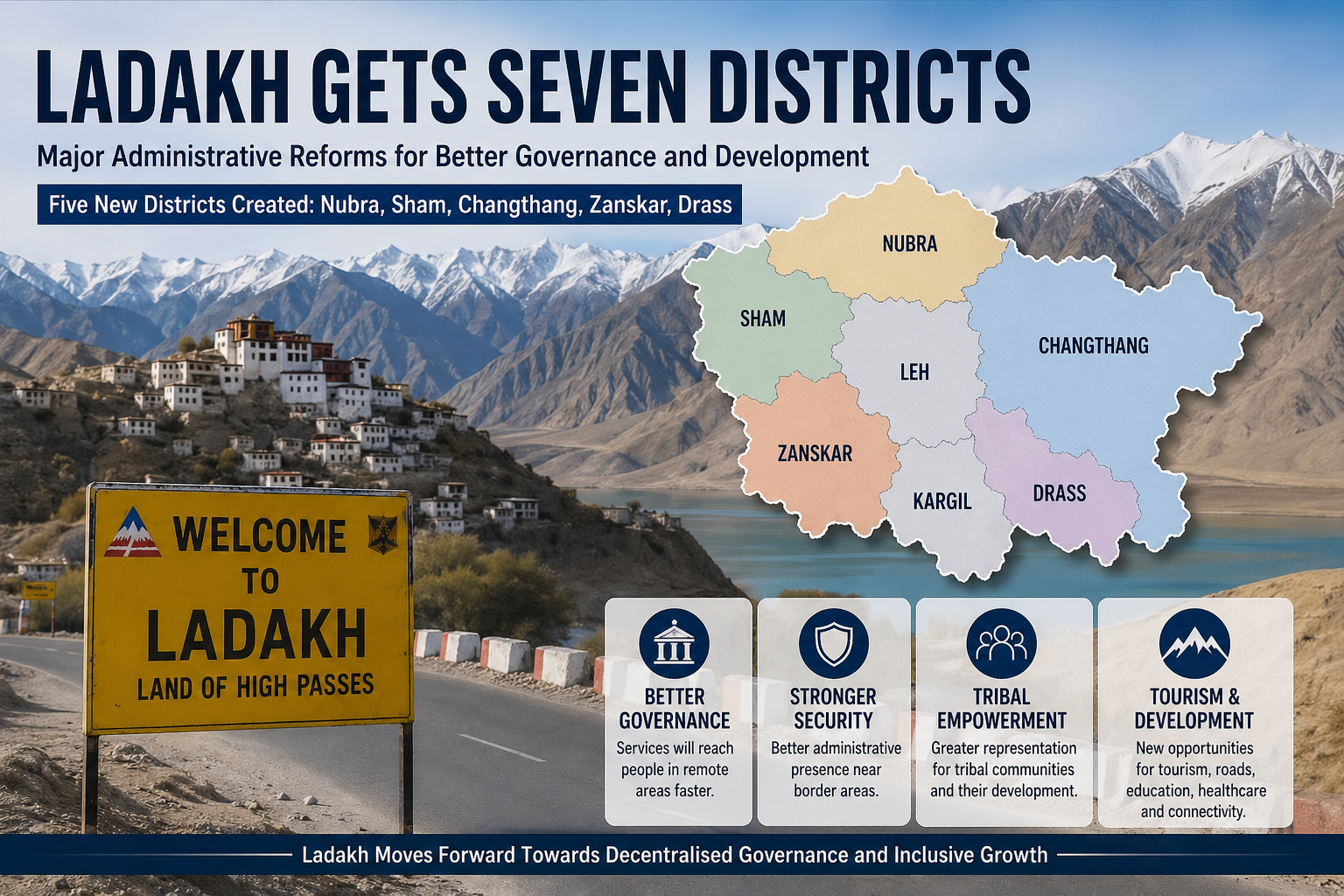
In a historic administrative reform, the Union Territory of Ladakh has expanded from two districts to seven after the creation of five new districts. Earlier, Ladakh had only Leh and Kargil districts. The newly created districts are Nubra, Sham, Changthang, Zanskar, and Drass.
The decision was taken to improve governance, administrative access, and development in Ladakh’s remote mountainous regions.
Who Announced the Decision?
The official notification was issued by Ladakh Lieutenant Governor Vinai Kumar Saxena ahead of Union Home Minister Amit Shah’s visit to the region. The move is being seen as one of the biggest administrative changes in Ladakh since it became a Union Territory in 2019.
New Districts – District Wise Details
| District | Headquarters / Main Centre | Carved Out From | Major Communities & Tribes | Dominant Religion | Historical & Cultural Importance |
|---|---|---|---|---|---|
| Nubra | Diskit | Leh | Balti, Ladakhi Buddhists | Buddhism | Ancient Silk Route region near Siachen Glacier |
| Sham | Khaltsi | Leh | Brokpa, Dard people | Buddhism & Islam | Aryan Valley and Dardic heritage |
| Changthang | Nyoma | Leh | Changpa nomads | Buddhism | Pangong Lake and nomadic culture |
| Zanskar | Padum | Kargil | Boto, Mon communities | Buddhism | Ancient monasteries and Tibetan heritage |
| Drass | Drass Town | Kargil | Balti, Shina communities | Shia Islam | Kargil War history and extreme cold climate |
Population, Tribes, Religion and Historical Background
Separate official Census data for the newly formed districts has not yet been released. The following figures are approximate estimates based on earlier subdivisions.
1. Nubra District
- Estimated Population: 25,000–30,000
- Major Tribes: Balti and Ladakhi communities
- Languages: Ladakhi, Balti
- Religion: Tibetan Buddhism
- Historical Importance:
- Part of the ancient Silk Route trade network
- Strategically important due to proximity to Siachen Glacier
- Home to the famous Diskit Monastery
2. Sham District
- Estimated Population: 20,000+
- Major Communities: Brokpa and Dard people
- Religion: Buddhism and Islam
- Historical Importance:
- Known as the “Aryan Valley”
- One of Ladakh’s oldest inhabited regions
- Preserves ancient Dardic cultural traditions
3. Changthang District
- Estimated Population: 15,000–20,000
- Major Tribe: Changpa nomads
- Lifestyle: Nomadic pastoralism
- Religion: Tibetan Buddhism
- Historical Importance:
- Home to Pangong Tso Lake
- Famous for Pashmina wool production
- Strategically located near the China border
4. Zanskar District
- Estimated Population: 20,000–25,000
- Major Communities: Boto Buddhists
- Religion: Tibetan Buddhism
- Historical Importance:
- Region of ancient Buddhist kingdoms
- Famous monasteries such as Phugtal Monastery
- Internationally known for Zanskar River trekking
5. Drass District
- Estimated Population: 30,000+
- Major Communities: Balti and Shina people
- Religion: Shia Islam
- Historical Importance:
- Key battlefield area during the 1999 Kargil War
- Known as the “Gateway to Ladakh”
- One of the coldest inhabited places in the world
Why This Decision Is Important
1. Better Governance in Remote Areas
Many villages in Ladakh are located in isolated mountainous terrain where people had to travel long distances to access district headquarters. The creation of new districts is expected to bring government services closer to local communities.
2. Strengthening Border Security
Regions like Changthang and Nubra lie close to the Line of Actual Control (LAC) with China. The new administrative setup is expected to improve infrastructure, governance, and strategic coordination in border areas.
3. Greater Representation for Tribal Communities
More than 97% of Ladakh’s population belongs to Scheduled Tribes. Communities such as Balti, Brokpa, Changpa, and Purigpa are expected to receive better administrative representation and development support.
4. Tourism and Economic Growth
Tourist destinations such as Nubra Valley, Pangong Lake, and Zanskar are likely to benefit from improved roads, healthcare, internet connectivity, and government investment.
Political Background
Ladakh became a separate Union Territory in 2019 following the reorganisation of Jammu and Kashmir. Since then, demands for greater autonomy, tribal safeguards, and better administrative decentralisation have increased. The creation of new districts is seen as a partial response to these long-standing demands.
Key Highlights
- Ladakh districts increased from 2 to 7
- New districts:
- Nubra
- Sham
- Changthang
- Zanskar
- Drass
- Main objectives:
- Decentralised governance
- Border development
- Tribal representation
- Tourism and infrastructure growth
- Announcement Year: 2026


