From Viral Memes to the Streets of Jantar Mantar — Is India’s Newest Youth Movement a Genuine Uprising or a Political Experiment?
New Delhi | June 6, 2026
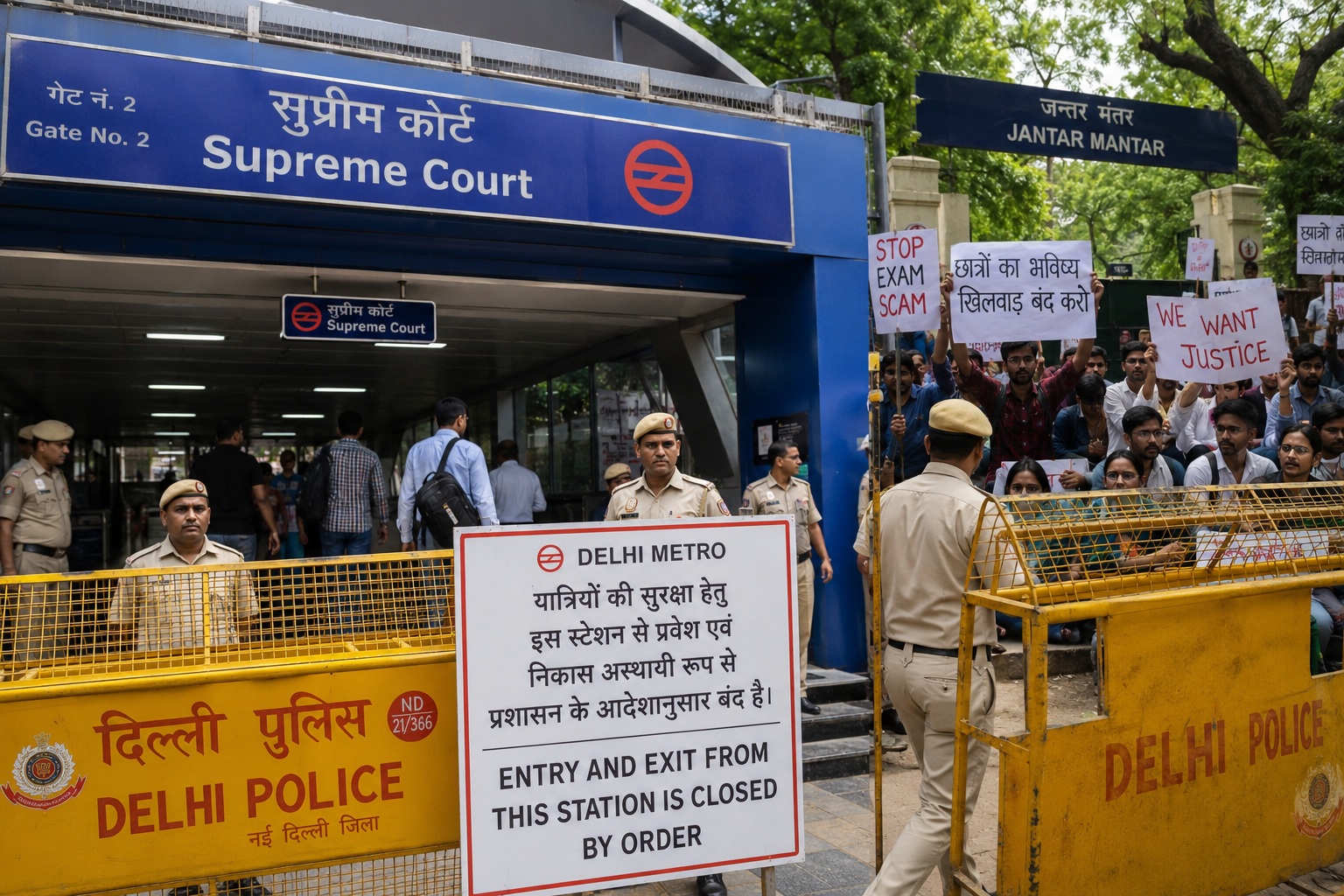
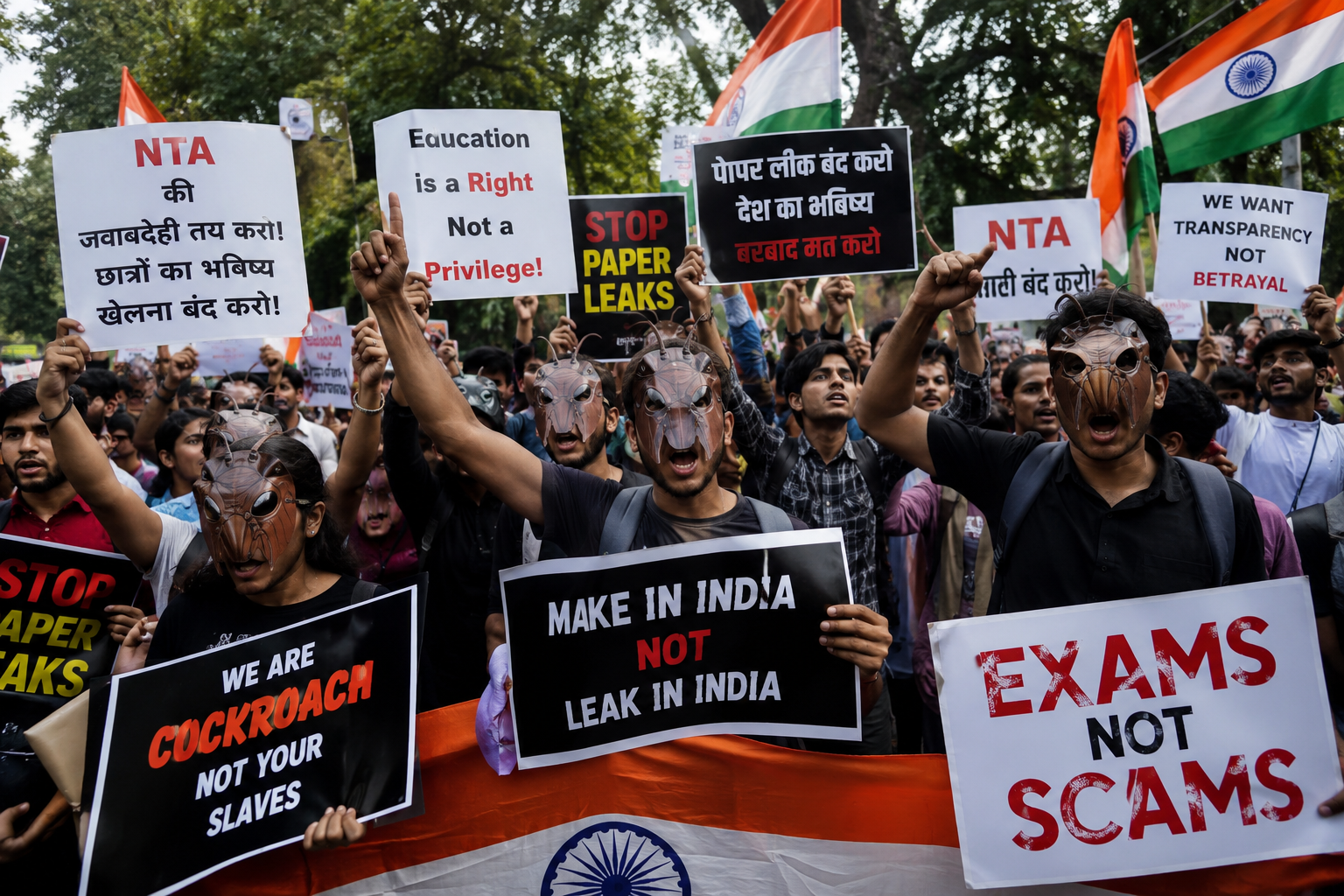
Under the blazing summer sun at Delhi’s Jantar Mantar, hundreds of young protesters wearing cockroach masks gathered with copies of the Constitution, exam admit cards, and placards bearing the names of India’s most controversial entrance examinations.
Their message was simple:
“Make in India, Not Leak in India.”
What began as an online youth movement exploded into one of the most talked-about political events of the year, putting the spotlight on exam scandals, unemployment, and growing frustration among India’s younger generation.
At the center of the storm stands an unconventional organization known as the Cockroach Janta Party (CJP) — a social media-driven movement that has rapidly transformed from an internet phenomenon into a street-level political force.
But as the movement grows, so do the questions surrounding it.
A Protest Born from Frustration
The June 6 demonstration was organized around allegations of irregularities in national examinations such as NEET, CUET, and JEE, along with broader concerns about youth unemployment and accountability within India’s education system.
Protesters demanded the resignation of Union Education Minister Dharmendra Pradhan, arguing that repeated controversies surrounding competitive examinations had eroded public trust.
Many participants described themselves as students, job seekers, and young professionals who felt ignored by policymakers.
For supporters, the protest represented a long-overdue expression of youth dissatisfaction.
For critics, it raised questions about the motivations and political affiliations behind the movement.
Who Is Abhijeet Dipke?
At the heart of the movement is Abhijeet Dipke, a 30-year-old political communications activist who has become the public face of CJP.
According to multiple reports, Dipke studied journalism in Pune before pursuing higher studies in Public Relations at Boston University in the United States.
Reports have also noted that he was associated with social media initiatives linked to Arvind Kejriwal’s Aam Aadmi Party (AAP) between 2020 and 2023.
Critics have cited these past connections as grounds for questioning the movement’s political neutrality.
Dipke, however, rejects such claims and insists that the movement belongs to ordinary young Indians rather than any political party.
Ahead of the protest, he urged supporters to remain peaceful and constitutional in their approach.
“The time has come for all of us to come together, following the path of the Constitution of India, and peacefully raise our voices.”
— Abhijeet Dipke
Why the Name “Cockroach”?
The movement’s unusual name emerged from a controversy that spread rapidly across social media following public debate over unemployment and recruitment issues.
Activists adopted the term “cockroach” as a symbol of resilience and resistance, arguing that young people who felt dismissed or ignored by the system could reclaim the label as a badge of defiance.
What began as memes soon evolved into organized digital campaigns, eventually culminating in large-scale public demonstrations.
A Social Media Phenomenon
One of the most remarkable aspects of CJP’s rise has been its online growth.
Within weeks, the movement reportedly attracted millions of followers across social media platforms, helping transform a niche internet campaign into a national talking point.
Supporters see this as evidence of genuine public anger.
Skeptics argue that such rapid growth naturally invites scrutiny regarding organizational structures, funding, and political backing.
As of now, no evidence has emerged showing that the movement is controlled by any major political party.
Are Left-Wing Student Groups Involved?
Another question repeatedly raised by critics concerns the presence of activists associated with left-leaning student organizations.
Social media users have pointed to photographs and videos allegedly showing individuals connected to organizations such as:
- SFI
- AISF
- AISA
- Other university-based student groups
Some commentators have also claimed that students from Jawaharlal Nehru University (JNU) participated in the protest.
However, there is currently no publicly verified evidence showing that these organizations officially organized, controlled, or directed the movement.
Political analysts caution against assuming organizational involvement solely because individual activists may have attended the event.
The Pakistan Allegations
As the movement expanded, political controversy intensified.
Several government supporters questioned whether some online engagement linked to the movement originated outside India.
Union Minister Kiren Rijiju and other political figures publicly raised concerns regarding online activity connected to the campaign.
Those concerns triggered wider debates about national security and foreign influence.
However:
- No official investigation has publicly concluded that CJP has links to Pakistan.
- No court findings have established such connections.
- Independent media investigations have not produced conclusive evidence supporting the allegations.
Dipke has denied the accusations and stated that the overwhelming majority of the movement’s audience comes from India.
At present, the issue remains a matter of political dispute rather than an established fact.
George Soros and Foreign NGO Claims
As often happens with fast-growing political movements, speculation soon extended to foreign influence.
Some commentators alleged connections between CJP and George Soros or the Open Society Foundations.
Yet no verified evidence has emerged to support such claims.
There are currently:
- No public funding records linking CJP to Soros.
- No grant disclosures establishing a connection.
- No government reports alleging such involvement.
- No independent investigations confirming the accusations.
As a result, these claims remain unverified political allegations rather than documented facts.
Government Supporters Push Back
The protest also prompted counter-mobilization from several Hindu and nationalist groups that criticized the movement.
These groups argued that while concerns about exams and employment are legitimate, public campaigns should avoid undermining confidence in national institutions.
Police deployed extensive security arrangements around Jantar Mantar to prevent clashes between opposing groups.
Reports suggest that the anti-CJP gatherings were significantly smaller than the main protest, although no official crowd estimates have been released.
Beyond Politics: The Real Issue
Regardless of political affiliations, one fact remains difficult to ignore.
The concerns raised by many protesters resonate with a significant section of India’s youth.
Their demands center on:
- Transparent examinations
- Merit-based recruitment
- Employment opportunities
- Greater accountability from public institutions
These concerns extend beyond party politics and reflect broader anxieties about the future.
The Bigger Question
Is the Cockroach Janta Party merely a temporary social media phenomenon?
Or is it the beginning of a new chapter in Indian youth politics?
The answer remains uncertain.
But the events at Jantar Mantar demonstrated that a generation increasingly shaped by digital culture is willing to bring its grievances from the internet to the streets.
Whether CJP evolves into a lasting political force or fades as a moment of protest, it has already succeeded in forcing a national conversation about youth aspirations, accountability, and the changing nature of political mobilization in modern India.