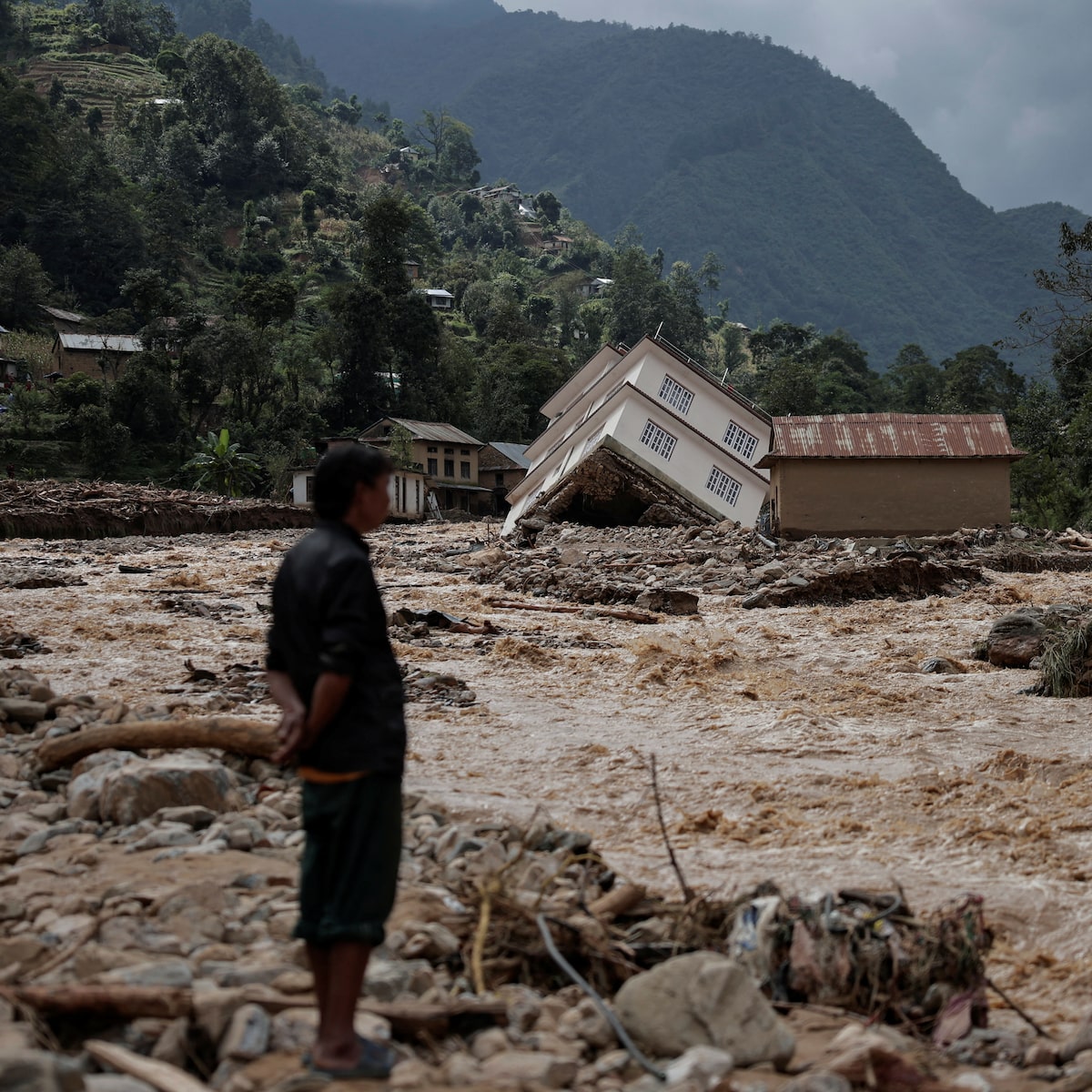
Kathmandu: A devastating flash flood in Nepal’s Rasuwa district, along the Nepal–China border, has triggered a massive rescue operation after hundreds of tourists and pilgrims were reported missing or out of contact.
According to the latest reports from Nepalese media, 403 tourists are currently unaccounted for, including 341 foreign nationals and 62 Nepali citizens. The figures are still being verified and could change as authorities receive updated information from travel agencies and local officials.
133 Indians Reported Missing or Out of Contact
Indian tourists and Kailash–Mansarovar pilgrims form the largest group among the foreign nationals reported missing.
According to the latest report by Onlinekhabar, 133 Indian citizens are among those currently unaccounted for. Many of them were travelling towards the Kailash–Mansarovar pilgrimage route through the Rasuwagadhi border crossing.
Earlier reports had put the number of missing Indians at 105, but the figure was subsequently revised as more travel agencies submitted passenger details.
The Kathmandu Post reported that nearly 400 Kailash-bound pilgrims were in the area, with many unable to establish contact following the disaster.
Kailash–Mansarovar Pilgrims Stranded
The flash flood struck at a critical transit point for pilgrims travelling to Tibet.
According to Nepalese media reports, several tour operators had groups in the Rasuwa area. Passenger lists supplied by travel agencies included travellers from India and several other countries.
The disaster has severely disrupted the overland route to Tibet, leaving pilgrims stranded as roads, bridges and other infrastructure were damaged.
Foreign Nationals From Several Countries Missing
The missing foreign nationals include travellers from countries such as India, the United States, the United Kingdom, Australia, Canada, Malaysia and the Netherlands, according to reports from Nepalese and international media.
The Kathmandu Post and Onlinekhabar have reported that the number of missing foreign tourists has changed as authorities continue to reconcile information received from different travel agencies.
British media have also reported missing British nationals, adding an international dimension to the disaster.
What Triggered the Flash Flood?
The disaster occurred along the Bhotekoshi River and the Lhende Khola in Rasuwa.
Preliminary assessments indicate that the flood may have been caused by a sudden release of water following an ice avalanche, landslide or debris blockage in the upper reaches of the river system.
According to The Kathmandu Post, satellite imagery and information from Chinese authorities suggested that debris had accumulated upstream, potentially forming a temporary blockage or lake. The subsequent collapse of that blockage may have released a huge volume of water and debris downstream.
The exact cause is still being investigated.
Timure and Border Areas Devastated
The settlements of Timure and Syabrubesi were among the worst affected areas.
Local officials described the destruction in Timure as extensive, with homes, shops, roads and other structures swept away or severely damaged.
The sudden arrival of the flood reportedly gave residents and travellers very little time to escape.
Several hydropower projects and other critical infrastructure in Rasuwa were also damaged.
Hydropower Projects and Infrastructure Damaged
The flood caused significant damage to Nepal’s hydropower infrastructure.
Roads, bridges, electricity infrastructure, buildings and facilities connected with border trade were affected.
According to The Kathmandu Post, dozens of people associated with the Langtang Khola Hydropower Project were also reported to be out of contact.
The destruction of transport infrastructure has made access to several affected locations extremely difficult for rescue teams.
Death Toll Continues to Rise
The death toll has also been increasing as rescue teams reach previously inaccessible areas.
Nepalese media have reported that the death toll has reached around 95, although figures are continuing to change as bodies are recovered and authorities verify information.
The disaster has affected not only Rasuwa but also areas including Nuwakot, Dhading and other districts downstream.
Authorities have warned communities living along the Trishuli River and other vulnerable areas to remain alert and move to safer locations where necessary.
Major Search and Rescue Operation Underway
The Nepal Army, Nepal Police and Armed Police Force have been mobilised for rescue and search operations.
Helicopters are being used to evacuate stranded residents and travellers where weather conditions permit.
However, rescue operations have been hampered by:
- Damaged roads and bridges
- Landslides and debris
- Poor weather
- Disrupted telecommunications
- Difficult mountainous terrain
- Continuing risks from unstable slopes and rivers
Authorities are working to establish contact with people stranded in remote areas.
India Monitoring the Situation
The large number of Indian pilgrims and tourists caught in the disaster has prompted concern in India.
Indian authorities are coordinating with Nepalese officials to establish the whereabouts of Indian citizens and assist in rescue and evacuation efforts.
The priority is currently to verify the identity and location of every person listed as missing or out of contact.
Importantly, being listed as “missing” or “out of contact” does not mean that the person has been confirmed dead. In many cases, communication has simply been lost because of the destruction of telecommunications and transport infrastructure.
What Nepalese Media Are Reporting
The Kathmandu Post: Reported that nearly 400 Kailash–Mansarovar-bound pilgrims were out of contact following the Rasuwa flash flood and highlighted the destruction of the route to Tibet.
Onlinekhabar: Reported that the number of tourists out of contact had risen to 403, including 341 foreign nationals and 62 Nepali citizens, with 133 Indians among the missing foreign nationals.
The Kathmandu Post: Reported that an ice avalanche and subsequent debris blockage may have contributed to the catastrophic Bhotekoshi flooding.
Latest Situation
According to the latest Nepalese media reports available:
403 tourists are reported out of contact
341 are foreign nationals
62 are Nepali citizens
133 Indians are among those reported missing/out of contact
The reported death toll has reached around 95
Search and rescue operations are continuing
Authorities caution that these numbers are provisional and subject to change as travel agencies, local governments, security agencies and families provide additional information.
The immediate challenge is to locate those still stranded in the remote mountain region and determine the status of every person listed as missing.