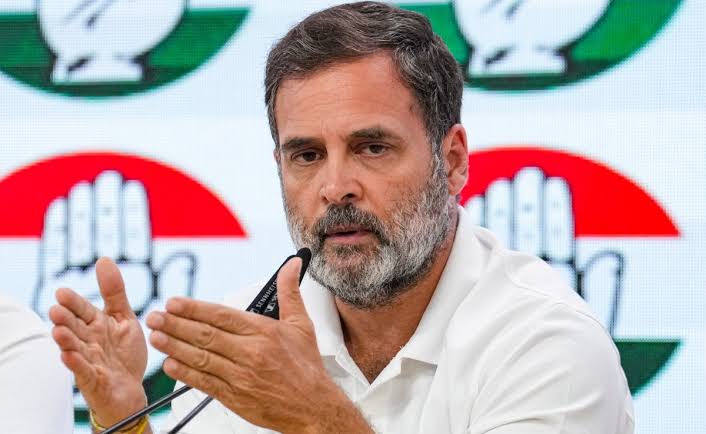
New Delhi: Senior Congress leader Rahul Gandhi has strongly criticized the Election Commission of India (ECI) for its directive allowing the destruction of CCTV recordings, webcast data, and video footage from polling stations just 45 days after the election—unless results are legally challenged in court.
Taking to X (formerly Twitter) on Saturday, Gandhi accused the Election Commission of eliminating critical evidence instead of providing transparency regarding the recently concluded Lok Sabha elections.
“Voter list? Not in a machine-readable format. CCTV footage? Photos and videos of the election process? Now, instead of storing them for a year, they’ll be destroyed in just 45 days. The one responsible for answering questions is the one destroying the evidence,” he wrote.
The Congress leader further alleged that the move indicates a deliberate attempt to suppress scrutiny and protect a questionable election outcome.
“It’s clear they were sure of victory. This fixed election is poison for democracy,” he added.
The controversy stems from a reported Election Commission advisory to retain certain polling-related digital records, such as CCTV footage and webcasts, only for a 45-day period post-results, unless legally contested. Critics argue that this is insufficient time for parties or independent observers to detect and act on any irregularities, especially given delays in accessing data.
Opposition Reacts
Multiple opposition leaders have echoed Rahul Gandhi’s concerns, alleging that the EC’s move undermines electoral transparency and raises questions about the integrity of the voting process. The INDIA bloc, led by Congress, has been demanding greater transparency in the use of EVMs, real-time data publication, and access to electoral roll formats that can be audited independently.
The Election Commission, however, maintains that it is following standard protocols as per its data retention policies and the Representation of the People Act, 1951.