Adinath.
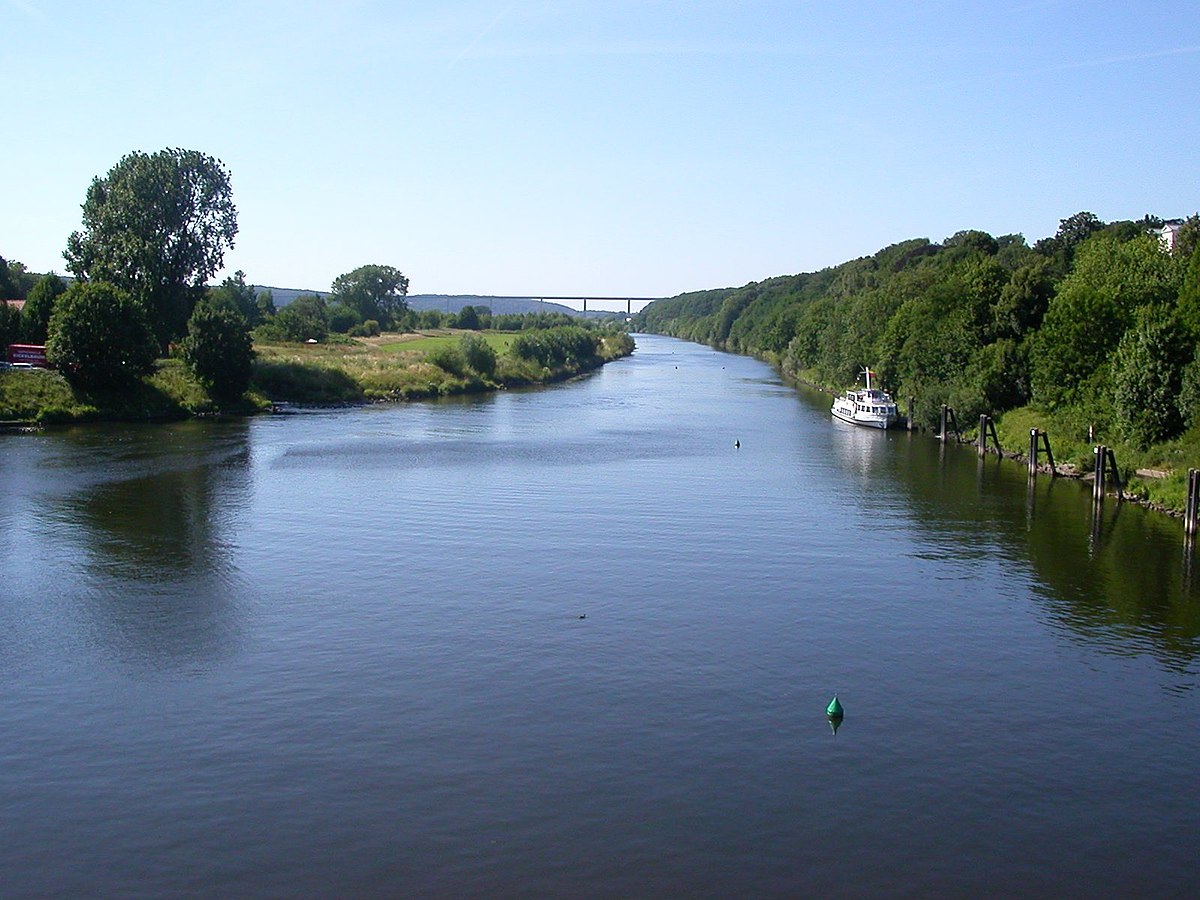
RUHR REGION, GERMANY – For over a century, the Emscher River was an infamous symbol of industrial pollution, a putrid waterway known as the “sewer of the Ruhr.” Its foul stench pervaded the towns of Germany’s industrial heartland, a constant reminder of the region’s intense industrial activity and the human waste it carried. Yet, today, the Emscher has undergone an extraordinary transformation, emerging as a vibrant blue-green artery that breathes life back into the formerly desolate landscape.
The Tyczkowskis, an octogenarian couple who witnessed the river’s darkest days, vividly recall the overpowering stench. “The whole thing was filthy and it stank terribly,” they stated, laughing in disgust at the thought of ever swimming in its waters.
“There were other things swimming inside.”
Since 2021, the Emscher’s waters have been entirely free from effluent, a monumental achievement that has allowed nature to reclaim what was once considered biologically dead. Aquatic ecologists, like Professor Daniel Hering from the University of Duisburg, celebrate this turnaround as a “success story.” He notes the return of diverse life, including lapwings, kingfishers, demoiselles, freshwater shrimp, caddis flies, and even beavers. In May, scientists confirmed the re-establishment of red-finned rudd from the Rhine, a testament to the river’s ecological recovery.
The Emscher’s plight began in the 1800s during the Industrial Revolution, as the burgeoning population of the Ruhr region faced rampant waterborne diseases like typhoid and cholera, impacting both public health and economic productivity. Industrial barons, concerned by the hit to their profits, formed the Emschergenossenschaft, Germany’s first water management association. However, unpredictable land subsidence caused by coal mining prevented the construction of underground sewage canals. The solution at the time was to dump waste directly into the Emscher, which was straightened and concreted to manage the flow.
The tide began to turn in the 1980s with the collapse of the coal mining industry, which finally halted the subsidence. This crucial development opened the door for politicians to envision a future where the river could be restored. Uli Paetzel, chair of the Emschergenossenschaft and Lippeverband, recalls the initial skepticism from engineers who saw no need to fix a “working” system. However, growing environmental awareness, spurred by events like the Chornobyl crisis and the die-off of North Sea seals, galvanized public and political will.
The Emschergenossenschaft embarked on an ambitious cleanup, transforming a river that had served as a toilet for over 2.5 million people. The centerpiece of this €5.5 billion (approximately £4.7 billion) project was a central 51km (32-mile) underground sewage “highway” with an internal diameter of 2.8 meters (9.2ft) – large enough, as Paetzel describes, to “drive through it with a car.”
This massive undertaking also involved the construction of numerous pumping stations, four treatment plants, and 436km of additional sewage channels.
The project was primarily financed by fees from industries and local communities, with roughly 20% coming from the EU and the state of North Rhine-Westphalia. Supported by low-interest loans from public banks and widespread local backing, the restoration proceeded with remarkably few hitches, notably avoiding any legal challenges – a rarity in Germany, according to Paetzel. The biggest hurdle, he notes, was purely technical: “Putting underground canals into a densely built-up region – with motorways, dense urban development, industrial facilities – and getting the land to do so, that was the biggest challenge.”
Today, the Emscher provides a vital blue-green space, offering flourishing nature and recreational opportunities for residents and tourists in a region that has historically grappled with poverty and unemployment. More than 130km of cycle paths now run along its banks, allowing people to enjoy its rejuvenated beauty. “Sometimes, from the bridge, you can even see down to the riverbed,” says Volker, a retired lawyer, marveling at the clear water during a bike ride. “We both find it so nice that it was restored.”
While the Emscher’s transformation is arguably one of the most drastic in Europe, many of the continent’s rivers and lakes remain in urgent need of similar attention. An October report from the European Environment Agency revealed that only 37% of surface-water bodies had a “good” or “high” ecological status, and merely 29% achieved good chemical status – figures that showed “hardly any change” between 2015 and 2021.
Nevertheless, the success of projects like the Emscher restoration has fueled enthusiasm for river rehabilitation across Europe. As governments face increasing pressure to protect nature and concepts like “rewilding” gain traction, the EU has committed to restoring 25,000km of river to a free-flowing state by 2030, hoping to replicate successes like the Emscher’s and bring more of Europe’s waterways back to life.
India faces similar challenges today. Iconic rivers like the Ganga and Yamuna, deeply woven into our culture and spirituality, are under siege from pollution, untreated sewage, and industrial waste. Despite numerous programs and heavy investments, progress has been uneven. But the Emscher’s story offers a powerful lesson: restoration is not only possible—it is transformational.
India has the talent, technology, and tradition of river reverence to lead one of the world’s greatest ecological revivals. Let the Emscher be a reminder that no river is beyond saving. What was once a sewer can become a sanctuary. With sustained commitment, community engagement, and integrated planning, India’s rivers too can flow clean and free again—nourishing both people and nature for generations to come.