New Delhi, India – In a significant strategic shift following the temporary suspension of the Indus Waters Treaty (IWT) with Pakistan, India has dramatically accelerated its plans for major hydroelectric projects on the Chenab River. This move aims to maximize India’s utilization of the river’s waters, especially with the treaty’s restrictions currently not in force.
A key development is the recent floating of international tenders for the Sawalkote Hydroelectric Project. Conceived over four decades ago, this ambitious project is projected to have a massive capacity of 1,856 MW, making it one of the largest hydropower initiatives in India. Located near Sidhu village in Jammu and Kashmir’s Ramban district, Sawalkote is viewed as a crucial step to optimize India’s leverage over Indus waters while the IWT remains in abeyance.
Beyond Sawalkote, India is rapidly advancing several other vital projects on the Chenab, all situated in Jammu and Kashmir’s Kishtwar district:
- Pakal Dul (1,000 MW): This project is on track to become the first water storage project in the region with a substantial live storage capacity of nearly 109 million cubic meters. It is approximately 66% complete as of May 2025, with an expected commissioning date of September 2026.
- Ratle (850 MW): This project is a frontrunner for early commissioning, with a target date of May 2026. The diversion of the Chenab River through tunnels at Drabshalla in Kishtwar district was successfully achieved in January 2024, expediting construction. As of May 2025, the Ratle project was 21% complete.
- Kiru (624 MW): This run-of-river scheme, located between Kirthai II (upstream) and Kwar (downstream) projects, is scheduled for commercial operation by July 2025. Significant civil works, including dam concreting and powerhouse excavation, are in advanced stages.
- Kwar (540 MW): Also a run-of-river project, Kwar achieved river diversion in January 2024 and is expected to enter commercial operation by 2027.
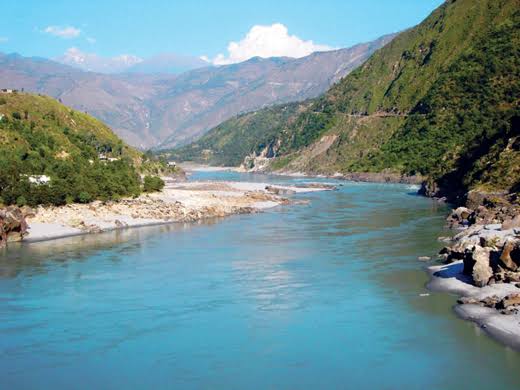
These projects collectively underscore a broader national strategy to harness the immense hydropower potential of the Chenab River, which originates in the high altitudes of Himachal Pradesh and flows through steep gradients, providing ideal conditions for power generation.
The intensified focus on these projects follows India’s suspension of the Indus Waters Treaty in April 2025, in the aftermath of a terrorist attack in the Pahalgam Valley of Jammu and Kashmir. The suspension has temporarily removed certain treaty-mandated requirements for extensive prior notification and adherence to specific design limitations, thereby enabling a swifter pace of construction and greater flexibility in water management. While the IWT historically allocated the western rivers (Indus, Jhelum, and Chenab) to Pakistan, it permitted India “non-consumptive” uses, including hydropower generation, under specified conditions. The current abeyance allows India to pursue its development objectives more assertively.
The increased hydropower generation from these projects is critical for meeting India’s escalating energy demands and bolstering its energy security. Furthermore, this acceleration of development serves as a clear assertion of India’s rights and strategic interests concerning the waters of the western rivers.