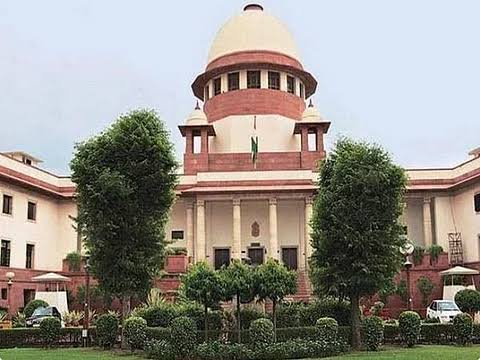
New Delhi: The Supreme Court of India has issued a landmark directive, ordering the release of all convicts who have been sentenced to a “fixed-term life imprisonment” after they have completed their prescribed prison term. The ruling, which came while the court was addressing the case of Sukhdev Yadav, a convict in the 2002 Nitish Katara murder, aims to prevent prolonged and unnecessary incarceration.
A bench of Justices B.V. Nagarathna and K.V. Viswanathan stated that a convict sentenced to a fixed period, such as Yadav’s 20-year term, must be released upon the completion of that period. The court emphasized that in such cases, there is no need for a “remission” process, which is typically required for convicts sentenced to a full life term.
The apex court expressed concern over prisoners who remain in jail even after completing their sentences. The bench directed that a copy of the order be circulated to the Home Secretaries of all states and union territories to identify and release such convicts immediately, provided they are not wanted in any other cases.
This ruling clarifies the distinction between a standard life sentence, which implies imprisonment for the natural life of the convict, and a fixed-term life sentence where a specific period is set by the court. The court’s decision is expected to bring relief to many prisoners who may have been languishing in jail despite having served their time.