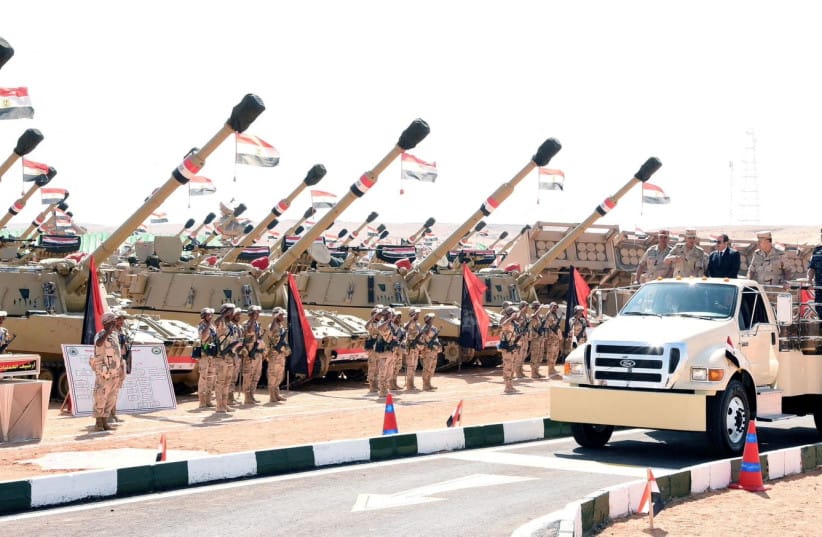
Cairo — In a significant move to reshape the regional security landscape, Egypt is reportedly pushing to revive a long-stalled plan to form a joint Arab military force, modeled on the NATO alliance. The initiative, first proposed nearly a decade ago, is gaining new momentum following recent escalations in the Middle East.
According to reports from multiple Arabic-language news outlets, including the Lebanese newspaper Al-Akhbar, Egyptian President Abdel Fattah al-Sisi is actively seeking support from other Arab nations to create a unified rapid-reaction force. This force would be capable of deploying to defend any Arab state under attack.
A Unified Command and a New Urgency
Sources indicate that Egypt, which possesses the largest military in the Middle East, is proposing to contribute up to 20,000 troops to the joint force. Cairo is also seeking to hold the top command position, with the second-in-command role to be offered to Saudi Arabia or another key Gulf state. This reflects Egypt’s ambition to secure a central role in a new regional security framework while ensuring a prominent position for its Gulf allies.
The renewed push for this military alliance is said to be a direct response to a recent Israeli airstrike in Qatar, which reportedly targeted and killed Hamas leaders. This incident has heightened tensions and underscored the need for a collective defense mechanism among Arab nations. The proposal is expected to be a key topic of discussion during an upcoming Arab-Islamic summit in Doha, where leaders will aim to formulate a unified response to the current geopolitical climate.
Challenges and Historical Context
While the idea is gaining traction, it is not without its challenges. Previous attempts to form a similar force have failed due to various obstacles, including disagreements over command structure, conflicting national interests, and concerns about sovereignty. Analysts note that for this new initiative to succeed, participating nations must overcome these long-standing issues.
The proposed force would consist of ground, air, and naval units, with a focus on counterterrorism and peacekeeping missions. Its primary objective would be to “deal with security threats and terrorism or anyone who poses a threat to the Arab world’s safety and stability.”
The revival of this “Arab NATO” concept signals a desire by key Arab powers to assert more control over their own security and to reduce reliance on external powers.