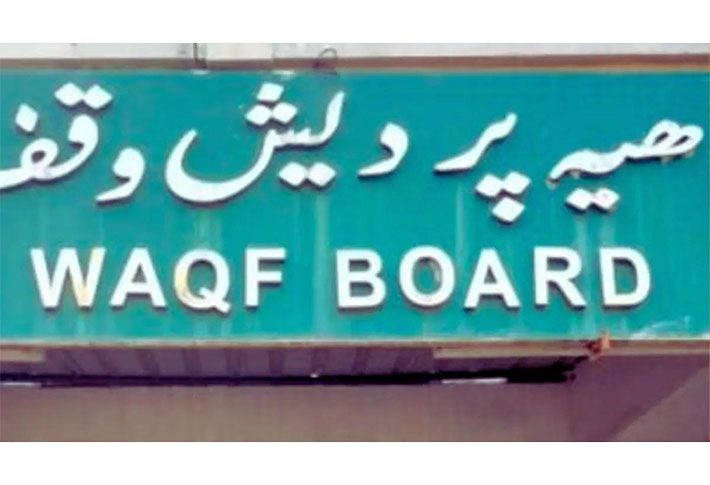
What is the Waqf (Amendment) Act, 2025 — major changes and contested provisions
To understand the objections and protests, it’s first necessary to see what changes the amended law brings, and why many see them as problematic.
Key features of the amendment
According to the official account (Press Information Bureau) and legislative tracking sources:
- The Amendment revises the Waqf Act of 1995.
- It changes the composition of Waqf Boards and the Central Waqf Council (how members are selected, inclusion criteria).
- It alters the criteria for forming a Waqf (endowments). For instance, the “waqf by user” provision is removed; only declarations or endowments will be accepted.
- It strengthens governmental roles in validating, auditing, or intervening in Waqf properties and records.
- It mandates Waqf Boards to provide reports, improve transparency, and enforces time lines for reporting and administrative oversight.
- The amendment also provides that Waqf Boards may take over Waqf lands (in some circumstances) and convert them into educational, commercial, housing, or market uses if necessary.
These changes are intended, per government accounts, to bring more uniformity, reduce mismanagement, corruption, and to modernize Waqf administration.
Objections and critical concerns
Critics—especially from Muslim organizations, opposition parties, legal scholars—see multiple red flags. Some of the major objections include:
- Intrusion into religious autonomy / minority rights
Waqf properties are part of Muslim religious / charitable endowments. Critics contend that giving the government or non-Muslim members enhanced control undermines the autonomy of Muslim institutions. - Exclusion of “waqf by user”
The removal of the “waqf by user” clause (which allowed the creation of waqf based on long usage) is seen as arbitrary, potentially invalidating long-standing endowments made informally. Critics say this disenfranchises many genuine waqf contributors. - Potential for misuse / expropriation
The increased governmental oversight and power to validate or reclassify property might lead to undesirable expropriation or “denotification” of waqf lands, particularly those lacking clear documentation (which is common in old waqf properties). - Constitutional / legal validity concerns
The critics argue the law may violate the constitutional rights of minorities, equality (Article 14), freedom of religion (Articles 25 and 26), and protections granted to minority institutions.
Also, the shift of authority in deciding property rights from courts to administrative bodies is seen as weakening judicial oversight. - Inclusion of non-Muslims in Waqf Boards
One of the most contentious changes is that non-Muslim members may now be part of Waqf Boards, which opponents argue is incompatible with the religious nature of these trusts. - Lack of consultation or ignoring community feedback
The AIMPLB has complained that despite large public responses (reportedly millions of emails), suggestions from Muslim organizations were not taken seriously or incorporated.
So, for many community leaders, the law is seen as a direct challenge to Muslim institutional and religious rights, and a possible mechanism for weakening Waqf holdings.
AIMPLB’s Protest Plans & Bharat Bandh Call
Given these objections, the All India Muslim Personal Law Board (AIMPLB) has mounted a multi-pronged protest and resistance campaign.
Key protest steps so far
- In early April, after Parliament passed the Waqf Amendment Bill, AIMPLB publicly condemned it and announced legal action and mass mobilization.
- AIMPLB filed a petition in the Supreme Court challenging the constitutional validity of the Act.
- It called for a “lights-out” protest (“Batti Gul”) on April 30, 2025, from 9:00 to 9:15 pm, where homes, offices, and shops would switch off lights briefly as a show of protest.
- The Board organized statewide, district-level protests, human chains, public meetings, and symbolic arrests in state capitals.
- During a large dharna in Indira Park, Hyderabad, AIMPLB reaffirmed that the protest would continue until the Act is withdrawn.
- AIMPLB also revised its protest strategy: in states unfriendly or hostile to them, it may scale down or avoid street protests, sticking to awareness campaigns instead.
Call for Bharat Bandh
- As part of this escalating protest strategy, the AIMPLB has announced a “Bharat Bandh” on October 3, 2025, to oppose the Waqf (Amendment) Act.
- The Bandh is intended as a nationwide shutdown—businesses, institutions, transport may be asked to remain closed, as a show of dissent and pressure on the government.
- The announcement appears on social media pages linked to AIMPLB and media reports citing the Board.
Thus, the Bharat Bandh is the next escalation in the protest chain, aiming to bring larger national attention and pressure for repeal.
Legal Status, Court Views & Interim Rulings
Because many parts of the Act have been challenged, the legal trajectory is crucial.
- After multiple petitions were filed (by AIMPLB, Jamiat Ulama-e-Hind, DMK, Asaduddin Owaisi, other MPs and organizations), the Supreme Court clubbed them under “In re: Waqf (Amendment) Act, 2025” and directed the government to submit a consolidated response.
- The Court also issued an interim order: no Waqf property (registered, unregistered, or “waqf by user”) shall be denotified, altered, or interfered with until further orders.
- The government, via Solicitor General, assured no appointments to new Waqf Boards or councils, and no interference with properties, at least until a later date (e.g. May) under the interim direction.
- However, AIMPLB expressed dissatisfaction with the interim ruling, noting that only some provisions were stayed, whereas they expected full stays on all contentious clauses they consider unconstitutional.
Thus, while the Act is in force, critical provisions are under judicial scrutiny and temporarily restrained from full implementation in some respects.
Protests, Tensions, and Incidents on Ground
The legislative and legal disputes have already translated into public protests and sometimes violent incidents, especially in certain regions.
- In Murshidabad (West Bengal), protests against the Act in April 2025 turned violent. Several people were injured or arrested, houses damaged, communal tensions flared. The Calcutta High Court reportedly ordered deployment of Border Security Force (BSF) forces.
- In various states, including Tamil Nadu, protest marches were held. For example, in Trichy, Muslim groups marched from RC School to the post office to protest the Waqf Amendment Act, denouncing it as unconstitutional and demanding its immediate withdrawal.
- The interfaith gatherings have also come up: e.g. in Nagpur, Muslim and Buddhist leaders jointly criticized the amendments, linking them to broader concerns over religious autonomy and constitutional rights.
- The Vishwa Hindu Parishad (VHP) has publicly cautioned the government and state authorities to monitor the protests, warning of potential violence or vandalism, and has criticized the scale of proposed mobilization by AIMPLB.
- Some parts of the community and commentators propose that the protests may be used to stoke communal tension or disturb law & order, and the VHP insists that organizers ensure peace.
Thus, the conflict is not merely legislative or legal, but increasingly political and social, with potential flashpoints in regions with historical communal sensitivities.
Political & Public Reactions
The controversy has drawn reactions from political parties, civil rights groups, opposition leaders, and media.
- Opposition parties, including Congress and state governments, have criticized the legislation, labeling it discriminatory and unconstitutional, and many have promised to challenge it in courts.
- Politicians have described the law as sending a message of unequal citizenship to Indian Muslims. For instance, Mahua Moitra (MP) said the bill tells Muslims that their rights “are not the same as ours.”
- Several state assemblies have passed resolutions opposing the amendment, and state-level governments have expressed unease with central overreach.
- The AIMPLB has pointed out that its protest campaign is not communal in nature but is in defense of constitutional rights, and it has invited cooperation from civil society and other religious groups.
- In public messaging, AIMPLB and allied organizations are framing the issue as not just about Waqf management but about preserving the constitution, secularism, minority rights, and religious freedom in India.
Strategic Implications & What to Watch
Given this high-stakes context, here are the key variables and likely turning points:
- Supreme Court Judgment: The ultimate constitutional review will decide whether many of the contested provisions can stand or must be struck down.
- Implementation and Provisional Delays: Even if parts of the law are stayed, how authorities (central/state) act (or refrain) in relation to Waqf Boards, property disputes, appointments, etc., will matter enormously.
- Mobilization and Social Response: The success or otherwise of the Bharat Bandh (Oct 3) and associated protests will indicate the strength of grassroots resistance.
- Political Fallout: How opposition parties and regional governments leverage this issue—especially in elections—is significant.
- Communal Peace & Law & Order: There is a real risk of protests escalating into communal violence in sensitive regions; managing tensions is vital.