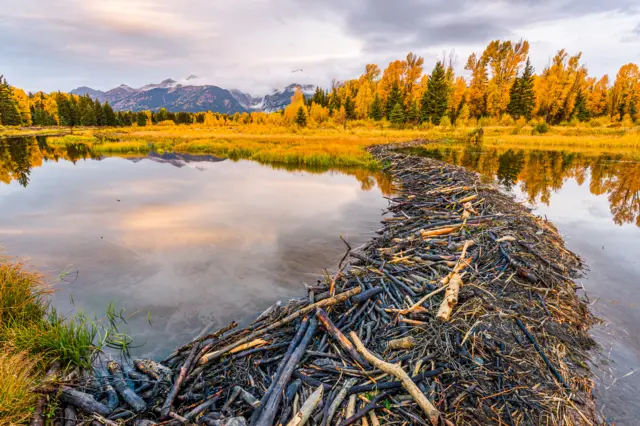
By Adinath
Ecosystem Engineering by the North American Beaver (Castor canadensis) in New Mexico, California, and the Desert Southwest
In the arid and semi-arid landscapes of the western United States, stream degradation and riparian decline have intensified under climate stress. The North American beaver (Castor canadensis), often called a “natural hydrologic engineer,” plays a vital ecological role in restoring such systems. Through dam-building, beavers slow surface flows, elevate groundwater, expand wetlands, and enhance biodiversity. This report by Adinath synthesizes recent scientific findings and practical experiences—especially from New Mexico, California, and the greater Southwest deserts—highlighting the hydrological, geomorphic, and ecological mechanisms of beaver restoration, evaluating the outcomes of translocation and beaver-dam analog (BDA) projects, and identifying challenges, constraints, and strategic directions for future restoration.
1. Introduction
Across the Western U.S., many stream channels have become incised, disconnected from their floodplains, and hydrologically unstable. Under increasing drought pressure, water scarcity, and ecological degradation, beaver-mediated restoration has reemerged as a cost-effective, nature-based solution. The reintroduction of beavers—or the construction of beaver-dam analogs (BDAs)—is being recognized as a means to slow runoff, enhance groundwater recharge, and support riparian vegetation recovery, thereby increasing resilience to droughts and wildfires.
2. Mechanisms of Restoration
2.1 Flow attenuation and pond formation
Beaver dams slow down stream velocity, creating small ponds that enhance water residence time. These impoundments reduce downstream erosion, allow infiltration, and serve as natural sediment traps. ([U.S. Fish and Wildlife Service, 2015][1])
2.2 Groundwater recharge and elevated water tables
The slowed flow promotes infiltration into adjacent soils and aquifers, raising local groundwater levels and converting ephemeral flows into more perennial reaches. ([IWJV, 2019][2])
2.3 Wetland and riparian expansion
Elevated water tables encourage riparian vegetation, which stabilizes banks, filters sediments, and provides shading and habitat diversity. Even in dryland conditions, beaver ponds can foster persistent wetlands. ([Beaver Institute, 2023][3])
2.4 Biodiversity enhancement
Beaver-created wetlands offer refuges for amphibians, fish, birds, and mammals during drought, sustaining ecological communities across otherwise water-limited landscapes.
2.5 Morphologic transformation
Beaver dams induce sediment aggradation, reduce incision, and reconnect streams to floodplains—processes documented in desert river systems like Arizona’s Bill Williams River. ([U.S. Geological Survey, 2011][4])
3. Case Evidence from the Arid West
3.1 New Mexico and rangeland systems
A U.S. Geological Survey review identified 97 beaver-related restoration efforts across western rangelands, often on private lands. These projects showed positive hydrologic outcomes but weak monitoring frameworks and limited stakeholder coordination. ([Pilliod et al., 2018][5])
3.2 Desert river translocation outcomes
A 2024 Utah study found that BDAs alone did not improve translocation success—high flows and limited forage led to low survival and rapid emigration. ([Sandbach, 2024][6])
Similarly, Animal Conservation (2022) reported translocated adult beavers had markedly lower survival rates than residents (0.26 vs. 0.88 over 8 weeks), underscoring the risk of relocation in desert environments. ([Doden et al., 2022][7])
3.3 Scientific reviews
Gibson and Olden (2014) synthesized global evidence showing that while beaver effects on hydrology and geomorphology are broadly consistent, biotic and water-quality responses vary across biomes—and arid systems remain underrepresented in research. ([PubMed, 2014][8])
3.4 California’s renewed policy focus
California’s Department of Fish and Wildlife launched its Beaver Restoration Program (2023), integrating tribal, conservation, and landowner partnerships. Pilot projects have shown measurable increases in surface water area and riparian recovery, validating the role of beavers even in semi-arid contexts. ([Beaver Institute, 2023][9])
4. Constraints and Knowledge Gaps
4.1 Ecological and operational limits
Beaver restoration in deserts faces inherent challenges: scarce woody vegetation, extreme temperature fluctuations, variable flow regimes, and predator exposure.
4.2 Translocation limitations
High post-release mortality and poor site fidelity remain major barriers in desert ecosystems. ([Doden et al., 2022][7])
4.3 Infrastructure and social conflicts
Beaver dams can flood roads, pastures, or irrigation ditches; thus, conflict mitigation tools like flow devices (“beaver deceivers”) are essential. Long-term success depends on integrating ecological goals with human infrastructure needs.
4.4 Data and monitoring deficits
Many western restoration projects lack systematic pre- and post-restoration hydrologic, geomorphic, and socio-economic monitoring, limiting adaptive management. ([USGS, 2018][5])
4.5 Knowledge gaps
Further research is needed on:
- Long-term hydrologic and groundwater effects (>10 years).
- Desert-specific translocation and habitat suitability protocols.
- Comparative cost-benefit of beaver vs. engineered restoration.
- Integration of legal, social, and water-rights frameworks.
5. Recommendations for Practice
- Rigorous site assessment – Evaluate stream gradient (<6%), flow stability, forage availability, and predator presence before beaver introduction.
- Pilot-based adaptive management – Start small, track hydrology, vegetation, biodiversity, and socio-economic outcomes.
- Hybrid restoration – Combine BDAs and natural beaver colonization but avoid assuming BDAs will guarantee success.
- Stakeholder integration – Engage ranchers, tribal groups, and local agencies early; coordinate around water use and flood risks.
- Non-lethal conflict mitigation – Use flow devices, fencing, and compensation schemes.
- Long-term funding – Secure sustained monitoring over multiple years to assess resilience and performance.
- Targeted research – Develop desert-specific data on hydrology, geomorphology, and cost-efficiency.
6. Conclusion
Beaver-mediated restoration represents a scientifically grounded, ecologically rich, and socially adaptive pathway for healing degraded streams and wetlands in the arid western U.S. The results from New Mexico, California, and other desert systems demonstrate that, where conditions allow, beavers can significantly enhance hydrologic function and biodiversity. Yet success is not universal—harsh climates, translocation difficulties, and management gaps persist. As Adinath concludes, “the key lies in site-specific design, persistent monitoring, and community partnerships that align human and ecological needs.”
When effectively implemented, beaver restoration can transform parched, incised streams into thriving wetland mosaics—reviving both water and life across the desert Southwest.
References
- U.S. Fish and Wildlife Service. (2015). Beaver Restoration Guidebook v1.02.
- IWJV (Intermountain West Joint Venture). (2019). Beaver Restoration in the West.
- Beaver Institute. (2023). Beaver Effects on Dryland Streams.
- Andersen, D.C. et al. (2011). Managed Flood Effects on Beaver Pond Habitat in a Desert Riverine Ecosystem. U.S. Geological Survey.
- Pilliod, D.S. et al. (2018). Survey of Beaver-Related Restoration Practices in Rangeland Streams of the Western USA. USGS.
- Sandbach, C.E. (2024). Evaluating Beaver Translocation Methods for Desert River Restoration. Utah State University.
- Doden, E. et al. (2022). Comparing Translocated and Resident Beavers in Desert Rivers. Animal Conservation.
- Gibson, P.P., & Olden, J.D. (2014). A Global Review of Beaver Dam Impacts. Aquatic Conservation: Marine & Freshwater Ecosystems.
- California Department of Fish and Wildlife. (2023). Beaver Restoration Program Overview.