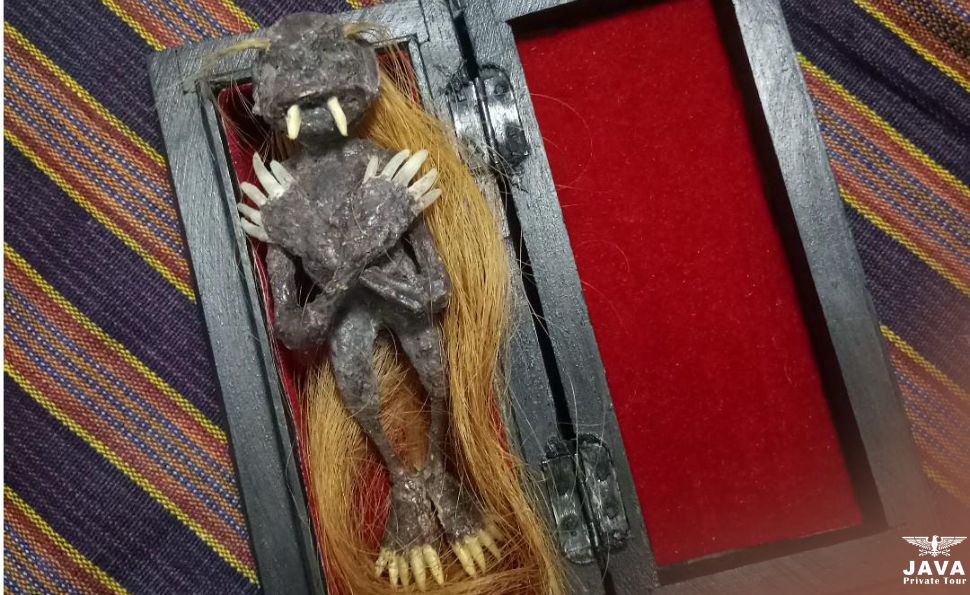
Among the most enduring and eerie legends of Indonesian folklore is that of the Jenglot — a small, humanoid figure said to possess supernatural powers and a thirst for blood. Often resembling a mummified doll with human-like features, the Jenglot has captivated, terrified, and intrigued Indonesians for generations, standing as a symbol of the nation’s deep-rooted mysticism and fascination with the occult.
Over the years, the Jenglot has moved beyond whispered village tales to become a cultural phenomenon — frequently showcased in paranormal exhibitions, television programs, and even private occult collections across the Indonesian archipelago.
A Frightening Physical Form
The Jenglot is typically tiny — measuring between 12 to 20 centimeters (5 to 8 inches) in length. Its physical appearance is chilling: a shriveled, leathery body with a gaunt, skeletal face, sharp fangs, and long, black hair that some claim continues to grow over time. Its nails are long and claw-like, giving it a distinctly predatory look.
The body is often stiff and desiccated, resembling a miniature mummy, sometimes found encased in small boxes, wrapped in silk, or displayed within glass containers by owners who claim to possess it.
Origins in Forbidden Magic
According to various Javanese and Sumatran legends, the Jenglot was once a human being — typically a hermit, ascetic, or sorcerer who practiced dark magic in pursuit of immortality.
When such an individual died, it is said that Mother Earth rejected the corpse, refusing to accept the body of one who had abused the laws of nature. Instead of decaying, the body would shrink, twist, and harden into the grotesque form of the Jenglot.
Other traditions suggest that the Jenglot is not human at all, but a spiritual entity or trapped djinn, bound into a physical form by magical rituals. These entities are believed to serve their human keepers — but only in exchange for sustenance and obedience.
A Vampire’s Appetite: The Ritual of Blood Feeding
Central to the Jenglot legend is its vampiric need for blood. Folklore holds that every Jenglot must be regularly fed with drops of human or animal blood to sustain its life-force.
The ritual is unique: the blood is placed beside the Jenglot, not directly consumed. Believers claim the creature absorbs the essence or energy of the blood through unseen means — a spiritual process rather than a physical act.
Neglecting this ritual, legend warns, can bring terrible misfortune, illness, or even death to the owner or their family. Conversely, those who faithfully maintain the Jenglot’s needs are said to gain wealth, protection, or mystical power in return.
Power and Fear: The Jenglot’s Alleged Abilities
For believers, the Jenglot is far more than an artifact — it is a spiritual servant capable of both blessings and curses. Its powers, according to traditional accounts, include:
- Granting protection from harm and malevolent spirits.
- Bringing good fortune and prosperity to its keeper.
- Aiding revenge against enemies through dark magical means.
- Enhancing spiritual power or charisma for those who practice occult rituals.
The Jenglot, however, is also feared for its volatility. Mishandling, disrespect, or neglecting its rituals is believed to provoke its wrath — with dire consequences for the owner.
Science and Skepticism
Despite these mystical claims, modern scientific investigations have cast strong doubt on the creature’s authenticity. Specimens exhibited in museums or private collections have been analyzed by Indonesian and international researchers.
DNA testing of hair and tissue samples has revealed human DNA, though inconsistently distributed — suggesting the hair may have been artificially implanted into a crafted body. Forensic examinations further suggest that many Jenglots are fabricated using animal remains, such as monkey or fish parts, combined with resin, leather, and human features to enhance realism.
Skeptics describe the Jenglot as an example of folk taxidermy or ritual fetishism — an object created to embody supernatural belief rather than an actual living creature.
Nonetheless, believers maintain that even if man-made, these figures can house spiritual entities, becoming vessels for unseen forces once rituals of invocation are performed.
A Living Legend in Modern Indonesia
Whether regarded as a hoax, a sacred relic, or a supernatural being, the Jenglot continues to hold a powerful place in Indonesian popular culture. It represents a bridge between ancient mysticism and contemporary fascination with the paranormal.
Television documentaries, museum exhibitions, and online videos regularly feature alleged Jenglot discoveries, while black-market sales of supposed “authentic” Jenglots persist — often fetching high prices among collectors and spiritual practitioners.
In a society where faith in the unseen remains deeply interwoven with daily life, the Jenglot endures not just as an object of curiosity, but as a reminder of the enduring belief in magic, mystery, and the thin veil between the natural and the supernatural.
Sources: Jakarta Post Archives | Indonesian Folklore Studies Journal | Kompas TV Investigative Reports | National Museum of Indonesia Exhibitions (2017–2024)