New Delhi:
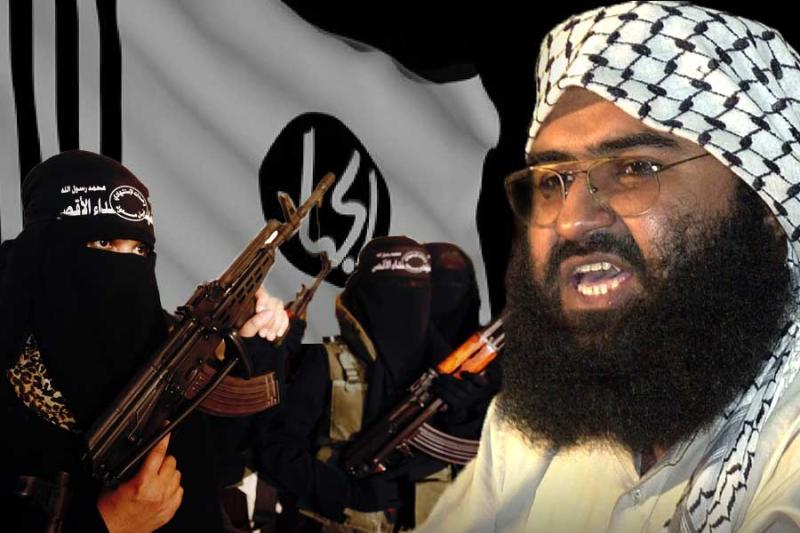
In a major alarm for regional security agencies, Jaish-e-Mohammed (JeM) chief and UN-designated global terrorist Masood Azhar has claimed that the group’s newly formed women’s wing, Jamaat-ul-Mominaat, has inducted more than 5,000 female recruits within weeks of its launch. The development signals a significant strategic shift for the Pakistan-based terrorist organisation, which until now discouraged women from direct participation in militant activities.
First Public Launch of Women’s Wing
According to reports, JeM formally unveiled Jamaat-ul-Mominaat in early October 2025, marking the organisation’s first structured attempt to build an all-female militant cadre. The unit is led by Saeeda (Sadiya) Azhar, sister of Masood Azhar, with other senior roles reportedly held by Azhar’s relatives, including his second sister Samaira (Umme Masood) and Afeera Farooq, widow of Pulwama bomber Umar Farooq.
Online Recruitment, 500 PKR Fee, and “Tufat al-Muminat”
Investigations reveal that JeM has begun online indoctrination classes for new female recruits under a programme titled “Tufat al-Muminat.”
The virtual sessions—conducted on online meeting platforms—run for 40 minutes daily and allegedly require a 500 PKR enrolment fee, framed as a “religious donation.”
These online courses reportedly serve as the first contact point for economically vulnerable women or relatives of slain militants, a demographic the outfit has aggressively targeted.
Structured Militant Training: “Daura-e-Taskiya” and “Daura-Ayat-ul-Nisa”
JeM’s blueprint indicates a two-phase training structure for female cadres:
- Daura-e-Taskiya – an initial radicalisation programme focused on ideological grooming and religious indoctrination.
- Daura-Ayat-ul-Nisa – a second-phase course involving selective textual interpretations that justify women’s participation in jihad, potentially paving the way for operational roles.
Masood Azhar has publicly compared this training framework to JeM’s male programme Daura-e-Tarbiat, underscoring the group’s intent to gradually integrate women into militant and possibly suicide operations.
He has also claimed—echoing extremist rhetoric— that any woman completing the induction course “will go straight to paradise after death.”
Nationwide Recruitment Drive Across Pakistan and PoK
The recruitment campaign reportedly began on October 8, 2025, originating from JeM’s headquarters at Markaz Usman-o-Ali in Bahawalpur.
Women from Bahawalpur, Multan, Sialkot, Karachi, Muzaffarabad, Kotli, and other regions have allegedly enrolled.
JeM has also announced plans to establish district-level chapters of Jamaat-ul-Mominaat, each led by a female muntazima (district manager) responsible for end-to-end recruitment and indoctrination.
Strict internal rules reportedly forbid female recruits from communicating with unrelated men, except husbands or immediate household members.
Propaganda, Emotional Targeting, and Motivational Narratives
A 21-minute audio message released by Masood Azhar positions the women’s wing as a counter to what he claims is a global “anti-JeM conspiracy,” citing the induction of women into the Indian Army and female journalists reporting against the group.
Security analysts note that JeM appears to be leveraging grievance-based radicalisation, using emotional appeals to women whose family members were killed in encounters, promoting revenge and martyrdom themes.
Security Agencies on High Alert
Indian and regional intelligence agencies view the emergence of Jamaat-ul-Mominaat as a major escalation, particularly due to JeM’s history of recruiting suicide bombers and orchestrating high-impact attacks.
However, independent verification remains limited. It is currently unclear:
- how many of the claimed 5,000 recruits have completed training,
- whether women are being prepared for operational roles, or
- the extent of JeM’s actual capability to run sustained militant training for female cadres.
Security officials caution that even if numbers are exaggerated, the formation of a structured women’s wing itself represents a troubling evolution in South Asian militant dynamics.