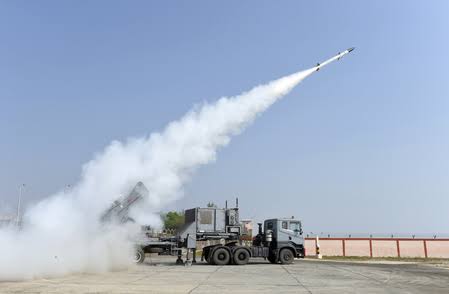
New Delhi: In a major boost to India’s strategic defence and space capabilities, the country has reportedly completed a key project to develop a rocket system capable of launching satellites for the Indian Army and other defence requirements, marking a significant milestone in indigenous launch vehicle technology.
While Indian space and defence authorities have not publicly used a specific project name in official documents yet, recent developments in India’s space launch ecosystem — including advances by government and private sector rocket programmes — signal that India is now positioned to support satellite launches for military applications from domestic launch vehicles.
Strategic Rocket Development and Defence Satellite Launching
According to sources tracking India’s space and defence advances:
- India’s space infrastructure, centred around the Indian Space Research Organisation (ISRO) and increasingly supported by private launch vehicle developers, is rapidly maturing to place strategic satellites into orbit when needed.
- ISRO’s heavy-lift LVM3 (Launch Vehicle Mark-3) has already successfully orbited major payloads, including the GSAT-7R military communication satellite for the Indian Navy, demonstrating the nation’s capacity to launch strategic payloads vital for defence communications and operations.
- In the private sector, initiatives such as Skyroot Aerospace’s Vikram-1 rocket are expanding India’s launch ecosystem, delivering flexible, responsive launch options for small satellites up to hundreds of kilograms — capabilities that could be adapted for defence and army support missions.
Official sources indicate that while specific defence rockets designed expressly for the Army’s satellite deployment are under development, the completion of the latest project reflects a collaborative trajectory involving ISRO, Defence Research and Development Organisation (DRDO), and Indian defence industry partners, aimed at achieving rapid on-demand satellite launch readiness for strategic and battlefield intelligence purposes.
Why This Matters for National Security
Experts highlight that the ability to independently launch satellites with military utility — such as communications, navigation, reconnaissance, and early warning systems — provides the Indian Army and defence services with:
- Greater sovereign control over space assets without reliance on foreign launch providers.
- Enhanced surveillance and communication resilience in contested or fragile environments.
- Better integration between terrestrial defence systems and space-based sensors and communication grids.
This capability is especially relevant given India’s ongoing efforts to expand its military satellite constellation under programmes that prioritize surveillance, communication, and space-based reconnaissance support for defence forces.
Recent Satellite Launch Successes Reinforce Capability
In 2025, ISRO capitalized on its heavy-lift rocket technology:
- The CMS-03 (also known as GSAT-7R) military communication satellite was successfully placed into geostationary transfer orbit, underscoring India’s ability to handle large defence payloads.
- The continued successful missions of the LVM3 heavy-lift launch vehicle strengthen India’s credibility as a space power capable of supporting both civilian and defence satellite launches.
Looking Ahead
The defence establishment is reportedly preparing for further enhancements in dedicated military launch capabilities, including possible integration of rapid-response small launch vehicles being developed by the private sector, and collaboration with ISRO and DRDO to ensure timely and reliable access to space for strategic payloads.
As these rocket projects move from development to operational capability, India’s military space profile is set to grow in tandem with its broader strategic interests in regional security and technological self-reliance.