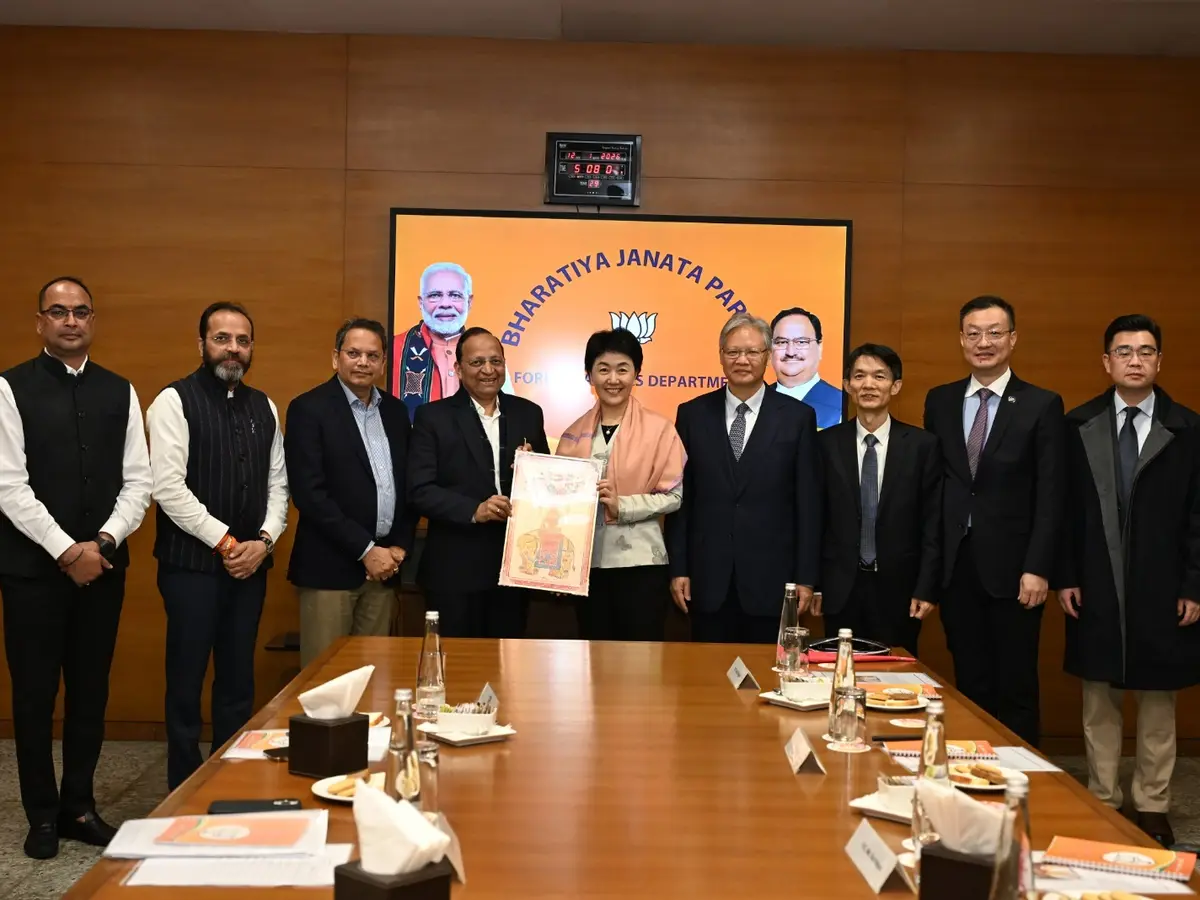
New Delhi: A high-level delegation from the Communist Party of China (CPC), led by Sun Haiyan, Vice-Minister of the International Department of the CPC, visited the headquarters of India’s ruling Bharatiya Janata Party (BJP) in New Delhi on 13 January 2026, marking the first party-to-party engagement with the BJP since the Galwan Valley clashes in 2020.
The six-member Chinese team also paid a courtesy visit to the Rashtriya Swayamsevak Sangh (RSS) headquarters the following day, where they met RSS General Secretary Dattatreya Hosabale. The interaction was described by RSS sources as a courtesy call with no formal agenda discussed.
Discussions and Diplomatic Context
According to BJP officials, the talks at the party headquarters focused on enhancing inter-party communication and dialogue between the BJP and the Communist Party of China. Leaders present included BJP General Secretary Arun Singh and Foreign Affairs department convener Vijay Chauthaiwale, with the Chinese Ambassador to India Xu Feihong also part of the delegation.
This exchange comes amid a gradual thaw in India-China relations after years of tension following the deadly Galwan Valley border clash in 2020. Diplomatic engagement between the two countries has increased since the BRICS summit in Kazan in 2024, where Prime Minister Narendra Modi and Chinese President Xi Jinping held talks, leading to efforts to reduce border frictions.
Political Reactions and Debate
The visit has triggered sharp political reactions in India:
- BJP leaders defended the meetings as routine diplomatic engagement aimed at improving understanding and communication between major political parties. They emphasized that inter-party dialogue is a normal aspect of international relations.
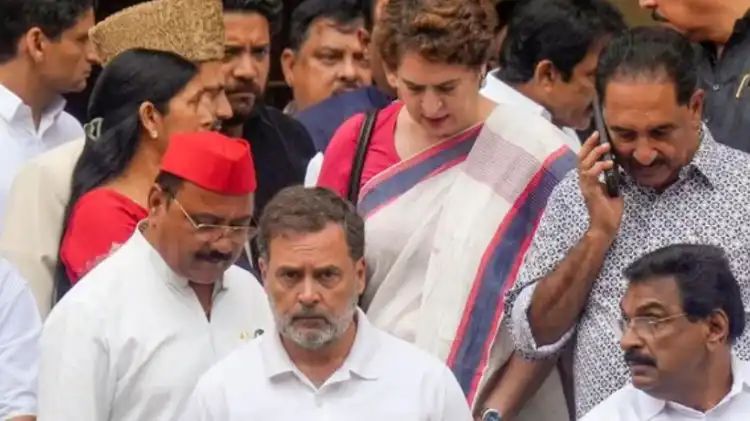
- The Congress Party sharply criticized the BJP, accusing it of hypocrisy and mixed messaging on China policy. Congress leaders questioned the timing and intent of the closed-door meetings and demanded full transparency about what was discussed.
- The Trinamool Congress (TMC) also joined the criticism, alleging double standards by the BJP — condemning China rhetorically while engaging in party-level talks with CPC representatives.
Opposition voices further raised concerns about China’s strategic actions in disputed border areas and its broader regional role, suggesting that political engagement should not undermine India’s national security interests.
Significance and Outlook
While the meetings were officially described as courtesy calls and dialogue exchanges rather than formal diplomatic negotiations, they underscore a notable development in people-to-people and party-to-party interactions between India and China. The events have highlighted the complexities of contemporary India-China relations, balancing diplomatic outreach with domestic political scrutiny and strategic concerns.