Dhaka:
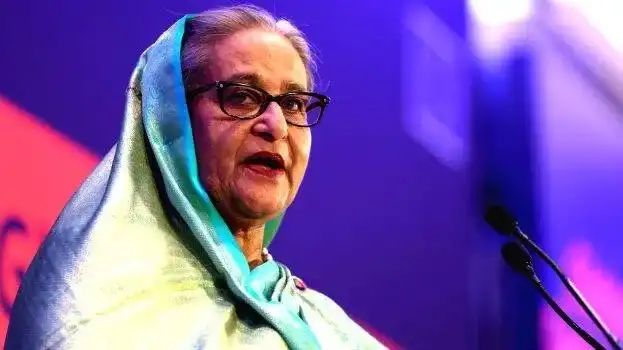
A special court in Bangladesh has sentenced former Prime Minister Sheikh Hasina to 10 years in prison after finding her guilty in a corruption case linked to the alleged illegal acquisition of government housing plots in the Purbachal New Town project. The verdict, delivered in absentia, marks one of the most significant legal actions against a former Bangladeshi head of government and signals a dramatic turn in the country’s political landscape.
What the Court Found
According to court proceedings, Hasina was accused of abusing her authority while in office to obtain residential plots reserved for senior officials and public servants. Prosecutors argued that the allocation violated established housing regulations and caused financial loss to the state.
The court accepted documentary evidence and witness testimony presented by investigators, concluding that the irregularities constituted criminal misconduct under Bangladesh’s anti-corruption laws. Alongside the prison term, the court also imposed financial penalties, reinforcing the seriousness of the offense.
Hasina, currently believed to be outside Bangladesh, did not appear in court during the trial. Legal experts say the sentence will take effect if and when she returns to the country, unless overturned by a higher court.
Political Shockwaves
The ruling is expected to intensify political tensions in Bangladesh, where Hasina remains a dominant and polarizing figure. Supporters have described the case as politically motivated, while opponents argue it demonstrates accountability and the rule of law.
Security analysts warn that the verdict could trigger fresh demonstrations, given Bangladesh’s history of street protests tied to major political developments.
Historical Background
Rise to Power
Sheikh Hasina, the daughter of Bangladesh’s founding leader Sheikh Mujibur Rahman, has been one of the country’s most influential politicians for decades. She first served as prime minister from 1996 to 2001, and again from 2009 onward, overseeing a period marked by strong economic growth, infrastructure expansion, and improvements in social indicators.
Achievements and Criticism
Her tenure saw Bangladesh emerge as one of South Asia’s fastest-growing economies, with notable gains in garment exports, women’s employment, and poverty reduction.
However, her governments also faced persistent criticism from international rights groups and opposition parties over:
- Allegations of authoritarian governance
- Restrictions on media and dissent
- Controversial elections
- Mass arrests of political rivals
These issues contributed to a deeply polarized political environment.
Turbulence Before the Case
Bangladesh experienced significant unrest in recent years, including large-scale protests led by student groups and opposition supporters demanding political reforms. The turmoil reshaped national politics and created conditions for renewed scrutiny of past government decisions — including land allocations and major development projects like Purbachal.
Anti-corruption drives launched afterward reopened several investigations involving senior officials from previous administrations.
What Happens Next?
Legal observers say Hasina retains the right to appeal the verdict. If she challenges the ruling in a higher court, the case could evolve into a prolonged legal battle with major political implications.
The development raises broader questions about Bangladesh’s democratic trajectory, judicial independence, and the future of leadership in a nation navigating both economic ambition and political uncertainty.