What Happened: The Trade Deal in Brief
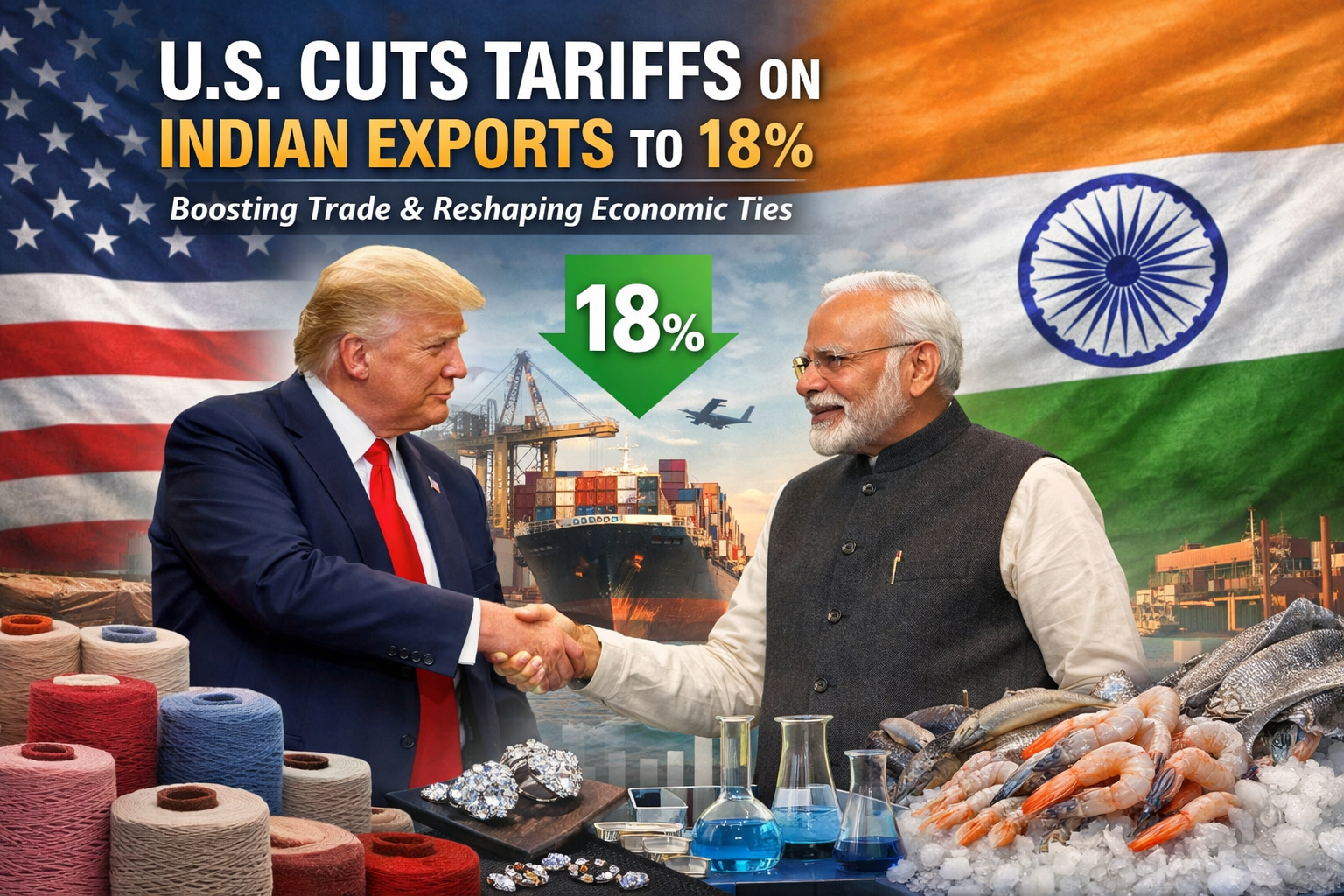
- The United States and India have struck a major trade agreement, under which the U.S. has agreed to lower tariffs on Indian goods to 18 % from a much higher level (effectively up to ~50 % in recent months due to punitive tariffs linked to prior policy).
- This tariff cut was announced by U.S. President Donald Trump following discussions with Indian PM Narendra Modi.
- Both sides have indicated complementary measures — including India lowering tariffs and non-tariff barriers on U.S. goods, and commitments to purchase more American products.
Immediate Economic Reactions
Financial Markets
- Indian stock markets saw strong gains, with indices such as the Nifty50 and Sensex surging sharply on the news — signalling improved investor confidence after weeks of uncertainty.
- The Indian rupee strengthened against the U.S. dollar as tariff risk faded.
Exporters’ Response
- Major export sectors — including textiles, gems & jewellery, chemicals, engineering goods, seafood and marine products — welcomed the tariff relief.
- The reduction removes a significant price-competitiveness disadvantage that Indian products faced compared to peers in Vietnam, Bangladesh, and Korea.
How This Tariff Cut Affects Key Economic Areas
1. Trade and Export Competitiveness
- Lower tariffs make Indian exports more competitive in the U.S. market, potentially reversing some of the export decline seen after higher duties were imposed last year.
- Exports to the U.S. previously faced a layered tariff structure that had eroded price competitiveness and caused production disruptions in labour-intensive sectors.
- At 18 %, Indian tariffs are now similar to or lower than many regional peers, which helps attract new orders and restore market share.
2. Impact on GDP and Growth
- Historically, economists estimated that high U.S. tariffs could shave off growth from India’s GDP and dampen export-led demand.
- With the tariff cut, the direct drag from the U.S. trade barrier is reduced, improving prospects for growth and possibly boosting manufacturing demand.
3. Sectoral & Domestic Manufacturing Effects
- While lower tariffs help exports, India’s commitments to cut its own import barriers on U.S. goods could increase competition for domestic manufacturers in electronics, machinery, and other sectors.
- Policymakers will need to balance the benefits of cheaper imports with protecting infant industries, especially those promoted under “Make in India.”
Geopolitical and Strategic Implications
India-Russia Energy Ties
- A key part of reaching this trade deal was India’s agreement to reduce or stop purchases of Russian oil — a major shift in India’s energy sourcing strategy.
- Russia has been a major supplier of discounted crude to India since 2022, so this shift could raise India’s energy import costs unless mitigated by pricing or alternate deals.
- This element shows that trade policy is now closely tied to broader geopolitical issues, especially regarding the Ukraine war and Western pressure on Russia.
India–Russia Relations
- The tariff deal may cool India’s energy and defence alignment with Russia in the short term, but it does not eliminate the longstanding strategic relationship between the two countries, which includes defence supplies, technology cooperation, and longstanding diplomatic ties.
- Analysts see this more as an economic realignment than a total geopolitical shift. The relationship with Russia remains important but is being balanced with closer economic integration with the U.S. and other partners.
Longer-Term Considerations
Diversification of Export Markets
- Beyond the U.S., India is also expanding trade with the European Union and other major partners, strengthening its external demand base.
Policy Certainty
- Reducing tariff volatility can encourage foreign investment and long-term contracts, improving India’s attractiveness as a manufacturing and export hub.
Domestic Adjustments
- Sectors need to adapt to a more open trade environment, potentially enhancing productivity and value-addition to stay competitive globally.
In Summary
Positive effects
- Boost to export competitiveness and orders.
- Stronger financial markets and investor confidence.
- Better positioning relative to regional competitors.
Challenges
- Need to manage domestic industry exposure to cheaper imports.
- Energy sourcing changes could affect costs.
- Strategic balance between U.S. and Russia may shift subtly.
Overall, this tariff deal represents a major turning point in India–U.S. economic relations, with both short-term market relief and long-term structural impacts for trade, manufacturing, and geopolitics.